
Property Management Company Website: Agency, No-Code Builder, or Template?
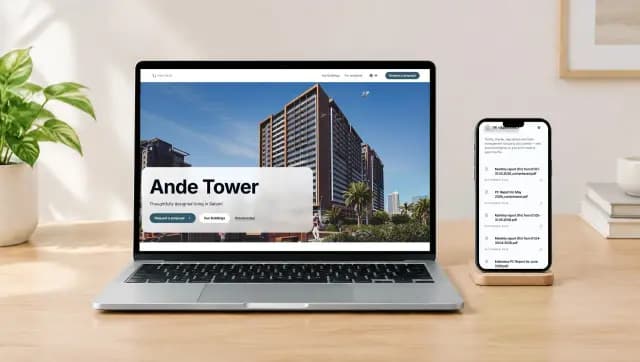
A practical guide to choosing the right website for your management company, from a ready-made building portal to a fully customized digital experience.
A property management company can create a website in several ways: use a ready-made template, build one with a no-code tool like SpreadSimple, hire a design studio such as Feely Studio, or commission custom development from Invental. There is another option specifically for residential management companies: Unitify, which provides websites for management organizations and individual buildings directly within its property management platform.
The right choice depends on what the website needs to do. A company looking for new management contracts needs a different online presence from an HOA publishing financial reports or a property manager maintaining a searchable catalogue of buildings.
The first question isn't which website builder is best. It's who will use your website, what they need to find there, and who will keep the information up to date.
Key takeaways
- For building information and resident transparency: Unitify provides branded websites connected to its property management platform.
- For searchable property catalogues: SpreadSimple turns Google Sheets data into websites with search, filters and property details.
- For marketing and brand positioning: Feely Studio creates professional websites designed to communicate a company's value and build trust.
- For specialized functionality: Invental develops custom websites and web applications.
- For a basic online presence: A ready-made template can be sufficient when only a few static pages are needed.
Which website solution should a property management company choose?
- Built-in management company and building websites: Solution: Unitify; Best for: HOAs, condo associations and residential management companies; Main consideration: Connected to building operations, with a predefined structure
- No-code website builder: Solution: SpreadSimple; Best for: Property catalogues and structured listings; Main consideration: Website content is managed through Google Sheets
- Professional design studio: Solution: Feely Studio; Best for: Corporate websites and brand development; Main consideration: Requires a design project and content planning
- Custom development: Solution: Invental; Best for: Complex websites, portals and web applications; Main consideration: Greater development scope and ongoing technical responsibility
- Ready-made template: Solution: Template-based website; Best for: Small companies needing a simple online presence; Main consideration: Limited differentiation and functionality
These approaches are not necessarily alternatives. A management company may use a marketing website to attract prospective clients and a separate building website to keep existing residents informed.
1. Unitify: A building website connected to your property management platform
Unitify provides a built-in website solution for property management companies, HOAs, condo associations and housing cooperatives.
Every management organization using Unitify can create its own branded website at unitify.homes, with a homepage for the organization and individual pages for the buildings it chooses to publish.
There is no need to hire a web agency, arrange separate hosting or maintain another content management system.
What can you publish on a Unitify website?
The management organization's homepage displays its name, logo and list of buildings. Each building has a dedicated page containing information relevant to residents and owners.
A building page can include:
- Building address, apartment count and management contacts
- News and announcements
- Charters, tariffs, regulations and other documents
- Monthly financial reports
- Information about available resident services
- Links to download the Unitify resident app
Documents can include short summaries so residents understand their contents without opening every file.
Residents can access this information through a browser, even if they haven't installed the app.
Where the relevant services have been configured, they can also submit requests and make payments from the building's web page. The full range of resident features, including guest passes and shared-space booking, remains available through the app.
How does Unitify avoid duplicate work?
The website is part of the same platform used to manage the building.
When a manager publishes an announcement, uploads a document or adds a monthly report in Unitify, the information becomes available through the resident app and the building website. News announcements can also reach residents by email.
For example, a company managing ten residential buildings can publish monthly reports and building announcements without maintaining ten separate content databases.
The manager chooses which buildings appear on the organization's website and controls the information published for each one.
This is particularly useful for small management teams: website updates become part of everyday property management instead of an additional administrative responsibility.
What do real Unitify building websites look like?
Two examples are already live:
A residential building page displaying its apartment count, available resident services, management contacts, documents and links to the resident app.
Edelweiss Residents' Cooperative, Almaty
A housing cooperative publishing monthly financial reports and other documents for residents.
Both websites are maintained by the organizations managing the properties.
Does a company need hosting or a web agency?
No separate hosting or development project is required.
The management organization creates its homepage inside Unitify, adds the buildings it wants to publish, and fills in the relevant information.
The website is hosted on unitify.homes.
News publication limits depend on the subscription: the Free plan includes one news post per month, while Base and Pro allow unlimited posts.
Best for: Property management companies, HOAs, condo associations and housing cooperatives that need building websites connected to their everyday operations.
When it may not be enough: Companies requiring a highly customized marketing website, an extensive public property catalogue or a fully browser-based alternative to the resident app.
Explore Unitify Building Websites
2. SpreadSimple: A no-code website built from Google Sheets
SpreadSimple turns spreadsheet data into a functional website without requiring programming skills.
Users can start from a template, use its AI website creator or connect an existing Google Sheet.
The platform transforms spreadsheet rows into structured website content, with options for search, filtering, sorting and individual item pages.
When is a spreadsheet-based website useful for property management?
Consider a management company that wants to publish a public catalogue of its properties.
Each building might have a name, address, photograph, location, service description and contact details. With SpreadSimple, those records can be organized in Google Sheets and displayed on a website.
The platform supports interactive maps, image galleries, filters and individual detail pages, making it suitable for presenting structured property information.
Changes to the source spreadsheet can be reflected on the website.
SpreadSimple also provides customizable layouts, SEO settings and external integrations, depending on the subscription.
What are the limitations?
A spreadsheet-based website introduces a separate source of content.
This can be convenient for a public property catalogue, but less practical when the same announcements, documents and building records already exist inside a property management platform.
A company should also distinguish between information intended for public display and sensitive operational or resident data.
Best for: Companies creating a searchable public property directory, building catalogue or simple marketing website without hiring developers.
When it may not be enough: Organizations requiring complex resident services, specialized operational permissions or closely connected building management workflows.
3. Feely Studio: A website designed to build trust and attract clients
An HOA website and a property management company's corporate marketing website serve different audiences.
Residents need practical information about their buildings. Developers, property owners and HOA boards considering a new management provider want to understand the company's experience, services and approach.
A professionally designed website can help communicate that difference.
Feely Studio specializes in brand identity, website design and development for digital businesses.
Its services include brand positioning, website structure, messaging, UX design, visual identity and development using platforms such as Framer and Webflow.
When does a management company need a professional design studio?
A management company competing for larger residential developments may need to demonstrate more than a list of services.
Its website might explain the company's management model, introduce the team, present completed projects and communicate what makes its approach different.
A design studio can help organize this information into a consistent brand and a clear visitor experience.
For example, a management company could create a corporate website explaining its services and use Unitify to provide operational websites for the buildings already under management.
The marketing website attracts potential clients; the building websites serve existing communities.
What should a company consider before hiring a studio?
A professional website project requires decisions about positioning, content, branding, scope and ongoing maintenance.
The management company should clarify who will update the site after launch, whether it needs a content management system and how the website will support its business development goals.
Best for: Growing property management businesses that need a distinctive corporate identity and a professional website to support sales and reputation.
When it may not be necessary: A small HOA that only needs to publish meeting notices, documents, reports and management contacts.
4. Invental: Custom website and web application development
Some website requirements go beyond what standard templates and no-code builders can provide.
A property management business may need a custom client portal, an unusual property search interface or a website connected to several proprietary systems.
Invental is a full-stack development studio that builds websites, web applications and custom digital products.
Its services include web design, custom development, content management systems, technical SEO and integrations.
When is custom development justified?
Custom development becomes relevant when a website must perform tasks that standard products cannot adequately support.
For example, a management group might require a portal combining information from several internal systems, specialized access permissions or a unique interface for prospective property owners.
Invental can design and build digital solutions for such requirements.
This is different from creating a basic information website. A custom application may require ongoing maintenance, infrastructure, security management and technical support.
Should property managers build operational functions from scratch?
Before commissioning custom development, a company should check whether an existing property management platform already provides the required functionality.
Unitify combines resident communication, maintenance management, billing, payments and building services in one platform. It also provides an Open API for supported integration projects.
Developing these capabilities again as a separate website may introduce unnecessary duplication and additional maintenance.
Custom development makes more sense when it delivers functionality that cannot be achieved through existing products or supported integrations.
Best for: Property management businesses and developers with complex technical requirements, proprietary workflows or specialized digital products.
When it may not be necessary: Companies whose requirements can be met through an existing property management platform or a conventional marketing website.
5. Ready-made templates: The simplest starting point
A ready-made website template provides a predefined layout that a company can customize with its own content, images and branding.
A small property management business might use a template to publish a homepage, contact details, services and a short company introduction.
Templates are available within website builders, content management systems and other web publishing platforms.
When does a template make sense?
A template is worth considering when the website has a limited purpose and the company does not need complex functionality.
For example, a newly established management business might want a basic online presence while developing its brand and customer base.
The main work involves selecting an appropriate template, preparing content, configuring the domain and maintaining the website.
What should a company check?
A template should support mobile devices, accessible navigation, basic SEO settings and straightforward content updates.
The company should also establish who is responsible for hosting, security updates and technical maintenance.
Best for: Small businesses needing a basic website with a limited budget and relatively static content.
When it may not be enough: Organizations needing integrated building operations, continuously updated resident information or highly customized functionality.
Does a property management company need one website or two?
The answer depends on who the website serves.
A property management company typically communicates with two audiences: potential clients and residents of buildings it already manages.
Those audiences have different expectations.
- Corporate marketing website: Main audience: Developers, property owners, HOA boards; Typical content: Services, experience, case studies, contacts
- Management organization and building website: Main audience: Residents and owners; Typical content: Announcements, documents, reports, management contacts
- Public property catalogue: Main audience: Prospective clients and partners; Typical content: Building descriptions, images, locations, filters
- Custom web application: Main audience: Defined business users; Typical content: Specialized workflows, integrations and permissions
A small HOA may need only a building website. A growing property management company may benefit from both a corporate marketing website and public pages for individual buildings.
But that doesn't mean every website needs its own content database.
For example, Unitify allows an organization to publish a homepage and pages for multiple buildings from the same management platform.
A separate corporate marketing website can focus on attracting new clients, while building announcements, reports and documents remain connected to the system used to manage the properties.
What should you consider before choosing a website solution?
Regardless of the approach, ask five practical questions.
1. Who is the website for?
Residents need building contacts, announcements and documents. Prospective clients need information about the company's services, experience and capabilities.
2. How frequently will the information change?
A website that changes twice a year has different requirements from one that publishes weekly announcements and monthly financial reports.
3. Where does the information already live?
If building data and documents are maintained in a property management platform, publishing them from the same system can eliminate unnecessary duplication.
4. Who will maintain the website?
A template may be inexpensive to launch but still requires somebody to update the content, resolve technical issues and maintain its security.
5. Does the website need to connect with other systems?
If the website requires data from accounting, resident management or another application, check available integrations and APIs before choosing the technology.
Choose the website that solves the right problem
A property management website should make information easier to find and reduce work for the people maintaining it.
For residents, that often means a reliable source of building announcements, documents and management contacts. For prospective clients, it means a clear presentation of the company's experience and services.
Unitify provides websites integrated with everyday residential building management. SpreadSimple offers a flexible no-code approach for structured public content. Feely Studio can create a distinctive corporate marketing website, while Invental supports more complex custom development.
A ready-made template may be enough for a simple online presence.
The most useful website isn't necessarily the most expensive or technically sophisticated. It's the one that solves the right problem without creating unnecessary work.
A website for residents should be connected to building operations. A website for winning new clients should help explain why the company deserves their trust.
Frequently asked questions
What is the easiest way to create a website for an HOA?
For an HOA using Unitify, the built-in building website is a straightforward option. The organization can set up its homepage, add buildings and publish news and documents without arranging separate hosting or hiring a developer.
Can a property management company build a website without coding?
Yes. Unitify offers predefined websites for management organizations and buildings. SpreadSimple allows users to create websites from Google Sheets, while template-based builders provide other no-code approaches.
Should a property management company hire a web design agency?
A professional studio may be useful when a website needs to support brand positioning, marketing and the acquisition of new management contracts. For publishing routine building information, a specialized platform may be more practical.
Can Unitify replace a corporate website?
Unitify provides branded pages for management organizations and individual buildings, including contacts, news, documents and reports. Companies requiring extensive marketing content or highly customized design may choose to maintain a separate corporate website.
What information should an HOA website include?
An HOA website should make it easy to find management contacts, building announcements, important documents, meeting information and relevant reports. Specific disclosure requirements depend on local legislation and association rules.
Can residents use a Unitify building website without installing the app?
Yes. Residents can access published building information, news and documents through a browser. Where configured, requests and payments are also available on the building page. The full set of resident services, including guest passes and amenity booking, remains in the Unitify app.
Can a company connect its website to property management software?
Integration depends on the software and available interfaces. Unitify provides an Open API for supported integration projects. Specific connections must be assessed for technical compatibility, security and data permissions.