
Owners Association in Saudi Arabia: A Guide
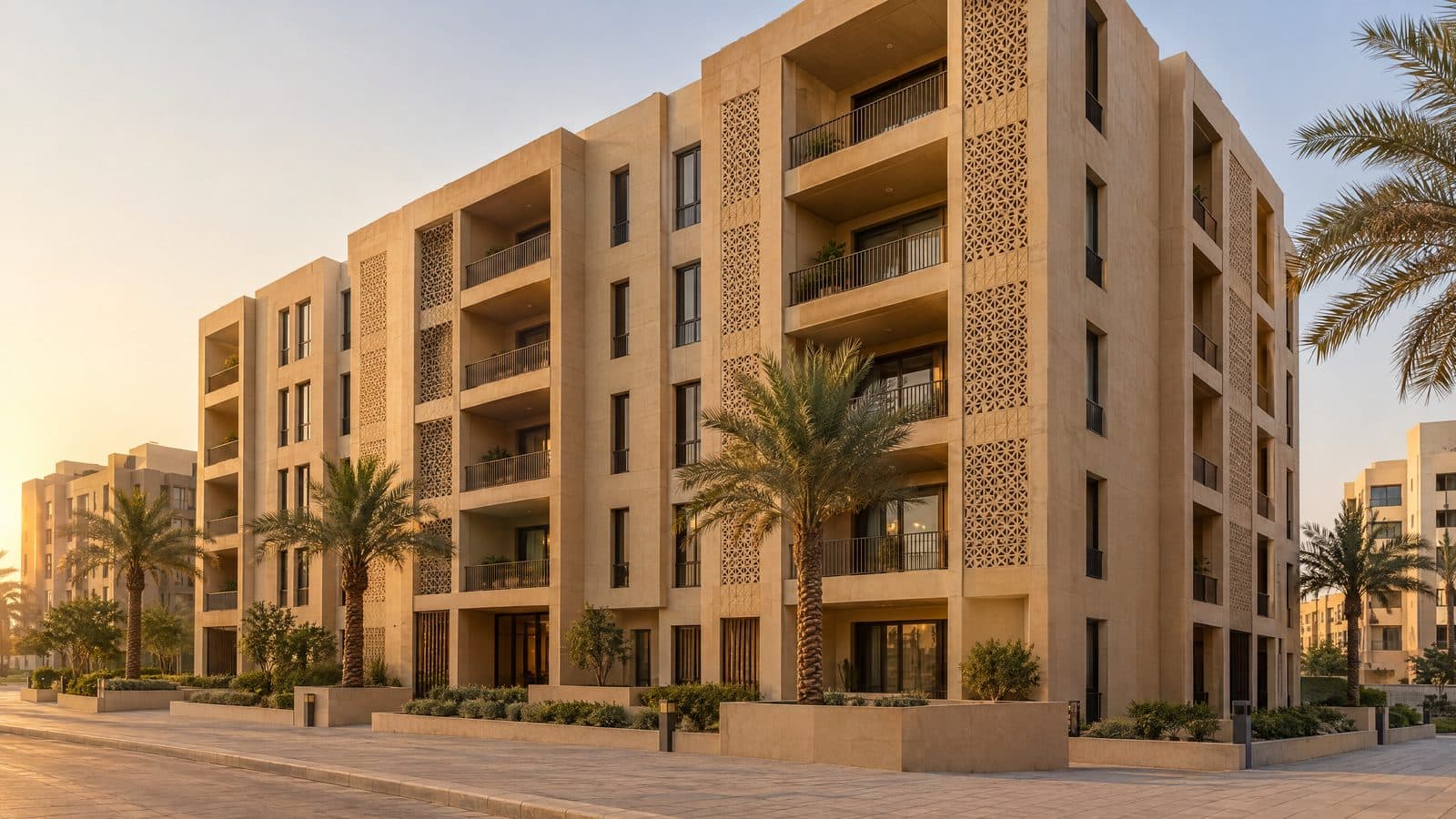
In Saudi Arabia, "ittihad al-mullak" (اتحاد الملاك) is what people call the body that brings together the owners of units in a shared property. The statute calls it "jam'iyyat al-mullak" (جمعية الملاك), the owners' association, and it is the same thing. This guide is for owners, chairmen and managers: what the association is, who runs it, what owners owe, how service charges are set and collected, how the general assembly works, what the property manager does, and a checklist. It is based on the Law of Ownership, Subdivision and Management of Real Estate Units (Royal Decree No. M/85 of 2/7/1441H), its Executive Regulation (Ministerial Decision No. 168 of 22/10/1441H) and the Real Estate General Authority's (REGA) own pages. It is general information, not legal advice; the official text published by REGA and your association's by-laws govern. The full Arabic version is here.
What the association is
REGA defines it as an entity the owners, or those who represent them, set up in a shared property to manage all of that property's affairs under the Law and the by-laws. It is mandatory once three or more owners hold subdivided units in the same shared property, and in an off-plan project the registration clock starts when handover of the second subdivided unit begins (Law art. 12(1)). The association must be registered with REGA, the application is due within 30 days of formation, and any owner may apply if the others do not (Regulation art. 10). It only acquires separate legal personality and its own financial liability after registration (Law art. 12(2)). For the developer's side of this, including the first-manager rule, see our guide to registration for developers.
Who runs it
- The general assembly, made up of all owners (Law art. 18). It reviews the manager's report and the auditor's report if there is one, approves the annual budget, appoints the manager and the auditor and sets their pay, discharges the manager, and amends the by-laws.
- The chairman, elected by the assembly from among its members for three years, renewable (Law art. 18). REGA says the chairman uploads and approves the minutes in the platform, and cannot set fees or amend the by-laws alone.
- The property manager, an individual or a company, appointed by the assembly (see below).
- The by-laws (النظام الأساسي), which are a condition of registration and must include the rules for setting owners' contributions, the financial year, how money is spent and how it is controlled (Law art. 12). REGA says they can only be amended by a decision of the general assembly with REGA's approval.
What owners owe, and what they can ask for
- Membership is automatic. Owning a subdivided unit in a shared property that has an association is itself acceptance of the by-laws and a commitment to the assembly's resolutions (Law art. 15).
- Pay your share. An owner cannot give up a share of the common parts to escape the cost of maintaining them (Law art. 24).
- The share follows area. Each owner contributes in proportion to the area of their unit against the total area of the subdivided units, and in a mixed-use building the contribution may differ by type of use (Law art. 26).
- Shared meters. Each owner pays the amount the general assembly fixes (Regulation art. 37).
- Let units. The owner stays liable to the association for the unit's rights and duties and for the common parts, unless the owner has agreed otherwise with the tenant (Law art. 23). REGA adds that the tenant bears the fees if the lease says so.
- Co-owners of one unit must choose one of themselves to represent them in the assembly (Law art. 17).
- Rights. Every owner may ask to see the association's account books (Regulation art. 32); owners representing at least half the units may request that the assembly be called (Law art. 18); and, although REGA says fees cannot be contested, members can put a request to change them to a vote.
Service charges: set, collect, report
Owners usually say "service charges" (رسوم الخدمات). The statute calls them "owners' subscriptions" (اشتراكات الملاك) and REGA's guide calls them "subscription fees" (رسوم الاشتراك).
Setting them. The by-laws must contain the rules for fixing the amount and how it is paid (Law art. 12; Regulation art. 14). REGA describes the fees as what the owners agree on, proposed by the chairman and put to a vote, covering common parts and shared services such as lifts, security, cleaning, parking, gardens and roofs. They do not include a unit's own electricity or water bills. We found no rate, minimum or ceiling in the Law or the Regulation: the owners decide.
A worked example with simplified, hypothetical numbers, not a tariff: if the assembly approves a yearly budget of SAR 600,000 for the common parts and the subdivided units total 20,000 m², an owner of a 125 m² unit carries 125 ÷ 20,000 of it, or SAR 3,750 a year.
Collecting them. The association keeps a bank account in its own name, at a bank licensed to operate in the Kingdom, into which all its money goes (Regulation art. 31). The manager collects the owners' contributions and spends from the approved budget (Regulation art. 23). REGA's Mullak platform lets owners see the fees and the invoices that were voted and approved, and the manager documents each payment. Once REGA approves them, the manager's decisions and contracts concerning the shared property are an enforceable instrument against owners under the Enforcement Law (Law art. 21), provided the manager and relatives to the fourth degree have no direct interest in the decision, it is within the manager's powers, and it meets any other control or procedure REGA sets (Regulation art. 24). A reserve fund is allowed if the general assembly decides, but nothing requires it (Regulation art. 30).
Reporting. The assembly reviews the manager's report and the year's financial position and approves the budget (Law art. 18). The association must keep its minutes and detailed books of what owners owe (Regulation art. 32). A licensed auditor is required for buildings with 100 or more subdivided units, or where the association's assets exceed SAR 1,000,000, and an assembly decision approving the manager's report and accounts without reading the auditor's report is void (Regulation art. 27).
The general assembly
- Yearly. At least once a year, within three months of the end of the financial year, called by the chairman under the by-laws (Law art. 18(4)). It can be called at any time at the request of the manager, the auditor, or owners representing at least half the units (Law art. 18(5)).
- First meeting. The applicant must call all members within five days of registration, with at least five days between notice and meeting; the first assembly decides on the by-laws, elects the chairman, appoints the manager unless the appointment is put off to the second meeting, and deals with the costs of setting up the association (Regulation art. 15).
- Voting. A resolution is valid if owners holding at least three quarters of the total area of the subdivided units approve it, unless the by-laws require more. If one owner holds more than half the area, that owner's votes are reduced to half (Law art. 18(6)). It is an area test, not "75% of owners".
- Quorum. There is no number in the Law: the by-laws must set out the notice procedure and the quorum (Regulation art. 14).
- Electronic voting. We found no provision on electronic or remote voting for owners' associations in the Law or the Regulation. REGA describes voting and the minutes as happening in Mullak. Check your by-laws and the platform before moving a formal vote online.
- Minutes. Our Arabic minutes template is a neutral printable form with blank fields and an attendance list; the English page explains it.
The property manager
REGA says the manager may be an individual or a company, runs maintenance of the common parts, collects the fees through the association's bank account and spends them against the budget, contracts service providers, prepares periodic financial and technical reports for REGA and the owners, and represents the association before the authorities, without the power to amend the by-laws or impose new fees. On REGA's service page the chairman nominates three candidates, the owners vote, and the appointment is made "by majority" after the vote. The validity of general-assembly resolutions is set by the Law at owners holding at least three quarters of the total subdivided area, unless the by-laws require more (Law art. 18(6)), and the texts we read do not say how the two statements fit together, so check with REGA and your by-laws before the appointment is approved. A developer who built the property may appoint the manager alone only if the building has at least 100 subdivided units and the developer keeps at least 10% of them (Law art. 19(4); Regulation art. 22).
Licensing: confirm with REGA. REGA's own pages do not agree. Its FAQ says the manager must hold a "FAL property-management" licence; its manager-application service asks individuals for a Saudi Real Estate Institute certificate and companies for a commercial register plus that certificate. Check the current requirement with REGA before you appoint.
A practical checklist
At formation
- Confirm three or more owners of subdivided units; in an off-plan project, note when handover of the second unit begins.
- Draft the by-laws with the charge rules, how payment works, the financial year and spending rules.
- Apply for registration within 30 days, with owner and property data (National Address, deed number, register number) and the names of the assembly members.
- Call the first assembly within five days of registration.
- Open a bank account in the association's name at a licensed bank, into which all its money goes.
Every year
- Hold the assembly within three months of the financial year end.
- Put the manager's report and the budget to a vote and check the result against the required ratio of area.
- Appoint a licensed auditor if you have 100 or more units or assets above SAR 1,000,000.
- Keep minutes and detailed books, and let owners inspect them.
- Have the chairman upload and approve the minutes in Mullak.
When collecting
- Issue the approved invoices through Mullak and record the payments.
- Keep each unit's own electricity and water out of the charge; shared meters follow the assembly's figure.
- Check leases before billing a tenant.
- Follow up arrears regularly; the manager can file the enforceable instrument once REGA has approved the decisions.
What Unitify does, and what it does not
Unitify is separate software, not a REGA service and not a replacement for Mullak.
- Arabic. The product interface is available in English and Arabic.
- Billing and collections (Easybilly). It applies the charge rule your by-laws set; in Saudi Arabia the rule the law itself sets is the ratio of the unit's area to the total subdivided area (Law art. 26), and Easybilly supports charging per square meter. Mullak runs registration and invoicing for the association; Easybilly follows up collections, reconciles receipts, reports collectability and gives the manager owner statements, and it does not issue an invoice outside Mullak. See the billing page.
- Payments. Residents pay the way they already do, through SADAD or mada, and Easybilly shows the status in the resident app. SADAD and mada are payment methods residents already use, not Unitify integrations.
- Voting. The voting tool records votes. It does not make a meeting legally valid, write the minutes or check the quorum.
- A live result. Collectability at Ande Tower, our live deployment in Georgia, rose from 40% to 80% in six months.
- Price. Free is $0, Base is $1 and Pro is $3 per apartment per month; billing is an add-on at $0.5 per invoice, free on Pro. See the pricing page.
See the Saudi Arabia page, the Gulf page or book a demo.
Sources: Law of Ownership, Subdivision and Management of Real Estate Units, Royal Decree No. M/85 of 2/7/1441H, and its Executive Regulation, Ministerial Decision No. 168 of 22/10/1441H, as published by REGA at rega.gov.sa; REGA's Mullak programme and service pages, rega.gov.sa/rega-services/platforms/mullak/, accessed 2026-09-07.
Frequently asked questions
What is the difference between ittihad al-mullak and jam'iyyat al-mullak?
Ittihad al-mullak (اتحاد الملاك) is the everyday phrase people use and search for. The statute's own term is jam'iyyat al-mullak (جمعية الملاك): the body the owners of a shared property set up to manage it, registered with the Real Estate General Authority (REGA).
When must an owners association be formed in Saudi Arabia?
When three or more owners hold subdivided units in the same shared property. They must register the association with REGA, and the application is due within 30 days of formation. In off-plan projects the clock starts when handover of the second subdivided unit begins.
Who sets the service charges?
The owners do, in the association's by-laws. The chairman proposes a change and puts it to a vote. Neither the law nor its regulation sets a rate, a minimum or a ceiling, and each owner pays in proportion to the area of their unit against the total subdivided area.
What happens if an owner does not pay?
The charge stays a debt of the owner, who cannot escape it by giving up a share of the common parts (Law art. 24). The property manager's decisions and contracts concerning the shared property, issued within the manager's powers, become an enforceable instrument against owners under the Enforcement Law once REGA approves them, provided neither the manager nor a relative to the fourth degree has a direct interest in them (Law art. 21; Regulation art. 24). REGA's own service page says the manager is the one who files that instrument against defaulters.
What vote does the general assembly need?
Owners holding at least three quarters of the total area of the subdivided units, unless the by-laws set a higher ratio. It is measured by area, not by headcount, and if one owner holds more than half the area, that owner's votes are cut back to half (Law art. 18(6)).
Does Unitify replace the Mullak platform?
No. Mullak is REGA's platform for registering associations, their invoices and minutes. Unitify is separate software that follows up collections, reconciles receipts and shows residents their status in the app; it does not issue an invoice outside Mullak.