
Croatia: The "Residents' Representative", Pay and Duties
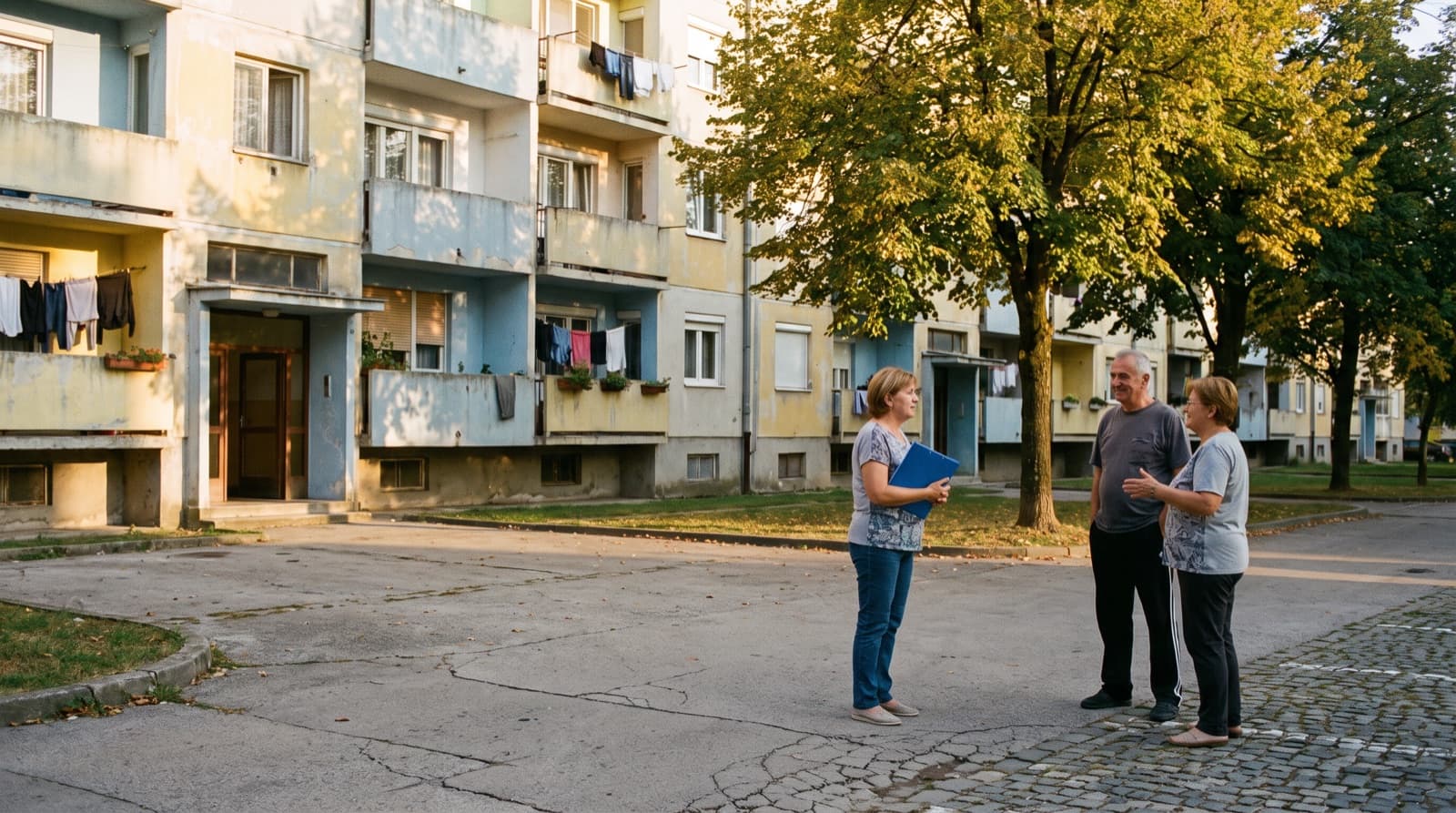
Anyone looking for a "residents' representative" (predstavnik stanara) in Croatian law will not find that name. The Act on the Management and Maintenance of Buildings (NN 152/2024), in force since 1 January 2025, has one role: the predstavnik suvlasnika, the co-owners' representative (Article 42). He is the person the community of co-owners picks to deal with the manager and with the other co-owners. This post answers the questions people actually search: who can do it, what he must do, what he is paid, and what happens when nobody wants the role. For how the representative is elected and by what majorities, see Croatian Co-owners' Representative Under the New Act.
Is the role still there?
Yes, under the statutory name. The act lists the representative next to the co-owners and the manager as one of the three actors in managing a building (Article 1). Representatives elected before 1 January 2025 carry on as representatives under the new act (Article 62), so nobody has to be re-elected just because the law changed.
In practice the role is mandatory: if the co-owners have not elected one, the manager must warn them in writing, and if they still do nothing, the manager appoints a forced representative (below).
Who can be one
The act has two circles of eligible persons (Article 42).
First circle. A legally capable natural person who is a co-owner, or the spouse, partner (formal or informal) or direct-line relative of a co-owner living in the same building, elected by a majority of more than half of the co-ownership shares.
Second circle. Only if the representative cannot be elected from the first circle, a third legally capable natural person with residence or stay in the town or municipality where the building stands may be chosen. That decision needs a two-thirds majority.
The representative must be a natural person, and his rights and duties cannot be transferred to third parties (Article 42(11)). Article 42 does not mention tenants separately: a resident who is neither a co-owner nor a relative from the first circle can only be elected as a second-circle person.
What he has to do
Article 42(4) lists the duties. The main ones:
- represent the co-owners in managing and maintaining the building within the limits of the act and the inter-owner agreement;
- convene and chair the co-owners' meeting, which must take place at least once a year (Articles 37 and 38);
- agree the annual and multi-year maintenance programmes with the manager;
- pass the co-owners' decisions and changes of ownership to the manager;
- supervise whether the manager meets the management contract and report to the co-owners when needed;
- by 1 February of the next year, give the co-owners a short report on his work (notice board or e-mail);
- sign the building cleaning contract;
- tell the co-owners about spending above EUR 2,000 (excluding VAT) that was not in the annual plan;
- inspect the movements on the building's account.
The inter-owner agreement may allow him to spend up to EUR 2,000 per transaction without the other co-owners' consent (Article 42(6)). He is not liable for co-owners' decisions taken in line with the act (Article 42(5)).
What he is paid
Short answer: a fee is possible, not mandatory, and the act sets no amount. The exception is the forced representative appointed by the manager, who has a statutory right to a fee (Article 42(12)).
- The inter-owner agreement may provide a monthly fee for the work and reimbursement of material costs (Article 44(1)).
- The co-owners decide by a majority of more than half (Article 44(5)).
- The fee is among the costs the reserve fund pays for (Article 28(9)).
- A paid representative who grossly neglects his duties must pay one to at most 12 of the monthly fees he received into the reserve fund, and can be recalled (Article 44(2)).
The act lists what counts as gross neglect, for example not trying to convene a meeting at least once a year, not passing a co-owners' decision to the manager, or not preparing the annual report on his work (Article 44(6)). Before the amount is set, co-owners holding more than one third of the shares send a warning with a deadline of at least eight days (Article 44(3) and (4)). The actual fee therefore depends on your building's inter-owner agreement and the co-owners' decision.
What if nobody wants the role
The act answers this directly (Article 42(7) to (10) and (12)):
- If no representative has been elected, the manager must warn all co-owners in writing to elect one within 60 days of the warning.
- If they do not act, the manager appoints a forced representative until the co-owners notify him of an election.
- The forced representative must be a legally capable natural person resident in the local self-government unit where the building stands, with a higher-education degree in social or technical sciences, and no criminal proceedings pending.
- The manager notifies all co-owners of the appointment within 15 days.
- The forced representative has all the rights and duties of a representative and a right to a monetary fee for the work.
Term, resignation, recall
The act sets no term in years. The mandate ends by recall, resignation or death (Article 43(1)). Recall needs a majority of more than half (Article 43(6)). Resignation is written, and the same day the representative informs all co-owners in writing, by post or notice board and by e-mail, and the manager in writing, by post or e-mail (Article 43(2)).
A representative who resigns or is recalled must report to the co-owners on the programme and contract duties as of that day, and within three working days hand all documents, passwords, keys and other property to the manager against a handover record (Article 43(3) and (4)). The manager keeps them until the co-owners name a new representative (Article 43(5)). The inter-owner agreement may also provide for a deputy (Article 46) and a co-owners' council that advises and oversees him (Article 45).
Deadlines that touch the representative
- A representative elected before 1 January 2025 continues without a new election (Article 62).
- He delivers the inter-owner agreement to the manager within 15 days of its conclusion (Article 36(4)).
- New inter-owner agreements and management contracts are due within two years of 1 January 2025 (Article 61(1)). The act gives no calendar date; the period ends at the turn of 2026 and 2027. The co-owners conclude the management contract in writing, represented by the representative (Article 48(1)).
How Unitify helps a representative and a manager
Unitify does not replace the written notice, the notice board or the minutes, and it does not give legal advice.
- Notices. The resident app can deliver a copy of the notice, agenda and reports to residents on top of the statutory delivery.
- Reporting. For Croatian managers Unitify gives one place for payment records on the separate building account, collection monitoring and reporting to co-owners, which makes it easier for a representative to check what the act expects of him.
- Voting. A manager can prepare a vote or a survey in the app and see participation. Croatian law does not provide the app as a valid voting channel: the statutory electronic route is e-mail, on the co-owner's request, with proof of identity or a qualified electronic signature. A vote in the app does not by itself make a decision legally valid.
See the Croatia page, pricing and how the reserve fund is run. If you want to see how this would look for your buildings, book a call.
Sources
Frequently asked questions
Does the Croatian act have a role called "predstavnik stanara"?
No. The Act on the Management and Maintenance of Buildings (NN 152/2024) calls the same role predstavnik suvlasnika, the co-owners' representative (Article 42). He is chosen by the community of co-owners, not by residents as such.
Who can be a predstavnik stanara?
A legally capable natural person who is a co-owner, or the spouse, partner or direct-line relative of a co-owner living in the same building. Only if no such person can be elected may a third person with residence or stay in the same town or municipality be chosen, by a two-thirds majority.
Is the representative paid?
The act does not make a fee mandatory. The inter-owner agreement may provide a monthly fee and reimbursement of material costs, and the act sets no amount. The fee decision needs a majority of more than half of the co-owners.
What if nobody wants to be the representative?
The manager must warn all co-owners in writing to elect one within 60 days. If they do not, the manager appoints a forced representative, who has a statutory right to a fee for the work.
How long is the representative's term?
The act sets no term. The mandate ends by recall (majority of more than half), resignation or death.