
Smart Building for Developers in Georgia: What to Hand Over
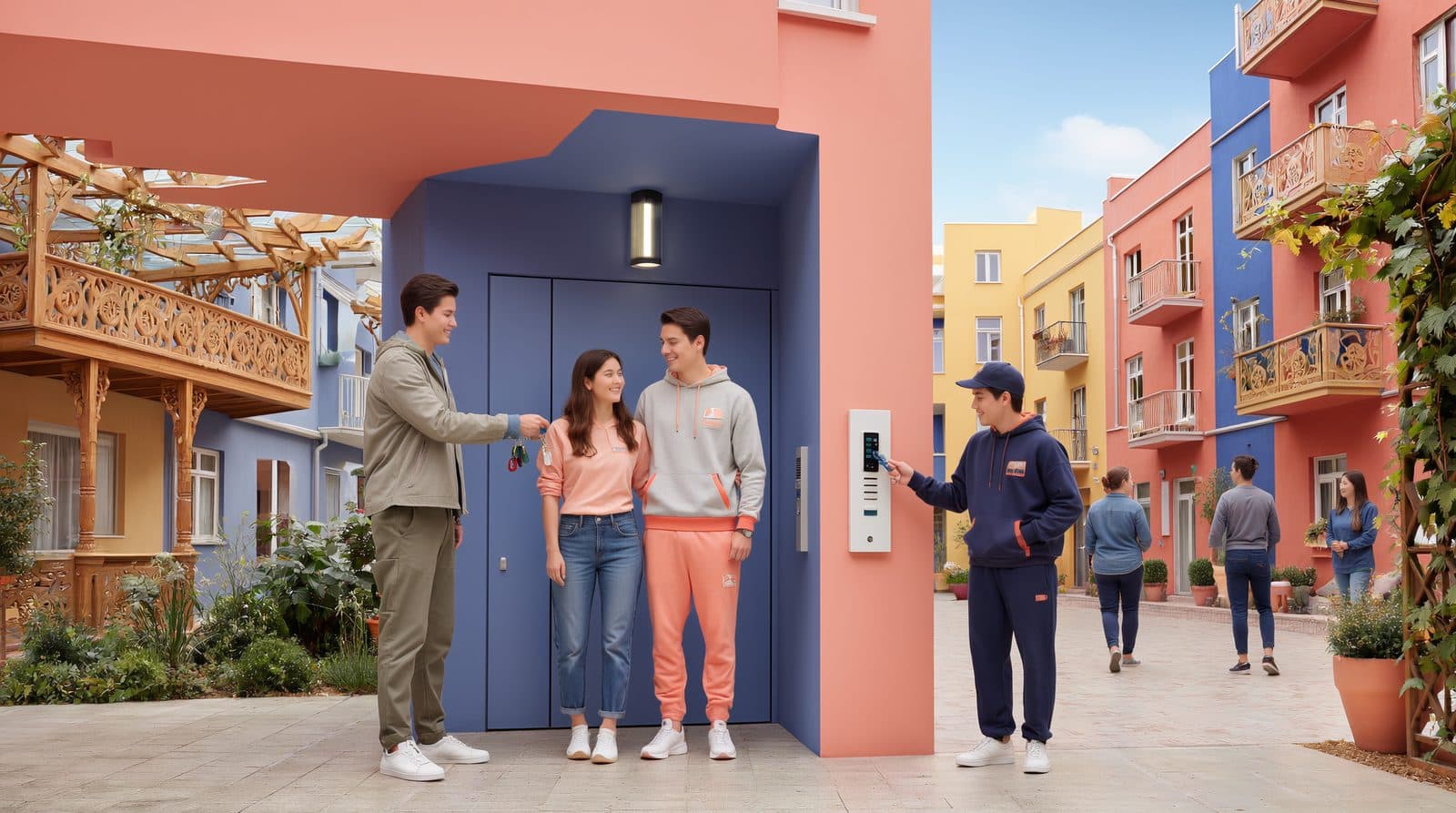
A developer handing over a new residential complex in Tbilisi or Batumi is not really selling square meters, they are selling what living there feels like from day one, and increasingly that includes how the building is accessed, managed and paid for. A smart building platform earns its place in that handover only if it holds up on three fronts: what the resident gets immediately, what the developer keeps, and what happens after the sales team moves on to the next project.
What a resident should get on day one
The test for a smart building system is not the spec sheet, it is whether a resident opens one app on move-in day and it already works: door and gate access without a physical key, requests to the building administrator instead of a phone number nobody answers, building news in one place, and, where the intercom is video-enabled, remote door opening from a phone instead of a wall panel. A complex marketed as smart but handed over with a paper access log and four separate vendor apps is not actually smart from where a resident stands.
What the developer keeps
The building's day-to-day operations usually pass to an amkhanagoba (the Georgian term for a homeowners' association) or a management company shortly after handover, but the brand relationship a developer spent a sales campaign building does not have to pass with it. A white-label setup keeps the resident app, the notifications and the building communications carrying the developer's own name and design, which matters for a developer with more than one project in the pipeline: residents of the first complex become a reference for the next one, and that only works if they remember whose brand they are living in.
Why the platform should not lock a developer into one vendor
Access control, intercoms and cameras are hardware decisions, made project by project on price, availability and fit with a specific building's layout, and a developer should be free to make them without also picking a management platform for the next ten years. Proprietary systems that only work with their own brand's hardware turn that choice into a trap: whichever vendor wins one project's tender ends up locking every future building into the same one, or forces a rip-and-replace when a better option comes along. A platform built on mini apps, small integrations that connect any vendor's hardware to the same resident app and the same management dashboard, keeps that choice open on every new project instead of closing it on the first one.
What this actually costs
Local integrators in Georgia do not publish smart building prices, so there is no public benchmark to quote. What changes the number is which systems are included, access control, video intercom, dispatching, the resident app, and how many units the building has; a costed estimate scoped to one specific project is more useful to a developer than an industry average that does not describe any building in particular.
Billing that works with what residents already use
Once the amkhanagoba or management company takes over, collecting shared fees works best when it uses the payment rails residents are already on rather than introducing a new one. TBC Bank and Bank of Georgia already handle utility and building-fee payments for Georgian residents; Bank of Georgia acquiring is integrated directly into billing, and TBC is a rail the platform reconciles against, instead of asking residents to learn a new payment habit on top of a new building.
A developer's job is to make the first complex work well enough that its residents sell the next one. Book a demo to see how the resident app, the developer's own brand, and any hardware vendor's equipment fit onto one platform.
Frequently asked questions
What should a resident get on day one in a new Georgian complex?
One app that already works: door and gate access, requests to the building administrator, and building news, plus remote door opening from the phone where the intercom is video-enabled. Handing residents a working app on move-in day, instead of a promise that one is coming, is what turns a smart building from a sales pitch into something residents actually use.
What does the developer keep control of after handover?
The brand and the resident relationship. A white-label setup means the app and the building communications carry the developer's own name and design, not a hardware vendor's or a management platform's, even after day-to-day operations pass to the amkhanagoba or management company.
Why shouldn't a smart building platform depend on one hardware vendor?
Because the developer, not the platform, should choose intercom, access control and camera vendors on price and fit for each project, and a management company inheriting the building should not be locked into whichever brand happened to win one tender. Mini apps that connect any vendor's hardware to the same platform keep that choice open project by project.
Which payment rails do Georgian residents already use for building billing?
TBC Bank and Bank of Georgia are the two rails already handling utility and building-fee payment for Georgian residents. Bank of Georgia acquiring is integrated directly into billing; TBC is a rail the platform accounts for when reconciling how residents already pay.