
A smart building platform for developers building in Tbilisi and Batumi
Unitify connects video intercoms, access control, cameras, meter readings and a resident app into one platform for Georgian developers and the amkhanagoba or management company that runs the building after handover. Anything that exposes an API or SIP interface is connected under the project: intercoms, access controllers, barriers with plate recognition, lift access, cameras, meters and smart-home devices in apartments. Hikvision and Dahua intercoms and door controllers connect through the device’s own interface (ISAPI, SIP).
How buildings are managed in Georgia
One platform built for how an amkhanagoba or management company actually runs a building.
Payment rails already in use
Flitt and Bank of Georgia acquiring are integrated directly into billing; TBC is the rail Georgian residents already use for building-fee payment.
Flitt
Unitify’s integrated payment acquirer, live in Georgia as TPAY LLC (NBG-registered payment service provider №0100-7704): dues are collected and reconciled straight through it.
TBC Bank / TBC Pay
TBC Pay’s utilities category (კომუნალური გადასახადები) already lists named residential-complex and building-service billers — a channel residents already use, not a connected Unitify integration.
Bank of Georgia
Unitify processes residents’ card payments through Bank of Georgia’s payment API.
Built around Georgia’s Law on Homeowners’ Associations, verified against the primary source
Every claim below links to the primary-source citation it is verified against, not a summary.
One statute, one term — Law №5277-რს of 11 July 2007
The Law of Georgia on Homeowners' Associations (№5277-რს, adopted 11 July 2007, in force from 1 August 2007) defines the homeowners' association as ბინათმესაკუთრეთა ამხანაგობა (binatmesakutretha amkhanagoba, commonly shortened to amkhanagoba).
Law of Georgia on Homeowners' Associations №5277-რს, matsne.gov.ge ↗Not a legal person, but full contractual capacity in its own name (arts. 14, 17–18)
An amkhanagoba is not a legal person, but it holds separate property, may open bank accounts and take bank credit, and may acquire rights and obligations — including signing contracts with third parties — in its own name, acting through its chairperson.
Arts. 14, 17–18, Law of Georgia on Homeowners’ Associations, matsne.gov.ge ↗No registration, no mandatory charter — the association exists by operation of law (arts. 11, 23)
The law deems an amkhanagoba established in every building on a single land plot with more than two individually owned apartments, with no founding act or state registration. A charter is optional; where none is adopted, the law’s own default rules govern the association’s activity.
Arts. 11, 23, Law of Georgia on Homeowners’ Associations, matsne.gov.ge ↗A hired manager, elected by two-thirds of the members, with no license or certification required (art. 26)
Owners can run the building through an elected chairperson, or hire a professional manager — the law’s own term is a “hired manager” (მოწვეული მმართველი) — by a two-thirds vote of the members’ meeting. Georgia imposes no license or certification requirement; the manager’s liability is set by contract.
Arts. 26, 14(4), Law of Georgia on Homeowners’ Associations, matsne.gov.ge ↗Meetings decide by majority of those present, and bind every member, even non-voters (art. 28)
Absent a charter, the members’ meeting needs two-thirds attendance to be quorate — or any turnout at all on a reconvened meeting with the same agenda. Decisions pass by a simple majority of those present, are recorded in written minutes signed by the chairperson, and are binding on every member, including those who did not vote.
Art. 28, Law of Georgia on Homeowners’ Associations, matsne.gov.ge ↗Arrears over GEL 500 attach to the apartment, and follow it to the next owner (art. 14(5)–(6))
Once a member’s debt to the association exceeds GEL 500, the chairperson may register it in the Public Registry as a liability attached to the apartment; if the unit is later sold, the new owner is personally and jointly liable for the unpaid balance.
Art. 14(5)–(6), Law of Georgia on Homeowners’ Associations, matsne.gov.ge ↗The hardware layer, wired into your platform
Intercom, access, video, meters and EV charging connect through mini apps, alongside your requests and billing.
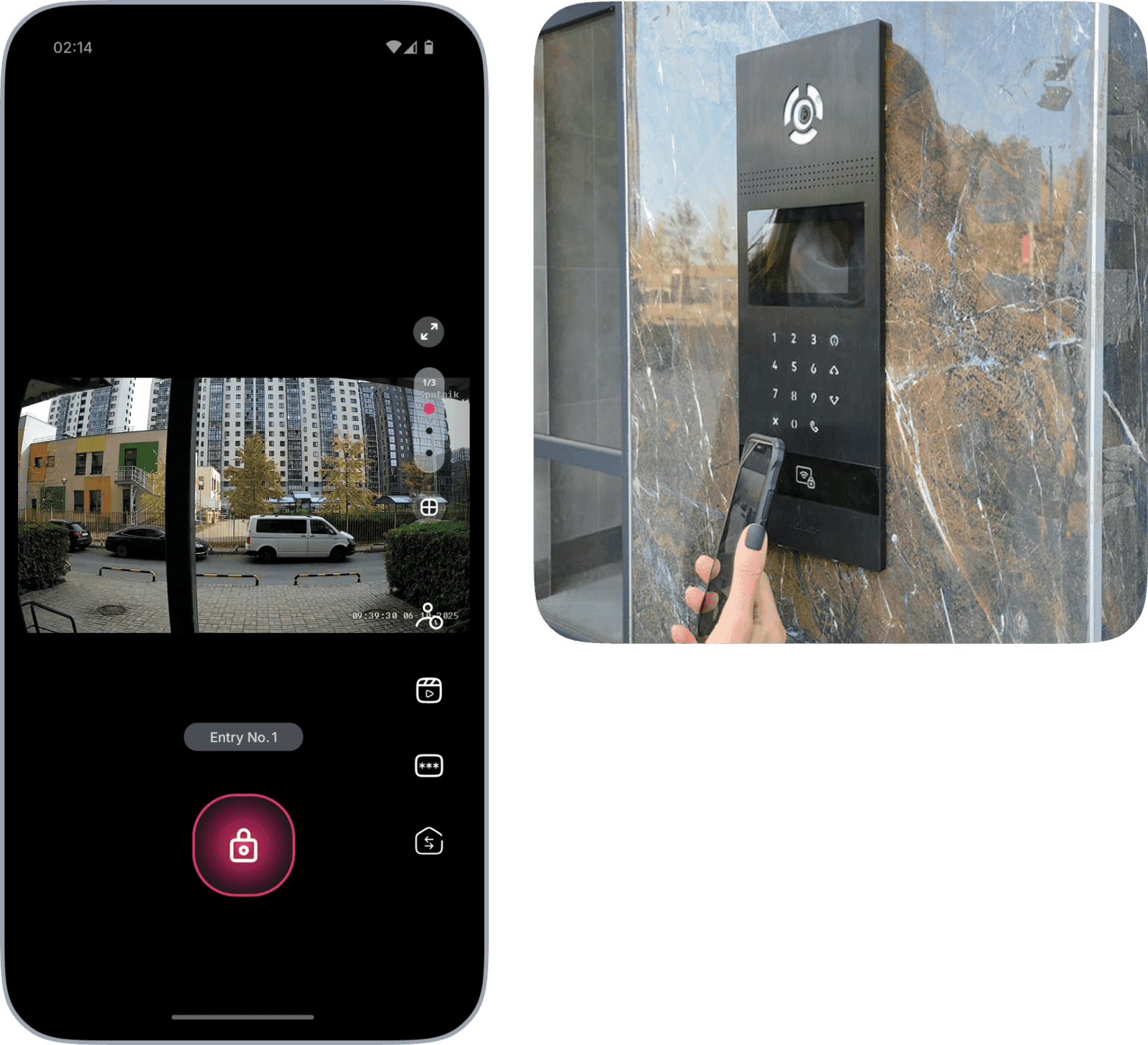
Digital intercom
Calls go straight to the resident’s phone. Entry by app, BLE tag or face.
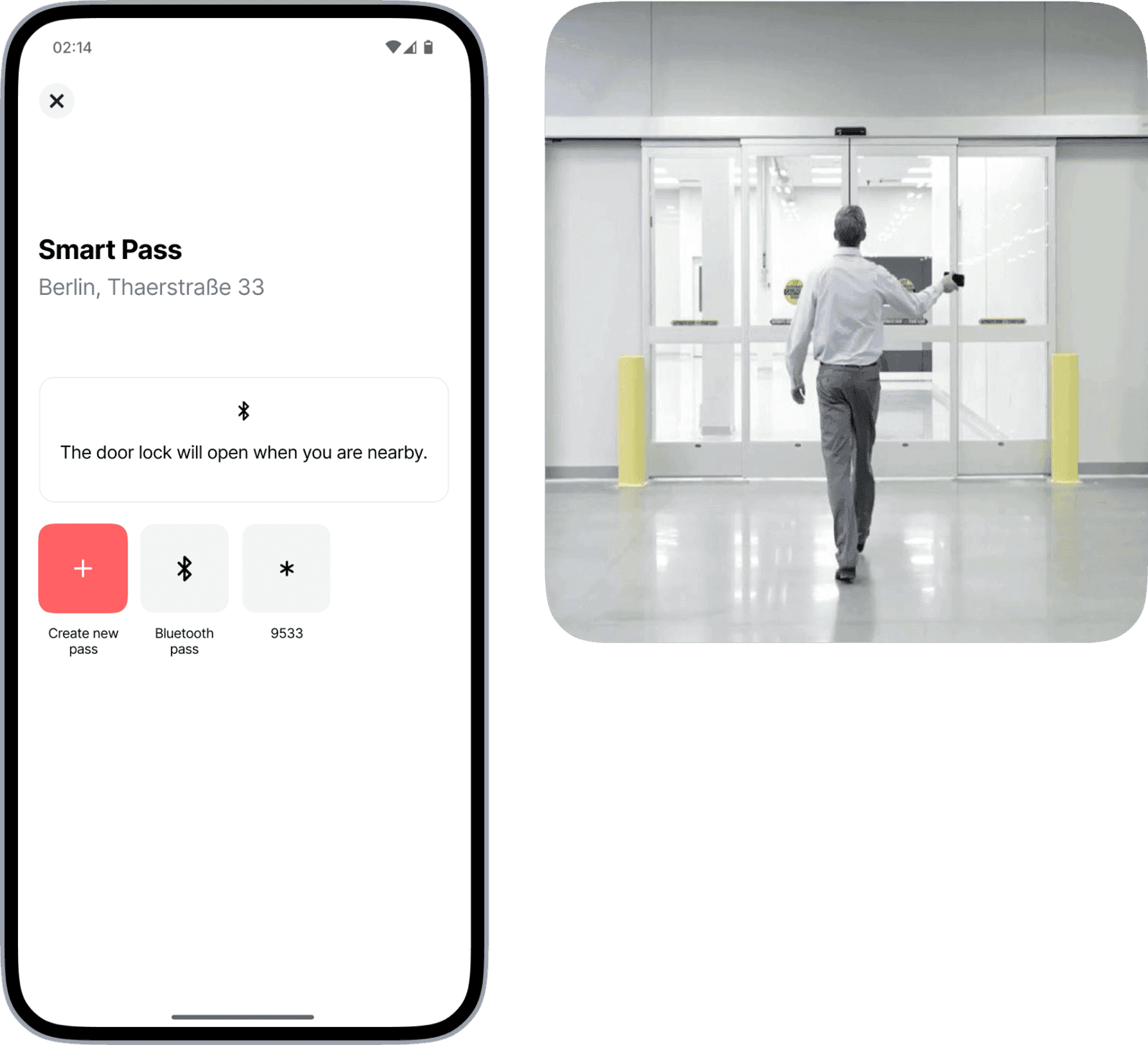
Access control
Contactless entry by phone or tag. Vehicle access by plate recognition.
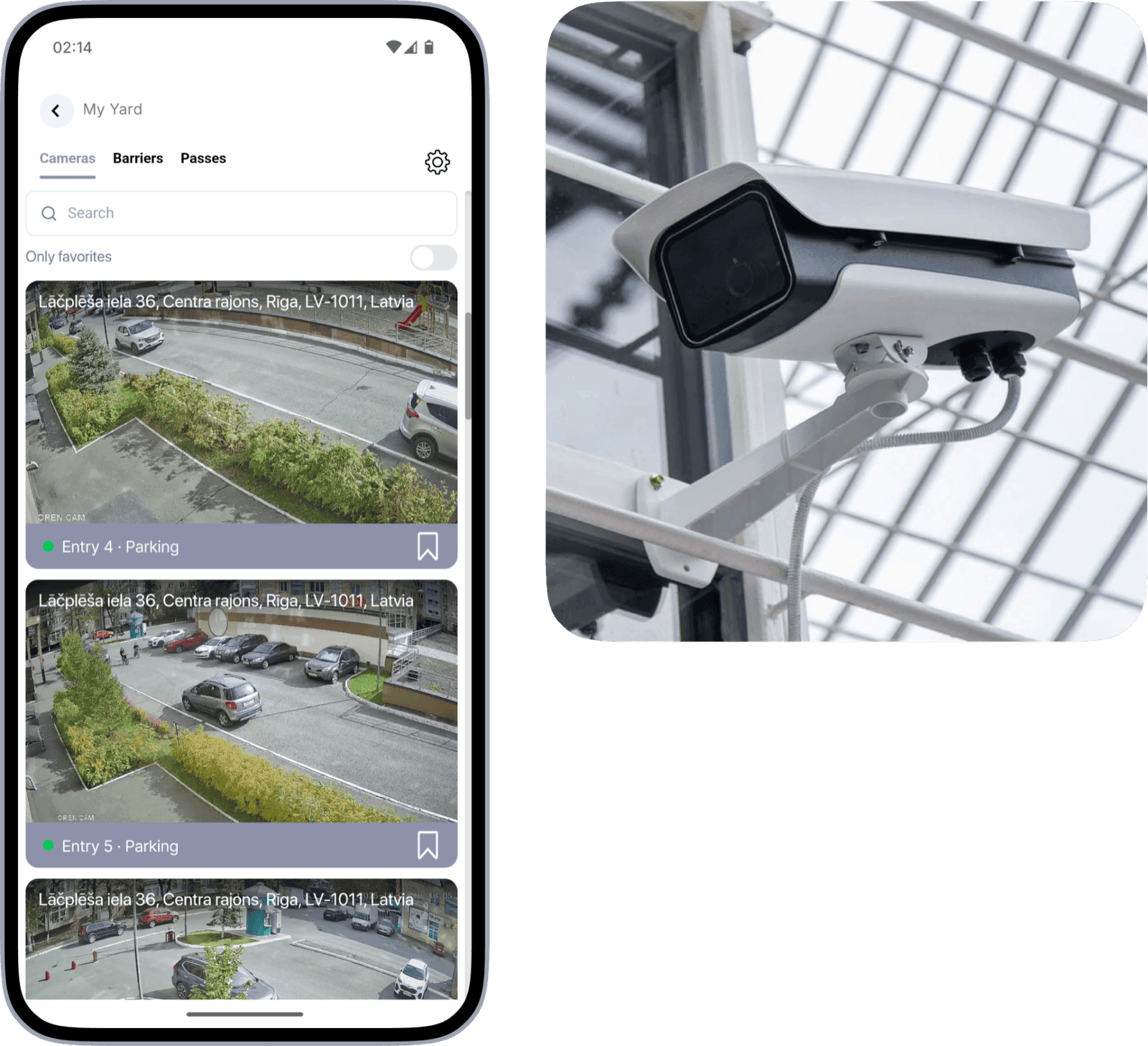
Video surveillance
Live cameras, digital archives and plate recognition at the gate.
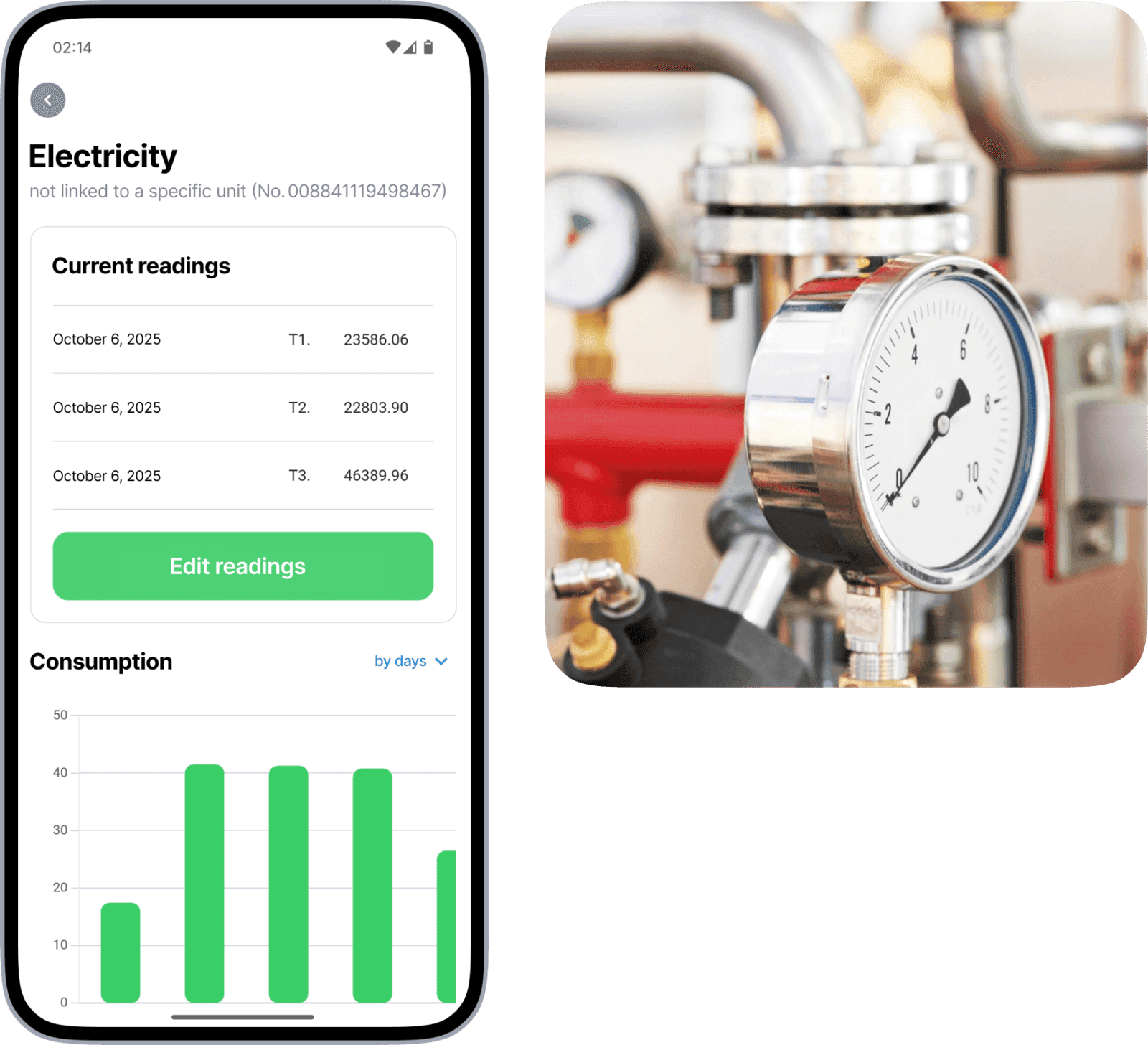
Meter telemetry
Readings come from residents in the app, from a file or over the API from your metering system. Smart meters that expose an interface are connected under the project.
EV charging
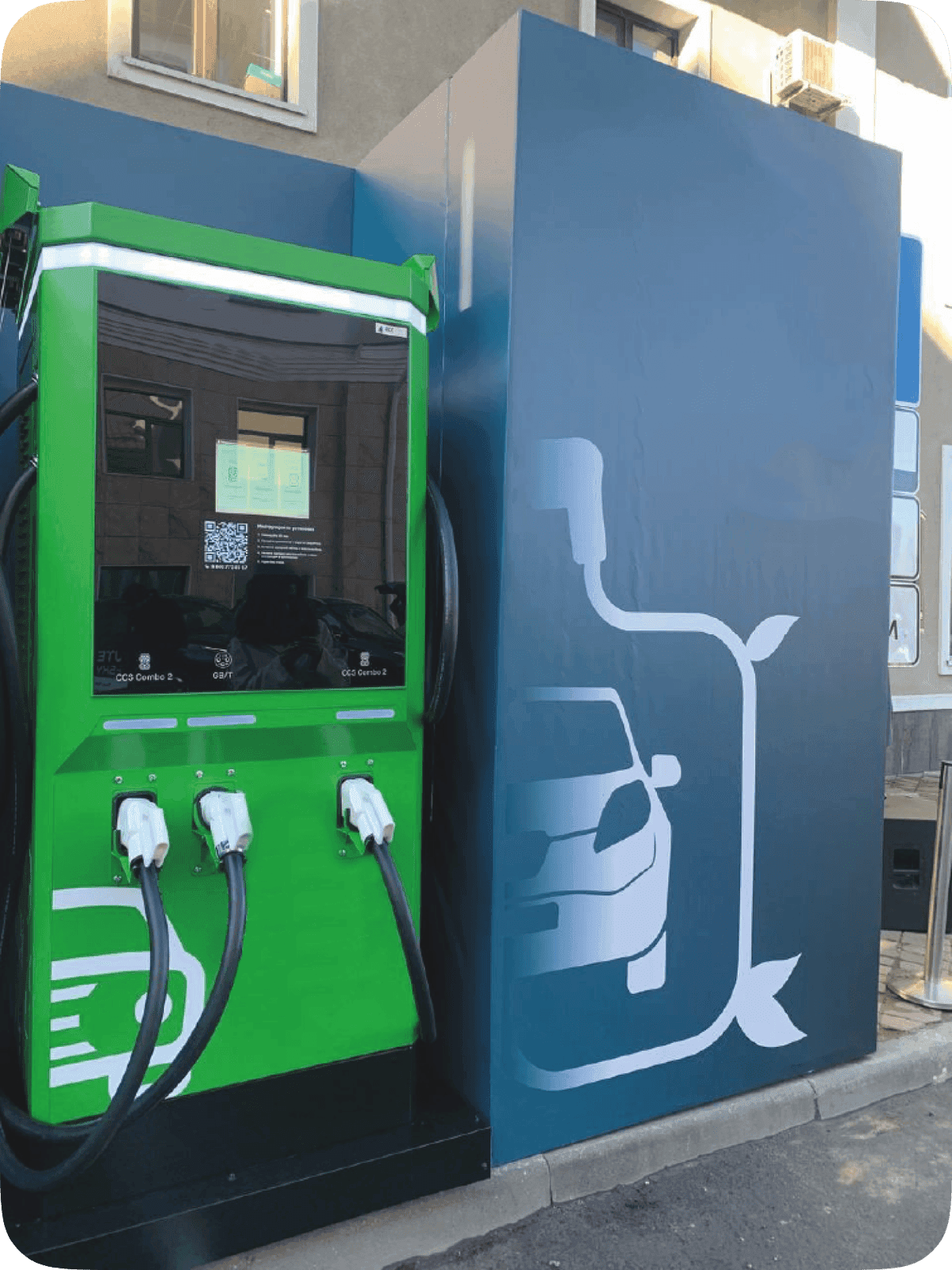
Stations on the map, sessions booked, billed and tracked in the app.
Building management
Ventilation, heating, lifts and other systems monitored from one dashboard, with instant alerts.
Hikvision and Dahua: connected under the project
We connect Hikvision and Dahua IP intercoms, door panels and door controllers to the resident app through the device’s own interface (ISAPI, SIP, API): the call from the panel, opening the door, cameras. It is project work, not a ready-made plug-in for every model, and we confirm the exact model before the contract.
Devices, orchestrator, resident app
Devices
Intercoms, access control, cameras, meters, EV chargers and building systems, from any vendor.
Orchestrator
Unitify connects every device to one dashboard. New hardware plugs in as a mini app, nothing gets replaced.
Resident app
One app for doors, meters, intercom calls and charging. No fifth login to remember.
Questions developers and associations ask
What does a unified access-control system for a residential complex look like?
One digital credential covers the entrance, elevators and parking instead of a separate key, card or code for each, with entries logged centrally.
What should a resident app for a Georgian residential complex include?
Bill payment, requests to the building administrator, building news and, where the intercom is video-enabled, remote door opening from the phone.
What is an amkhanagoba, and does it have legal-entity status?
It is the association of apartment owners the Law of Georgia on Homeowners’ Associations (№5277 of 2007) deems to exist in every building on a single land plot with more than two individually owned apartments — no founding act or registration required. It is not a legal person, but it holds separate property, may open bank accounts and take bank credit, and may sign contracts with third parties in its own name through its chairperson. Owners can run the building through an elected chairperson or elect a professional “hired manager” by a two-thirds vote; either way, a platform can contract directly with the amkhanagoba, not only with a management company or developer. In Georgian and Russian-language usage, ‘management company’ more often means short-term rental management; this page is about building administration.
Which payment rails do Georgian residents already use for building billing?
TBC Bank and Bank of Georgia are the two rails already handling utility and building-fee payment for Georgian residents. Bank of Georgia acquiring is integrated directly into billing; TBC is a rail the platform accounts for when reconciling how residents already pay.
How much does a smart building system cost in a new Georgian complex?
Local integrators do not publish prices, so there is no public market benchmark. Unitify calculates cost per building based on which systems, access, intercom, dispatching, app, are included.
How fast can we launch, and what do you need from us?
Start free with one building: no card and no call. For a full launch, send the building registry — apartments, owners and opening balances — as an Excel file or an export from your current system; we set the building up with you, and residents then add their own apartment in the app and get verified by the management company. How long it takes depends on the shape of your registry and is worked out per building.
We are a developer with our own management company. Does Unitify fit?
Yes — that is the case it is built for: you launch the management company at handover, with the resident app, requests, announcements and billing on one platform. Your own branding is available as a paid white-label option in three formats: branding inside the Unitify app, a separate app under your brand in the App Store and Google Play, or your own app on our SDK and API; the price is set after a short brief.
Which cards can residents pay with?
Card payment is live through Flitt, in production at Ande Tower. Bank of Georgia’s payment API is also integrated: Bank of Georgia’s own cards and Visa, Mastercard or Amex from any issuing bank — check the rollout timing for Bank of Georgia with us.
Can you connect the intercom or access hardware we already have?
Usually yes. If the panel, controller, camera or meter exposes an integration interface (an API, SIP, ONVIF or a Modbus or M-Bus gateway), we connect it to the resident app under the project. Barriers with plate recognition, lift access and in-apartment smart home are handled the same way, as project work. Hardware with no interface cannot be connected, and we check the exact model before you commit. Hikvision and Dahua video intercoms and door controllers are the most common cases here, connected through their own interfaces.
Can the intercom fee appear on the resident’s monthly bill?
Yes. In Unitify billing the intercom fee is a separate line on the resident’s personal account and bill, next to maintenance and utilities, at the rate set by the management company, owners’ association or service company. Whether and how such a fee may be charged depends on local rules and the owners’ decision, so confirm that locally; Unitify only issues the line.
From the blog

Ready to make your next project smarter?
Unitify connects every building system into one platform and one resident app, for new developments and existing buildings alike.