
Noise and Works in an Italian Condominium: What to Do
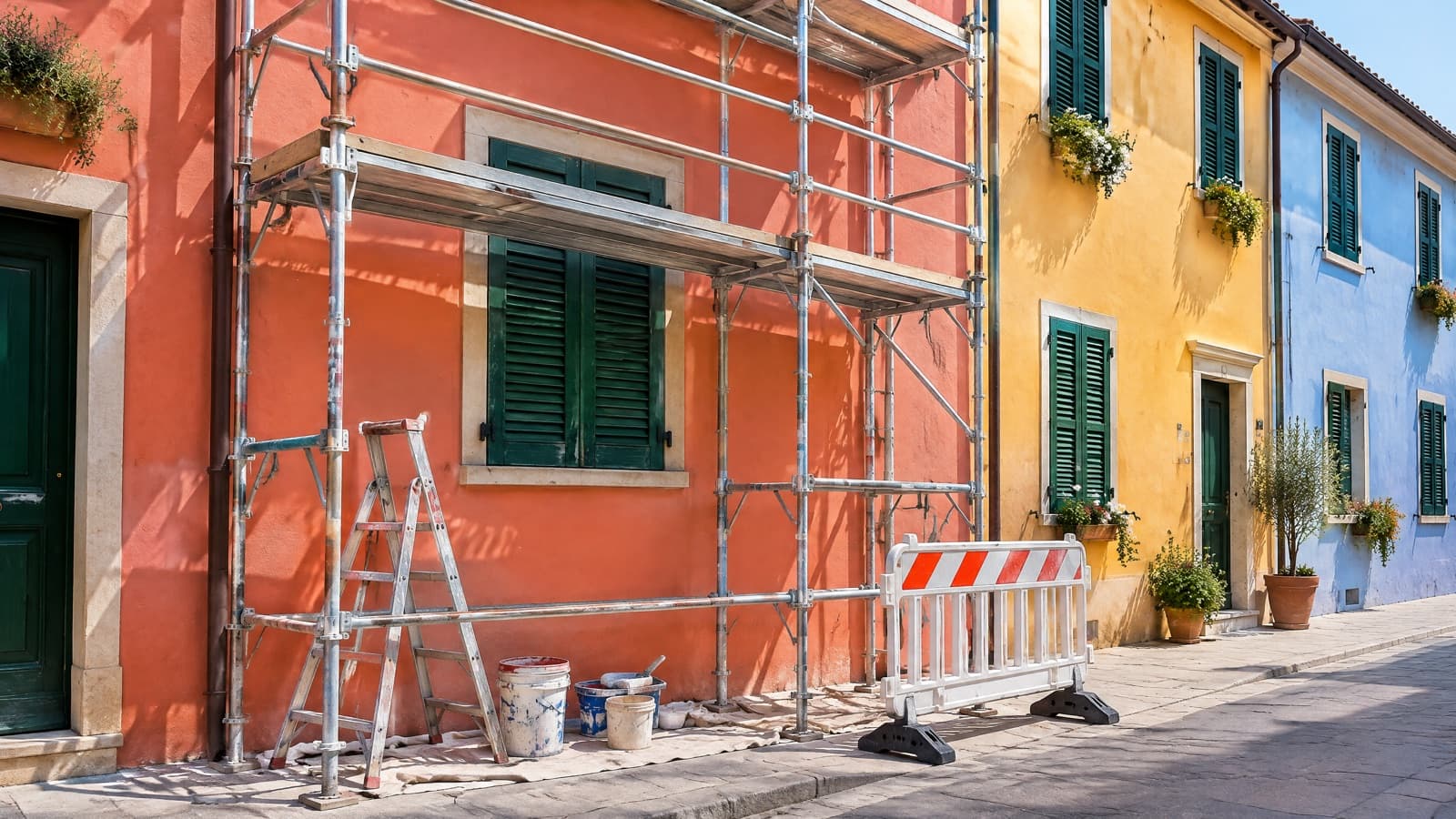
Noise is among the most common causes of argument in a condominium, and works are a frequent source of it. An administrator hears two questions: at what hour can work be done, and who must be told. Both have fewer answers in the law than you might imagine, and it is better to know that before writing a notice. The notices below are in Italian because they are meant for Italian buildings.
Noise: art. 844 and its limits
The Civil Code's reference provision on noise between neighbours is art. 844, on immissioni. It says the owner of a plot "may not prevent immissions of smoke or heat, fumes, noise, shaking and similar propagations coming from the neighbour's plot, if they do not exceed normal tolerability, having regard also to the condition of the places".
Three things can be read with certainty in the text. It speaks of "the neighbour's plot", not of a condominium. The test is "normal tolerability", assessed "having regard also to the condition of the places". And it contains no hours and no decibel thresholds: deciding whether a noise exceeds tolerability is a judgment on the concrete case, and we do not make that judgment here.
The regulation and the municipality can say more
Hours, where there are any, are elsewhere. In the condominium provisions of the Civil Code (arts. 1117-1139) and in the implementing provisions (arts. 61-72) no hours appear, nor the words for noise and quiet. They may be in the condominium regulation or in municipal rules: how they are written and approved is in quiet hours in an Italian condominium, and what the regulation must contain is in the condominium regulation guide.
The law asks the administrator to "see to the observance of the condominium regulation" (art. 1130, no. 1). If the regulation provides a penalty for breaches, art. 70 of the implementing provisions caps it at a sum of up to 200 euros, rising to 800 for repeat offences, and imposing it is decided by the assembly.
The Criminal Code: art. 659
Besides the civil route there is art. 659 of the Criminal Code, "disturbance of people's occupations or rest": it punishes anyone who, "through shouting or noise", disturbs "people's occupations or rest". In the case of the first paragraph the text provides prosecution on complaint by the injured person, with the exceptions indicated. It is not a condominium provision and it does not say at what hour it applies: it applies to the concrete fact. We mention it for completeness; for a real case, speak to a lawyer.
Works at home: what art. 1122 says
For works in a unit the article that counts is 1122. It says the co-owner, in the unit they own, "may not carry out works that damage the common parts or prejudice the building's stability, safety or architectural decorum", and that "in every case prior notice is given to the administrator, who reports to the assembly".
What the article provides, then, is prior notice to the administrator. It does not speak of authorisation by the assembly, it gives no hours and it does not require a notice to neighbours. Everything else depends on the regulation and municipal rules.
Works on the common parts
For works that concern the condominium, art. 1135 gives the assembly extraordinary maintenance and innovations, and says the administrator "may not order extraordinary maintenance works, unless they are urgent, but in that case must report to the first assembly". How works of this kind are funded is in fondo cassa and special works fund.
Two notices ready to use
A works notice tells others what is happening, when and whom to contact. It does not replace prior notice to the administrator and does not make valid hours the regulation does not provide. Square brackets are placeholders.
Notice of works in a unit.
CONDOMINIO [via e numero civico, città]

AVVISO LAVORI IN CONDOMINIO

Si comunica che nell'unità interno [__] saranno eseguiti lavori di
[descrizione] dal [data] al [data], nei giorni e negli orari [__].

I lavori sono stati comunicati in anticipo all'amministratore
(art. 1122 c.c.). Ditta esecutrice: [nome]. Referente: [nome e telefono].

Possibili disagi: rumori [e, se previsto, uso dell'ascensore / delle
scale per il trasporto di materiali].
Per segnalazioni durante i lavori: [recapito].

[Luogo], [data]                              [Proprietario / amministratore]
                                              ____________________
Notice of works on the common parts.
CONDOMINIO [via e numero civico, città]

AVVISO LAVORI SULLE PARTI COMUNI

Si comunica che dal [data] al [data] saranno eseguiti lavori di
[descrizione: es. rifacimento della facciata, manutenzione dell'impianto]
[approvati dall'assemblea del [data] / urgenti, di cui si riferirà alla
prima assemblea].

Giorni e orari di lavoro: [__]. Ditta esecutrice: [nome].
Possibili disagi: [rumori, area di cantiere, accessi limitati].
Per informazioni e segnalazioni: [recapito amministratore].

[Luogo], [data]                              L'amministratore
                                              ____________________
Getting them to residents
A works notice is not a convocation and does not have the channels of art. 66: you can post and send it as you prefer. Unitify's notice generator lets you paste the text and print it in A4: the interface is not yet in Italian, but every text field is free. On Unitify the same notice reaches every owner in the app, by email and on the building website, with read receipts (the app does not yet have an Italian interface; the texts you write stay in Italian), and residents can report a problem during works from the app, with a status visible to the whole firm and closure confirmed to whoever reported.
Which other systems can be connected to the firm is covered in condominium software integrations in 2026.
For reports during works, see also condominium reports: how to manage requests and tickets. If your firm wants to stop redoing the same notices by hand, you can start free from the Unitify page for Italy.
Sources: Civil Code, arts. 844, 1122, 1130 and 1135; implementing provisions of the Civil Code, art. 70; Criminal Code, art. 659, Normattiva, accessed 16.10.2026. The quotations are our translation of the Italian text; the source texts are in the internal pack research/66.
Frequently asked questions
What does the Italian Civil Code say about neighbours' noise?
Art. 844 says that the owner of a plot may not prevent immissions, among them noise, coming from the neighbour's plot if they do not exceed normal tolerability, having regard also to the condition of the places. The provision gives no hours and no decibel thresholds.
Does the law set hours for works in a condominium?
No hours appear in the condominium provisions of the Civil Code (arts. 1117-1139) or in the implementing provisions (arts. 61-72). If they exist, they are in the condominium regulation or in municipal rules, and have to be checked case by case.
Does an owner doing works at home have to tell the administrator?
Art. 1122 says that in the unit they own, the co-owner may not carry out works that damage the common parts or prejudice the building's stability, safety or architectural decorum, and that in every case prior notice is given to the administrator, who reports to the assembly. The article speaks of prior notice, not of authorisation.
Can the administrator order works on the common parts alone?
Not extraordinary maintenance, unless the works are urgent: in that case they must report to the first assembly (art. 1135, second paragraph).
Can noise be a crime?
Art. 659 of the Criminal Code punishes anyone who, through shouting or noise, disturbs people's occupations or rest; in the case of the first paragraph the offence is prosecutable on complaint by the injured person, with the exceptions the article itself provides. It is not a condominium provision, and whether a real case falls within it depends on the facts.
Is a works notice on the board compulsory?
The provisions we examined do not provide a notice to neighbours. They provide prior notice to the administrator for works in a unit (art. 1122). A notice to residents is good practice, and the regulation may require it.