
Brazil Regimento Interno: Printable Model
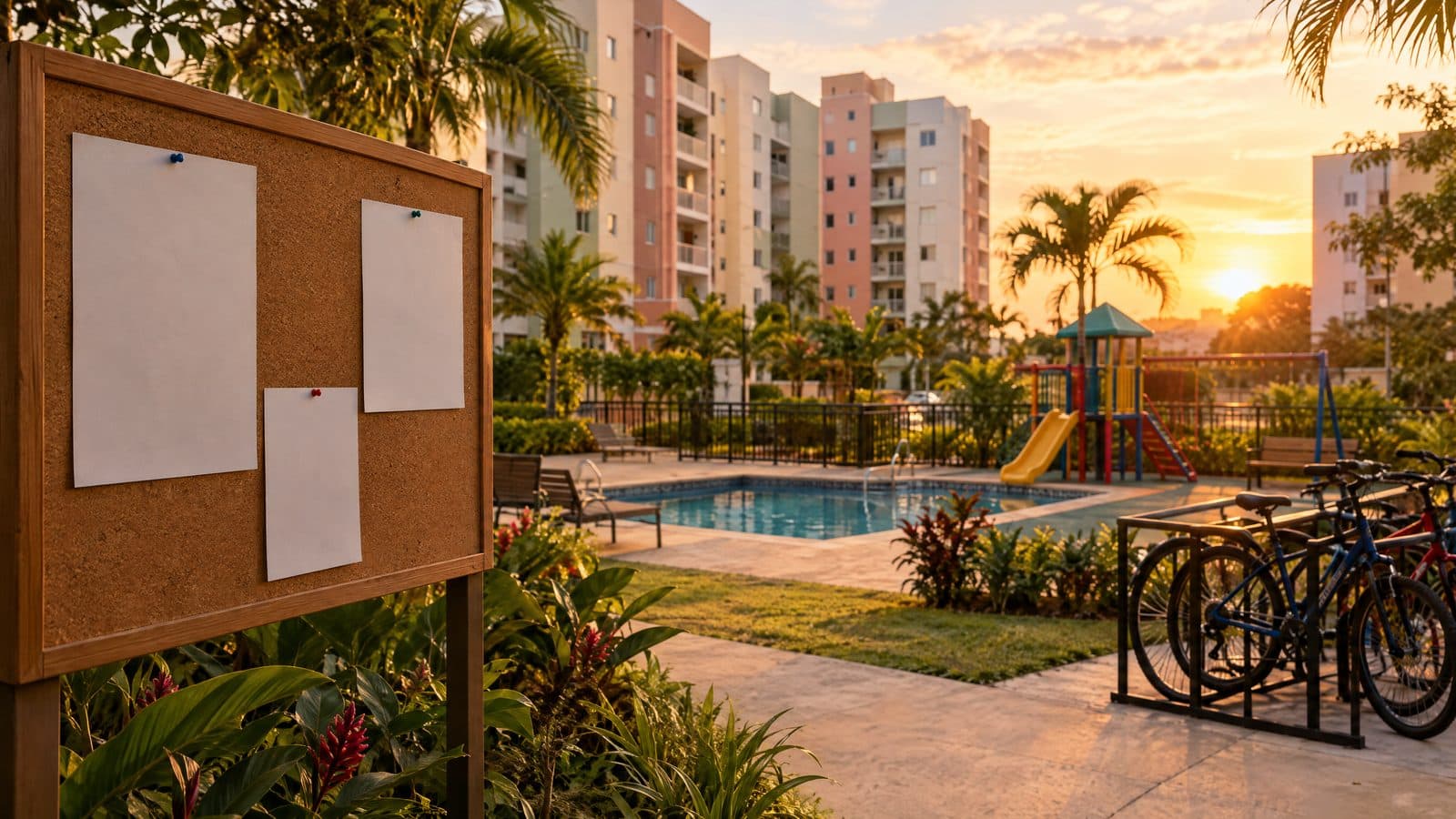
This is the Brazilian counterpart of a set of HOA house rules, and it is written in Portuguese because that is the document a Brazilian condomínio uses. The printable model is on the Portuguese page; below is what it contains and what the Código Civil says about the regimento interno, for readers who need to follow it in English. It is a model, not legal advice: what applies to a condomínio is what its assembly approves within what the convenção determines, and the condominium's lawyer should review a draft first.
What the Civil Code says about the regimento
- The convenção determines it. Art. 1.334, V, lists the regimento interno among the points the convenção determines.
- The annual assembly may change it. Art. 1.350 says the síndico convenes the owners' assembly every year, in the form set by the convenção, to approve the expense budget, the owners' contributions and the accounts, and possibly to elect a substitute for the síndico and to change the regimento interno.
- The síndico enforces it. Among the síndico's duties, art. 1.348, IV, lists complying with and enforcing the convenção, the regimento interno and the assembly's decisions.
- Electronic assemblies. Complementary rules on electronic assemblies may be set in the regimento interno, defined by simple majority of those present at an assembly called for that purpose (art. 1.354-A, § 5º).
What these articles do not give: a model text, a list of chapters, or, outside the electronic-assembly case, a quorum of its own for approving the regimento. That quorum, and how the assembly is convened, are in the condomínio's convenção. See Brazil's convenção de condomínio explained.
What the model contains
The Portuguese model has twelve chapters, with every value, hour and number left as a blank to be filled in by the condomínio:
- General provisions: scope, how the rules are communicated, who settles doubts.
- Quiet hours and coexistence.
- Common areas: pool, gym, playground, party hall, booking and guest limits, responsibility for damage.
- Moves and works: notice, hours, elevator use, rubble.
- Pets.
- Vehicles and parking.
- Front desk, security and visitors.
- Waste and recycling.
- Short-term rentals: left as a blank for the rule the convenção sets.
- Communication: official channels, requests and complaints.
- Breaches and penalties: the model says the sanctions are those in the convenção and the law, and leaves the procedure (written notice, time to respond, who decides) blank.
- Final provisions: how the regimento can be changed (as the convenção provides), omitted cases, entry into force, signatures.
How to use it
- Read the convenção first: it says how the assembly is convened and what quorum applies.
- Fill in only what the condomínio has decided, and copy no values from another building.
- Ask the lawyer which municipal rules apply to hours, pets and works.
- Put the approval or change of the regimento on the assembly's agenda and attach the draft to the notice.
- Record the approved text and the vote in the minutes. The Portuguese ata model is built for that.
- Give each resident the approved, dated version.
How Unitify helps, and what it does not do
Unitify does not write the regimento or decide whether a rule is valid. On the building's website, the convenção, the regimento and other documents sit on the building's page and reach residents in the app. Announcements, such as notice that the regimento changed, reach residents in the resident app, by email and on the building's website, with read receipts. Residents' complaints, such as a noise report, become tracked requests. In resident voting the tool records votes; whether that makes a decision valid depends on the law and on the convenção, and Unitify has no built-in video conferencing.
See the Brazil page, the pricing page or book a demo.
Frequently asked questions
What is a condominium's regimento interno?
It is the set of house rules of a Brazilian condomínio: hours, use of common areas, moves, pets, parking, the front desk. The Civil Code lists the regimento interno among the points the convenção determines (art. 1.334, V).
Who approves or changes the regimento interno?
The assembly of owners. Article 1.350 says the annual meeting, convened by the síndico in the form set by the convenção, is held, among other things, to change the regimento interno. The quorum to approve or change it is not in the articles cited here: check what your convenção says.
What is the difference between the regimento interno and the convenção?
The convenção is the act that constitutes the condomínio; the regimento interno is one of the points it determines (art. 1.334, V). In practice the regimento covers day-to-day routines. If a rule of the regimento seems to conflict with the convenção, take the question to the condominium's lawyer.
What should a regimento interno contain?
The Civil Code articles cited here give no list of chapters. The model below gathers the usual ones with every value left blank: hours, common areas, moves and works, pets, parking, front desk and visitors, waste, short-term rentals, communication and penalties. What applies to a given condomínio is what its assembly approves.
Who enforces the regimento interno?
The síndico. Among the síndico's duties, art. 1.348, IV, lists complying with and enforcing the convenção, the regimento interno and the assembly's decisions.