
Why Small Property Management Teams Need Automation Most
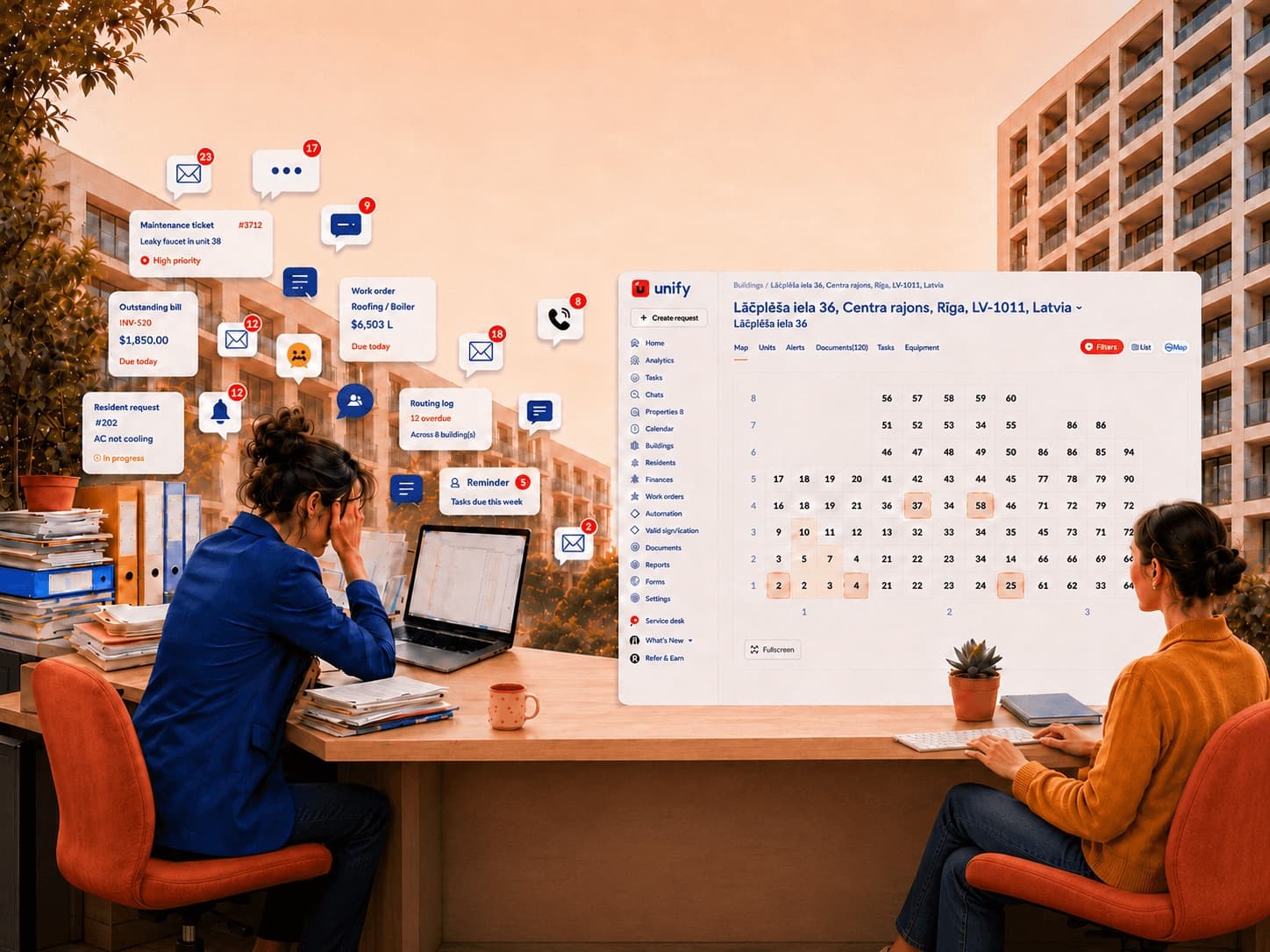
Small property management teams often have the strongest need for automation — and the least time to implement it. This creates a frustrating loop. The team is already busy answering messages, processing resident requests, moving data between systems, preparing reports, resolving billing issues and coordinating contractors. Everyone knows that better tools could save hours of work every week. But introducing a new tool also requires time and attention. So implementation gets postponed until “things calm down.” And in property management, things rarely calm down.
The work that should — and shouldn’t — be automated
In 2026, experienced specialists should not have to spend much of their day doing work that software can handle for them. A good property manager brings something technology cannot replace. They understand the building and its residents. They know how to resolve difficult situations, coordinate different people and make decisions when there is no obvious answer. Their value lies in their experience, judgement and ability to communicate. That is not the work to automate.
What can be automated is much of the routine surrounding it:
- Collecting, categorizing and routing resident requests
- Moving information between people and systems
- Sending notifications and reminders
- Generating and distributing invoices
- Gathering meter readings
- Preparing regular reports
- Tracking recurring maintenance tasks
- Making sure requests, deadlines and important details do not get lost
Automation is not about replacing good specialists. It is about giving them more time for the work that actually requires their expertise and human involvement.
Why implementation is particularly difficult for small teams
Large companies can assign a separate employee or department to introduce a new system. Small property management companies rarely have that option. The same people who are expected to improve internal processes are usually also handling residents, contractors, payments, emergencies and day-to-day operations. Even when the benefits of automation are obvious, implementation competes with tasks that feel more urgent.
This is why technology can easily become one more project for an already overloaded team to manage — instead of reducing the workload. The answer is not to wait for a quieter period. It is to make the change small enough to begin now.
Start with one process
A property management company does not need to redesign all its operations at once. A more practical approach is to identify one repetitive process that consumes a disproportionate amount of time. It might be manually assigning resident requests, repeatedly answering the same questions, collecting meter readings, preparing monthly reports or reminding contractors about recurring work.
Then:
- Choose one routine to improve first.
- Set aside dedicated time for implementation instead of waiting for “free time.”
- Start with a simple setup that works — it does not need to be perfect.
- Measure how much time and manual work it removes.
- Once the process is working, move on to the next one.
This approach makes automation manageable. It also allows the team to see tangible results quickly, rather than spending months preparing for a large transformation.
Technology should reduce the workload from the beginning
This is one of the reasons we built Unitify to be practical for property management companies of any size.
A new system should not become another complex project that an overloaded team has to manage. It should help the company introduce improvements step by step, starting with the process that creates the most unnecessary work. Each automated routine gives property managers more capacity to focus on residents, buildings and decisions that genuinely require their attention.
Book a demo at unitify.com/calendly. We’ll help you identify the first process worth optimizing — and show you how much time your team could save.