
One platform for owners' association (WEG) administration and smart building operations in Germany
Unitify connects video intercoms, access control, cameras, meter readings and a resident app into one system, so a property manager (Hausverwaltung) runs an owners' association (Wohnungseigentümergemeinschaft, WEG) without stitching together separate vendor apps for every building system. Anything that exposes an API or SIP interface is connected under the project: intercoms, access controllers, barriers with plate recognition, lift access, cameras, meters and smart-home devices in apartments.
Built for how a WEG (owners' association) is actually run
One platform built for how a German property manager (Hausverwaltung) runs an owners' association (WEG), day to day.
Built around the WEG (owners' association law), HeizkostenV and GEG, verified against the primary source
Each item links to the primary source, not a summary.
Virtuelle und hybride Eigentümerversammlung — virtual and hybrid owners' meetings (Section 23 WEG)
Under the law of 10 October 2024 (BGBl. 2024 I No. 306), in force since 17 October 2024, owners may resolve by at least three quarters of the votes cast to hold assemblies without physical presence for at most three years from the resolution (Section 23(1a) WEG); the virtual assembly must be comparable to an in-person one in participation and exercise of rights. The simple-majority option to allow electronic participation in an in-person assembly (hybrid) is unchanged (Section 23(1) sentence 2 WEG).
Section 23 WEG, gesetze-im-internet.de ↗Transition rule through 2028 (Section 48(6) WEG)
If a resolution under Section 23(1a) WEG is passed before 1 January 2028, at least one in-person assembly per year must still be held through the end of 2028, unless the owners waive this unanimously. A breach of this duty does not invalidate or make contestable resolutions passed in a virtual assembly.
Section 48 WEG, gesetze-im-internet.de ↗Kostenverteilung in der WEG (cost allocation, Section 16 WEG) and Betriebskosten (service charges, BetrKV)
Inside a WEG, cost allocation follows Section 16(2) WEG: each owner bears the community’s costs in proportion to their Miteigentumsanteile (co-ownership shares), unless an agreement (typically the Teilungserklärung, the declaration of division) or a resolution under Section 16(2) sentence 2 WEG sets a different key. The Betriebskostenverordnung (service charges ordinance) is tenancy law: it defines which recurring costs a landlord may pass through to a tenant — the catalog in Section 2 BetrKV covers items such as property tax, water and drainage, heating and hot water, elevator, cleaning, insurance and caretaker (Hauswart) — and expressly excludes management and maintenance costs (Section 1(2) BetrKV). Managers therefore use the BetrKV catalog where a unit is let, for the tenant pass-through, not as the allocation key for Hausgeld (owners' advance contribution).
Section 16 WEG, gesetze-im-internet.de ↗Monthly consumption information (HeizkostenV)
Where a building has remote-readable heating and hot water meters installed, the Heizkostenverordnung has required monthly consumption information to residents since 1 January 2022, not just an annual statement. Buildings without remote-readable meters are not covered by this specific obligation.
Section 6a HeizkostenV, gesetze-im-internet.de ↗Energy documentation (GEG)
The Gebäudeenergiegesetz requires an Energieausweis (energy performance certificate) on sale or new letting, and sets a renewable-energy share for new heating systems. Its building-automation and energy-monitoring mandate (Section 71a GEG) is a separate provision that applies only to non-residential buildings with a heating, cooling or combined system above 290 kW, with a 31 December 2024 deadline, not to residential WEG (owners' association) buildings.
Section 71a GEG, gesetze-im-internet.de ↗The hardware layer, wired into your platform
Intercom, access, video, meters and EV charging connect through mini apps, alongside your requests and your existing accounting software.
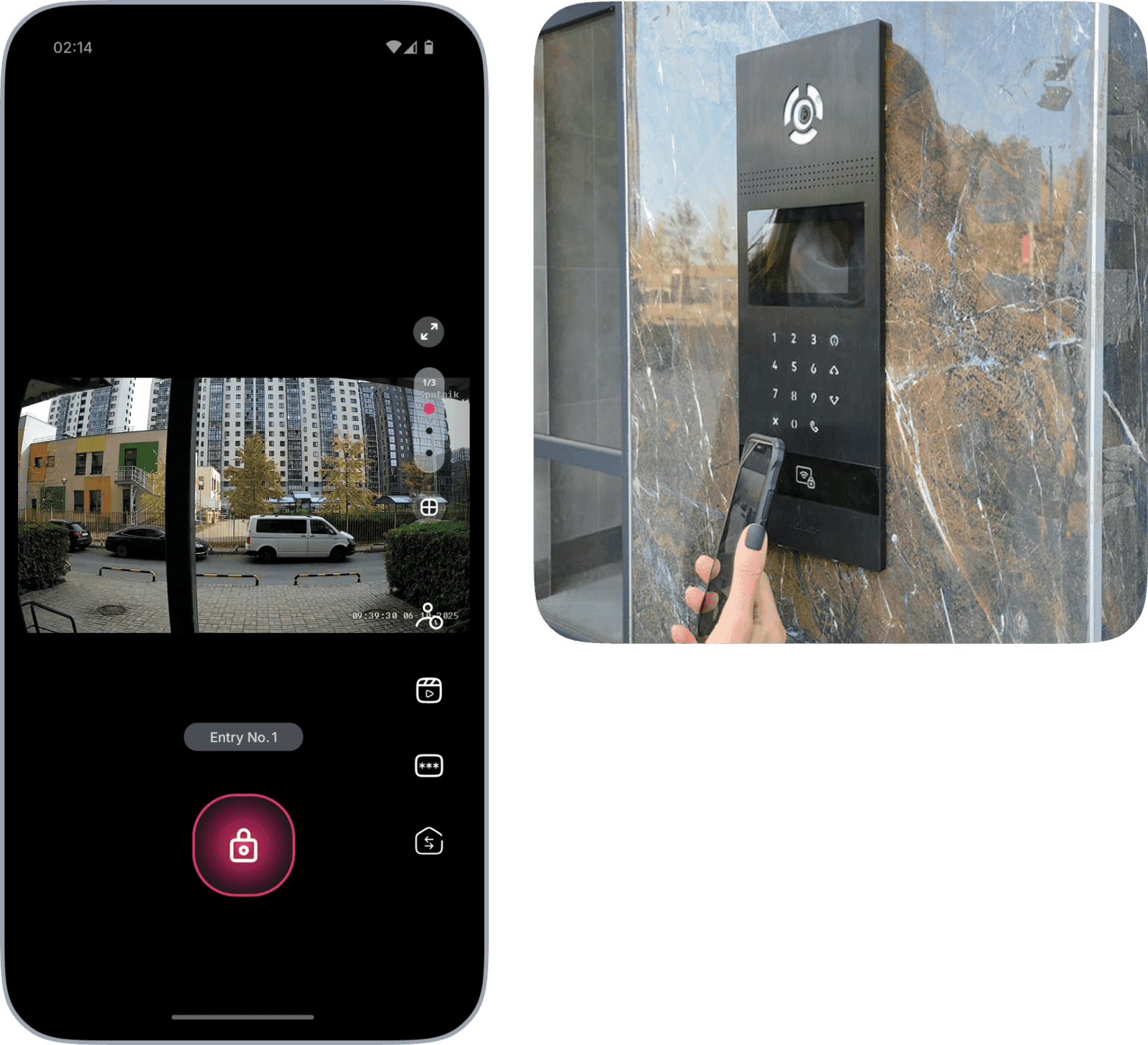
Digital intercom
Calls go straight to the resident’s phone. Entry by app, BLE tag or face.
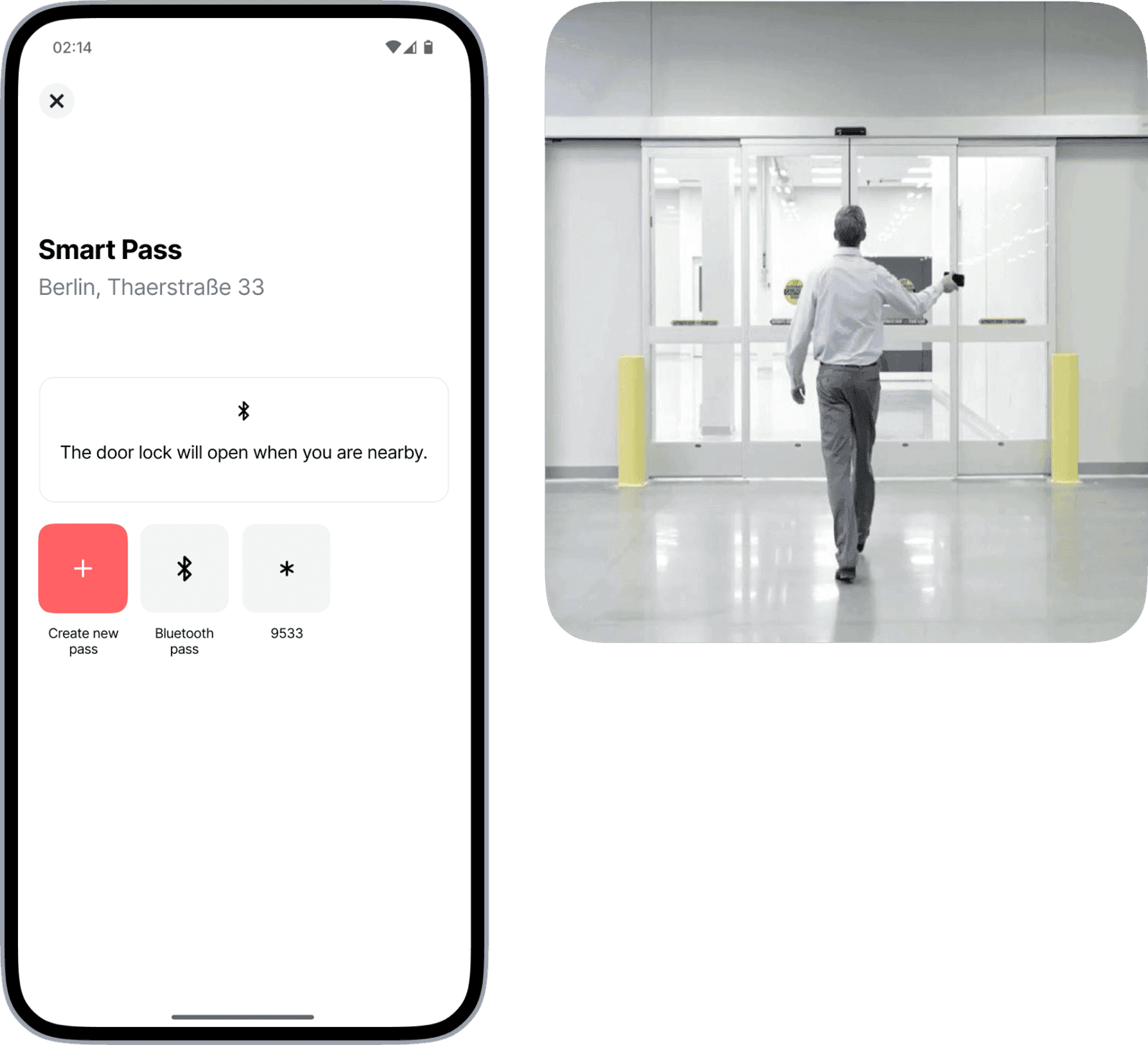
Access control
Contactless entry by phone or tag. Vehicle access by plate recognition.
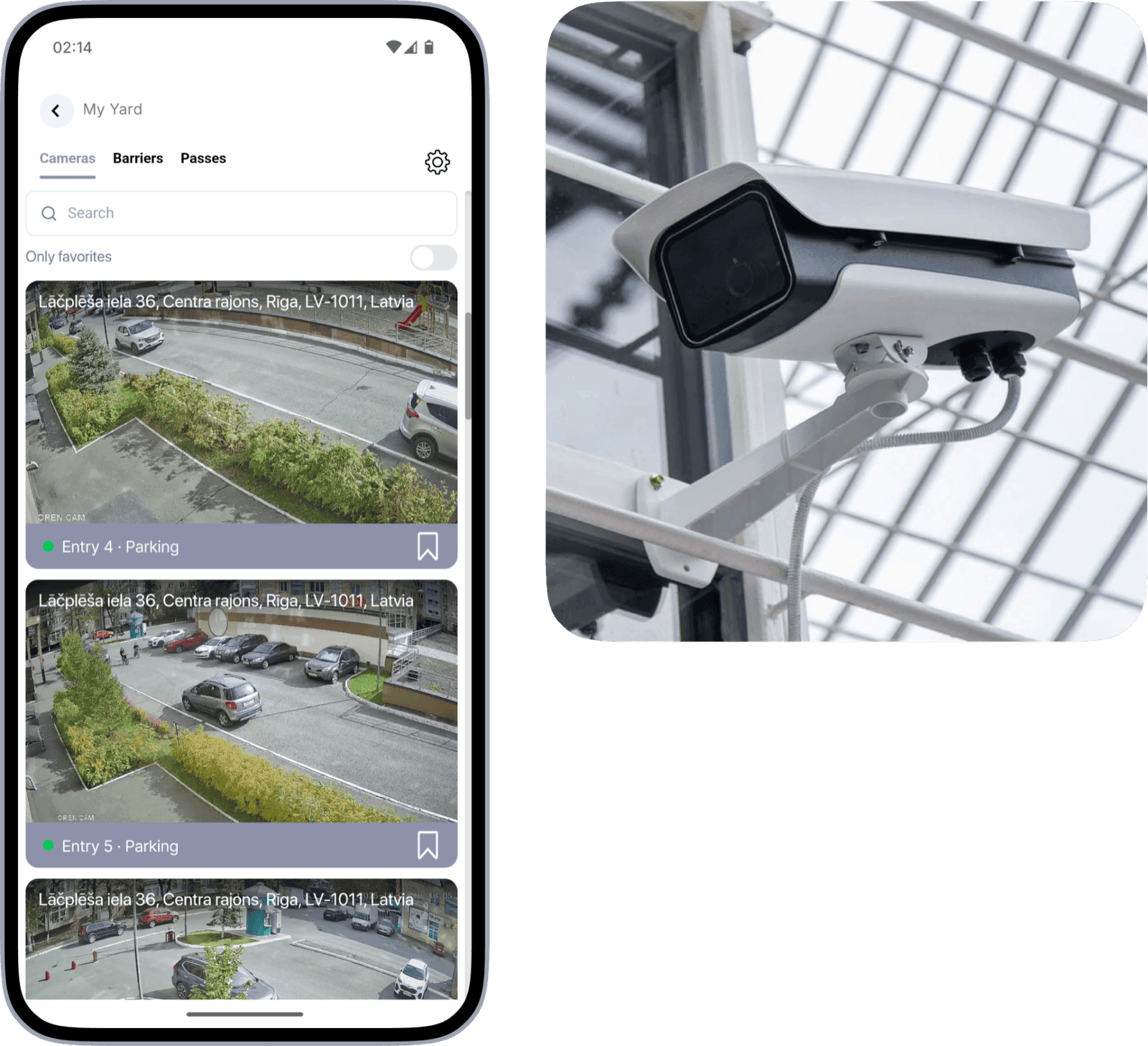
Video surveillance
Live cameras, digital archives and plate recognition at the gate.
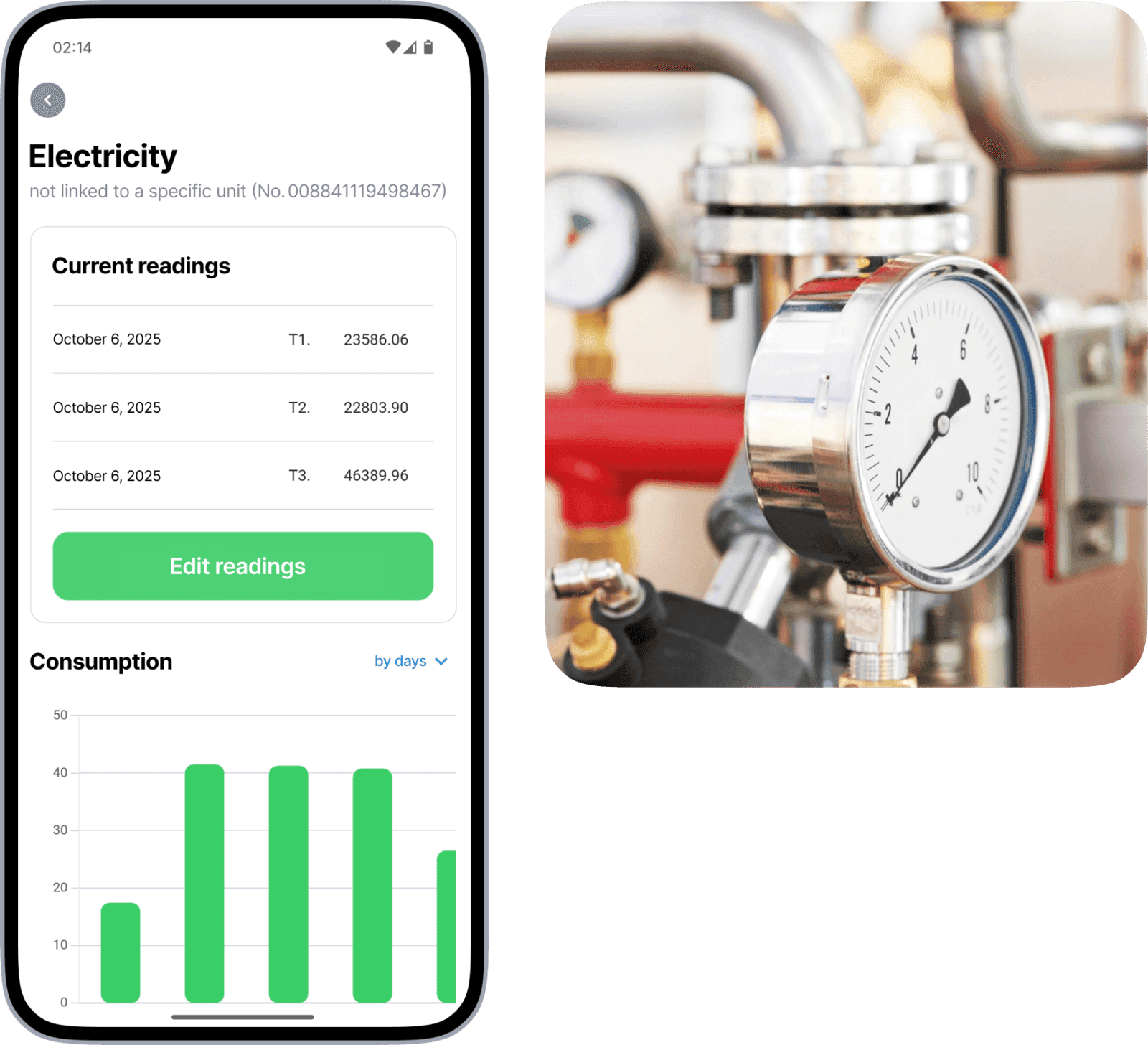
Meter telemetry
Readings come from residents in the app, from a file or over the API from your metering system. Smart meters that expose an interface are connected under the project.
EV charging
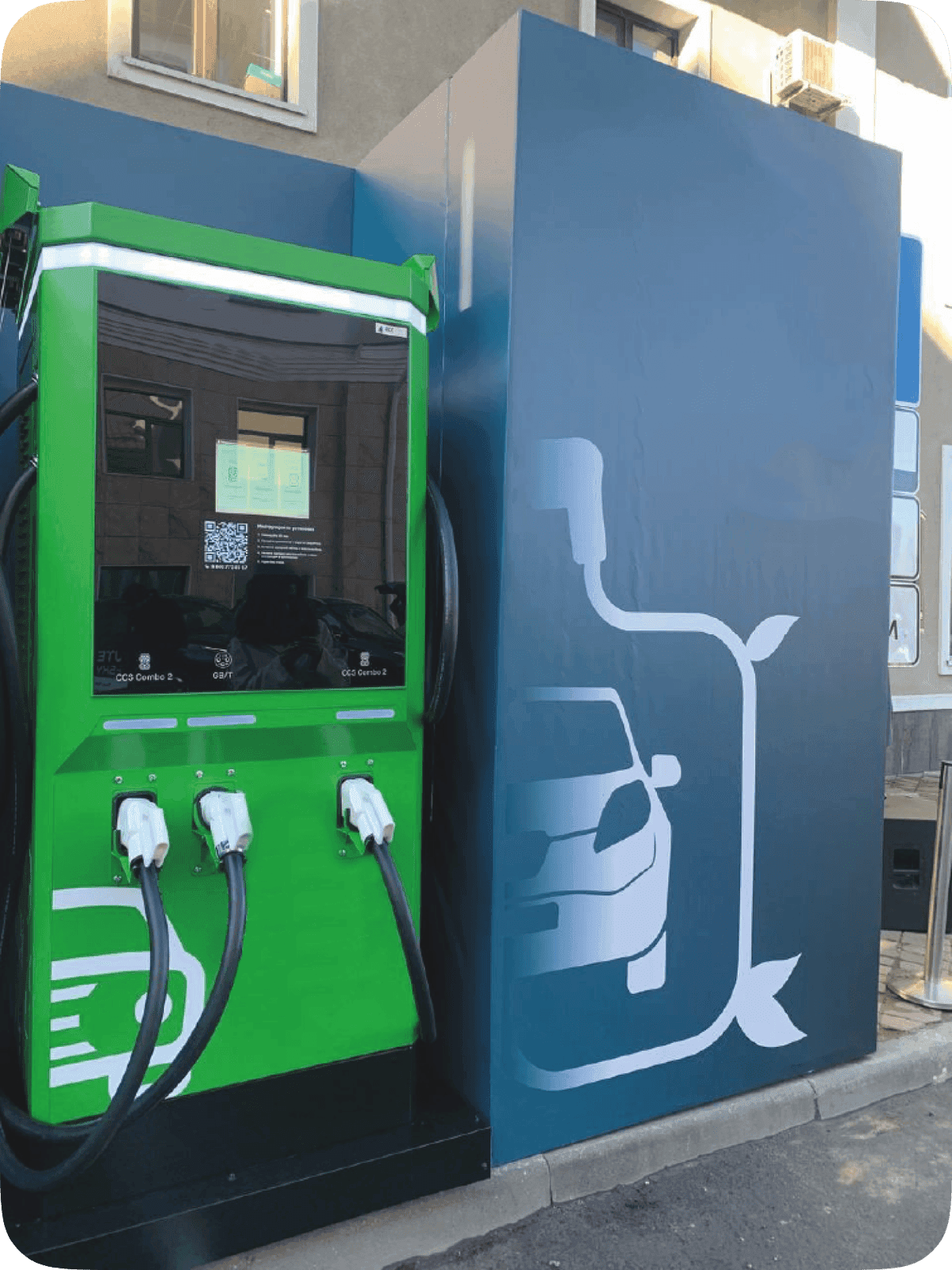
Stations on the map, sessions booked, billed and tracked in the app.
Building management
Ventilation, heating, lifts and other systems monitored from one dashboard, with instant alerts.
Devices, orchestrator, resident app
Devices
Intercoms, access control, cameras, meters, EV chargers and building systems, from any vendor.
Orchestrator
Unitify connects every device to one dashboard. New hardware plugs in as a mini app, nothing gets replaced.
Resident app
One app for doors, meters, intercom calls and charging. No fifth login to remember.
Questions German property managers (Hausverwaltungen) ask
What is a WEG-Verwaltung (owners' association administration) and what does it actually do?
It is the administration appointed by a Wohnungseigentümergemeinschaft (owners' association, WEG) to run the building day to day: collecting Hausgeld (owners' advance contribution), paying shared bills, keeping the maintenance reserve, preparing the annual Hausgeldabrechnung (statement of the year's contributions and costs) and organizing the Eigentümerversammlung (owners' meeting).
Is a virtual owners’ assembly allowed under German law?
Yes, under the law of 10 October 2024 (BGBl. 2024 I No. 306), in force since 17 October 2024: owners can resolve by at least a three-quarters majority of the votes cast to hold assemblies without physical presence for at most three years (Section 23(1a) WEG), provided the virtual assembly is comparable to an in-person one in participation and exercise of rights. If the resolution is passed before 1 January 2028, at least one in-person assembly per year is still required through the end of 2028, unless the owners unanimously waive it (Section 48(6) WEG). A simple-majority option to allow electronic participation in an in-person assembly already existed and is unchanged.
Which costs count as umlagefähige Betriebskosten (service charges that can be passed on to tenants)?
Inside a WEG, cost allocation follows Section 16(2) WEG: each owner bears the community’s costs in proportion to their Miteigentumsanteile (co-ownership shares), unless an agreement (typically the Teilungserklärung, the declaration of division) or a resolution under Section 16(2) sentence 2 WEG sets a different key. The Betriebskostenverordnung (service charges ordinance), by contrast, only lists what a landlord may pass through to tenants — the catalog in Section 2 BetrKV covers items such as property tax, water and drainage, heating and hot water, elevator, cleaning, insurance and caretaker (Hauswart) — and it expressly excludes management and maintenance costs (Section 1(2) BetrKV); managers use that catalog only where a unit is let.
Does heating consumption have to be reported monthly?
Only where remote-readable meters are installed. Since 1 January 2022, the Heizkostenverordnung requires monthly consumption information to residents in that case, on top of the annual statement.
What is the difference between Sondereigentum (individual ownership) and Gemeinschaftseigentum (common ownership)?
Sondereigentum is the individually owned unit, the parts an owner can renovate or sell on their own. Gemeinschaftseigentum is everything shared by the WEG: structure, roof, facade, stairwells, and the building’s technical systems, decided on collectively.
Can you connect the intercom or access hardware we already have?
Usually yes. If the panel, controller, camera or meter exposes an integration interface (an API, SIP, ONVIF or a Modbus or M-Bus gateway), we connect it to the resident app under the project. Barriers with plate recognition, lift access and in-apartment smart home are handled the same way, as project work. Hardware with no interface cannot be connected, and we check the exact model before you commit.
From the blog

Ready to make your next project smarter?
Unitify connects every building system into one platform and one resident app, for new developments and existing buildings alike.