
Apartment Owners’ General Meeting and Survey in Latvia: How to Convene and Vote
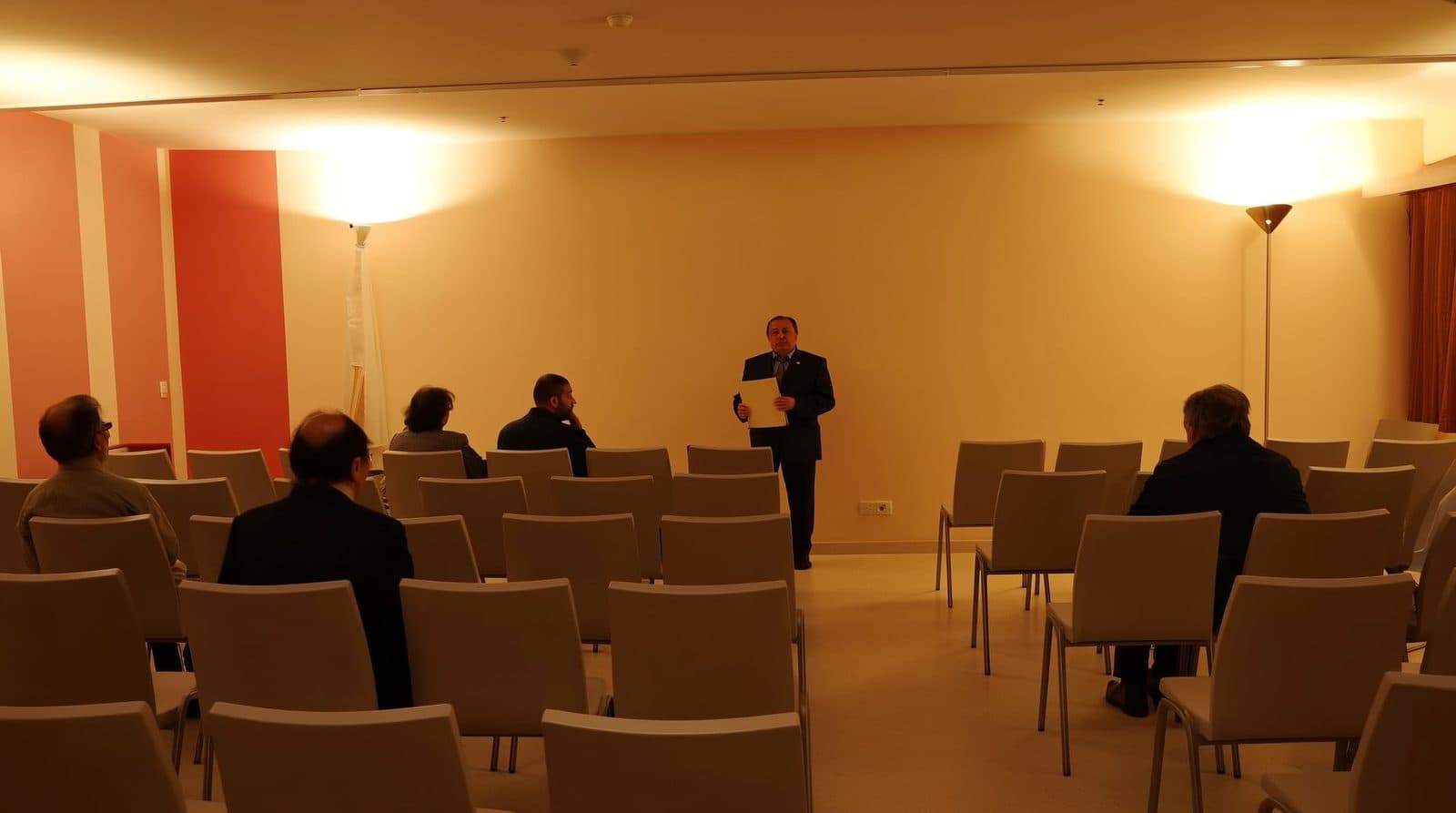
The short answer. In Latvia the owners' community can take decisions at a general meeting, by written survey, or by otherwise agreeing among themselves — all three have equal legal force. Owners must be invited to a meeting at least seven days ahead; it has power to decide if owners representing more than half of all apartment properties take part. A survey's voting window runs from 14 to 180 days. Voting can also be done electronically, in the Construction Information System (BIS).
Three ways to decide, and what they have in common
Art. 18 of the Law on Apartment Property (Dzīvokļa īpašuma likums) says the community can decide the questions within its competence: 1) at a general meeting (art. 19), 2) without convening one, by written survey (art. 20), or 3) by otherwise agreeing among themselves (art. 21). All decisions have equal legal force however they are taken, but the community may decide that particular questions are settled only at a general meeting.
Every decision is put in writing, and a decision counts as taken at the moment the meeting or voting protocol is signed. Decisions take effect the day after they are notified unless the community has decided otherwise, and count as notified from the moment they are signed in BIS or attached to BIS. The organiser of a meeting or survey must also inform the manager of it, and send the decision to the manager within one month of the day it was taken.
Who has how many votes
- Each apartment owner has as many votes as the number of apartment properties they own — not by floor area or co-ownership share.
- If one owner holds more than half of the apartments in the house, that owner has 50 percent of all votes.
- If a property belongs to two or more co-owners, they authorise one person, who has one vote.
- A power of attorney is made in writing; an owner can also issue or revoke it electronically in BIS. If it was issued outside BIS, the house-file keeper registers it in BIS on the owner's request.
How many votes a decision needs
By default a decision binds every owner if owners representing more than half of all apartment properties in the house vote for it — not half of those present. For some questions the law requires all owners' votes (for example to establish pre-emption rights), and the community may itself set a higher required number of votes. See arts. 16 and 17 for the specific thresholds.
The general meeting: from invitation to minutes
- Invitation. Each apartment owner and the manager must be invited at least seven days ahead in writing or in another way set by the community. The invitation states the place, time, agenda and the conditions for taking decisions. For sending an invitation to a meeting or information about a survey, the law sets an order of channels: e-mail first, then the official electronic address (if the owner has created one), and only then the correspondence address or the apartment's address. Owners, for their part, must supply current contact data — a phone number, an e-mail and a correspondence address if it differs.
- Running the meeting. The procedure for convening and holding the meeting, including by electronic online means, is set by the community.
- Voting before the meeting. An owner can vote before the meeting — in writing to the organiser, or in BIS if the meeting was convened using BIS functionality. If the owner then attends and votes at the meeting, the earlier vote is cancelled.
- Quorum. The meeting has power to decide if the owners entered in the participant registration list represent more than half of all apartment properties. The list counts three categories: those who voted beforehand and do not attend, those attending in person, and those attending by electronic online means.
- Minutes. The minutes must show each owner's vote — "for" or "against" — on each agenda item. If the meeting was convened through BIS, the organiser has 14 days to prepare the minutes, and the chair and the minute-taker sign them within 7 days with BIS's e-signing tool.
- Objections. If an owner has not objected within 14 days of the minutes being approved to the vote recorded for them, the owner is taken to agree; objections can also be made through BIS.
If quorum fails: the repeat meeting
If the meeting could not decide for lack of quorum, a repeat meeting can be convened within a month. It has power to decide if the registered owners represent more than one third of all apartment properties. The agenda may include only questions that would have needed no more than a majority of all apartment properties at the original meeting and that were on the original agenda. A decision needs "for" votes from more than half of the owners of the properties represented at the repeat meeting, and takes effect one month after it is notified — unless within that time the community, at a newly convened meeting or by survey, has decided otherwise. These rules do not apply where the original meeting or survey failed for lack of quorum before 1 November 2024.
The written survey: when you don't need a meeting
The organiser can be an owner, a person the community has designated, or the manager. The organiser sends each owner the draft decision, the decision conditions and the related documents in writing, and names the period in which owners may vote "for" or "against" — no shorter than 14 and no longer than 180 days. A survey has taken place if more than half of all owners in the house have voted "for" or "against" in writing. The organiser sends the voting protocol to all owners within five working days, and within 14 days adds it, with each owner's vote on each question, to the house file in BIS. A repeat survey can be held within a month (but not earlier than two days after the first); it is valid if owners representing more than one third of all apartment properties in the house have answered, and a majority of those who answered decides.
The manager has a duty to organise a written survey when a co-owner of the house, or an apartment owner, makes a written request and the question concerns management activities.
Electronically, in BIS
If a survey is run using BIS functionality, the owner votes with BIS's e-signing tool, and the community sets how owners who cannot use BIS vote. A meeting can also be convened through BIS, in which case advance votes can be cast directly in BIS. A decision counts as notified when it is signed in BIS or attached to BIS.
Why the evidence matters
The law allows decisions to be challenged. A court may declare a decision invalid if the decision, or the procedure by which it was taken, contradicts the law or the procedure the owners set. The claim must be brought within three months of the day the owner learned or should have learned of the decision, but no later than a year after it was taken; if a decision is contrary to law, a court can be asked to declare it invalid at any time (art. 24, in force from 29 May 2026). That is why the individual votes recorded in the minutes, the notification dates and proof of the invitation decide whether a decision stands.
Template: notice and minutes
The templates below are ours, based on the requirements of art. 19 of the Law on Apartment Property. They are not an official form and need adapting to your house's procedure.
Invitation to a general meeting of apartment owners
- Residential house: [address]
- Meeting organiser: [name or company name, contacts]
- Place and time: [place or online link], [date] at [time]
- Agenda: 1. [question]; 2. [question]; 3. [question]
- Conditions for taking decisions: [for each question, the number of votes required, for example more than half of all apartment properties]; voting before the meeting [possible / not possible] [how]
- Draft decisions and documents: [attached / where to read them]
- Invitation sent: [date, at least seven days before the meeting], to [e-mail / official electronic address / correspondence address]; copy to the manager [name, contacts]
General meeting minutes
- Residential house: [address]
- Date and time: [date, time]
- Format: [in person / online / hybrid]
- Organiser: [name]; chair: [name]; minute-taker: [name]
- Registration: voted before the meeting [number]; in person [number]; online [number]. [Number] of [total] apartment properties represented — quorum [reached / not reached] (more than half).
- Question 1: [text of decision]. Vote by apartment: apt. [no.] — for; apt. [no.] — against; … Total: for [number], against [number]. Decision [carried / not carried] against [the threshold that applies].
- Question 2: [same]
- Signatures: chair [signature]; minute-taker [signature]
- After the meeting: send the decision to the manager within a month; decisions and minutes are to be prepared or added in BIS under arts. 8 and 8.1 of the Law on the Administration of Residential Houses (14-day limit).
If you are preparing an A4 notice for residents, our free notice generator helps.
How Unitify handles it
Unitify's voting tool lets the manager create a Meeting (a formal owners' vote) or a Survey, set the building, the voting period and the questions; residents vote from the app, and the management company sees participation and results as they come in. Instead of retyping invitations and hunting for addresses, contact data and voting results sit in one place.
What Unitify does not do: the tool does not by itself make a meeting legally valid, it has no built-in video conferencing (for a virtual meeting you can use, for example, Zoom or Google Meet where the community has provided for it), and we do not claim an e-signature is available. Nor does it replace BIS — preparing or attaching decisions and minutes in BIS still happens in BIS. Unitify helps prepare and maintain the data you work with.
See also Unitify in Latvia and pricing; there is a free plan.
Related reading
- Latvian house file and BIS: what goes in and who keeps it
- Management fee: how it is calculated and whether VAT applies
- Managers' register: how to check a manager
Based on arts. 10, 16–20.3 and 24 of the Law on Apartment Property (redaction from 29 May 2026) and art. 14 of the Law on the Administration of Residential Houses (redaction from 16 July 2025), as published on likumi.lv. Latvian laws are amended often — check the current redaction before you rely on this. This is not legal advice.
To see how Unitify voting works on your building, book a demo.
Frequently asked questions
Is a general meeting mandatory, or can decisions be taken by survey?
The owners' community can take decisions at a general meeting, by written survey, or by otherwise agreeing among themselves, and all decisions have equal legal force. The community may decide that certain questions can only be settled at a general meeting; a survey is then not available for those questions.
How many days' notice must be given of a general meeting?
Each apartment owner, and the manager, must be invited at least seven days beforehand in writing or in another way set by the community. The invitation states the place, time, agenda and the conditions for taking decisions.
What quorum does a general meeting need?
The meeting has power to decide if the owners entered in the participant registration list represent more than half of all apartment properties. The list counts those who voted before the meeting, those attending in person, and those attending by electronic online means.
What happens if a general meeting fails for lack of quorum?
A repeat meeting can be convened within a month; it has power to decide if the registered owners represent more than one third of all apartment properties. It can decide only questions that would have needed no more than a majority of all apartment properties at the original meeting and that were on the original agenda; a majority of the represented owners carries a decision, and it takes effect one month after it is notified.
When does a survey count as held?
When more than half of all the owners in the house have voted "for" or "against" in writing. The voting period may not be shorter than 14 days or longer than 180 days after the draft decision is sent.
Can owners vote electronically?
Yes, in the Construction Information System (BIS). An owner can cast a vote before the meeting in BIS if the meeting was convened using BIS functionality; a survey can be run in BIS, and the owner then votes with BIS's e-signing tool. The community sets how owners who cannot use BIS vote.