
A turnkey smart building platform for developers in Croatia
Unitify connects access control, video intercoms, dispatching and a resident app into one platform for developers building residential complexes in Zagreb and beyond, and for the upravitelj who runs the building afterward.
Built around Croatia's new Law on the Management and Maintenance of Buildings
One platform built for the Zakon o upravljanju i održavanju zgrada and the upravitelj (manager) it makes responsible for the building's separate account, its 24/7 emergency channel and its filings into two state registers.
Payment rails already in use
Croatian building charges run on the payment methods residents already use for recurring bills. Card payments run through Unitify's integrated Stripe acquiring.
Stripe
Card payments processed through Unitify's Stripe integration.
HUB 3A
Croatia has one national standardised payment slip — the HUB 3A — with a published PDF417 2D barcode format maintained by the Croatian Banking Association, euro-denominated since 1 January 2023, carrying the payee's IBAN, amount, currency, reference number and a purpose code.
KEKS Pay
Erste banka's payment app delivers bills from more than 110 companies and cities into the app on its own account, and works whatever bank the payer uses.
Aircash
An app with bill payment and a prepaid card, usable without a bank account — a market payment option, not a Unitify integration.
Built around Croatian housing law, verified against the primary source
Every claim below links to the primary-source citation it is verified against, not a summary.
A new law, in force since 1 January 2025 (arts. 1, 4, ZUOZ)
Croatia rewrote the rules for apartment buildings: the Law on the Management and Maintenance of Buildings has applied since 1 January 2025. The law covers residential buildings of four apartments or more, mixed residential-commercial buildings, commercial buildings and block garages, and it sets the common parts, the maintenance regime, the minimum reserve fund and the duties of the co-owners, their representative and the manager. Croatian decisions are counted in co-ownership shares, not in heads, and the law names three majorities: more than half, more than two thirds, and a qualified majority of more than 80%.
Arts. 1, 4, Zakon o upravljanju i održavanju zgrada (ZUOZ), zakon.hr ↗The building is now a legal person, with its own tax number (arts. 7, 8, 14, 36, 61, ZUOZ)
Since 2025 a Croatian apartment building is a legal person in its own right — the community of co-owners — with its own name, its own address and its own tax number, able to contract, to sue and to be sued. The community's property is the money on the reserve-fund account, and its legal personality begins the day it is entered in the state Register of Communities of Co-owners. Every building must have an inter-owner agreement setting the shares, how the reserve fund is collected and spent, the house rules and how the common areas are used. It is concluded on more than half of the shares, it binds every co-owner, it reaches the manager within 15 days, and the manager files it into the state register. A manager in Croatia is jointly and severally liable with the community and the co-owners for damage to third parties, and the one way out is proving it proposed the necessary works to the co-owners in writing and they declined. Every Croatian building has two years from 1 January 2025 to conclude a new inter-owner agreement and a new management contract, and the old ones cease to apply at the end of that period.
Arts. 7, 8, 14, 36, 61, Zakon o upravljanju i održavanju zgrada (ZUOZ), zakon.hr ↗The manager: compulsory, unlicensed, and a ring-fenced account per building (arts. 47, 49, 50, 52, ZUOZ)
Croatian co-owners must entrust management to a manager — and a developer of a new building must appoint one within 30 days of the use permit becoming final. Any legal or natural person registered for the activity of real-estate management may be a building manager in Croatia. The law sets no licence, no examination and no qualification level. The manager must open and keep a separate account for each building and run each community's business apart from its own accounts — and if the manager goes bankrupt or is enforced against, the building's money is out of reach. Croatian law requires the manager to make emergency repairs possible every day of the year, around the clock, and to secure an emergency repair within three hours of it being reported. Where a building has not chosen a manager, the mayor appoints one by decision through a public call, and any firm registered for the activity may bid.
Arts. 47, 49, 50, 52, Zakon o upravljanju i održavanju zgrada (ZUOZ), zakon.hr ↗Decisions: five days' notice, and a statutory e-mail route (arts. 37, 39, 40, ZUOZ)
A Croatian building must hold a co-owners' meeting at least once a year, and the law fixes its agenda: the annual management and maintenance report, next year's maintenance programme, and the multi-year programme. Notice of a meeting is five days, delivered to the letterbox or the home address, or by e-mail where more than half the shares have agreed to that channel — and in every case posted on the building's noticeboard as well. Where a meeting cannot be convened, Croatian law lets a decision be taken by collecting signatures on a written decision — or, at a co-owner's own request, by e-mail with proof of identity or a qualified electronic signature. Such a decision binds every co-owner. Every management decision the co-owners take is filed by the manager into the state register.
Arts. 37, 39, 40, Zakon o upravljanju i održavanju zgrada (ZUOZ), zakon.hr ↗Pričuva: one pot, a statutory floor, and monthly payment (arts. 28, 29, ZUOZ)
The reserve fund is charged on each unit's value area or its land-register share, and the inter-owner agreement may set a double rate for commercial units, short-term-let apartments and apartments let to large groups. In Croatia the reserve fund is one pot: it pays maintenance, emergency and necessary repairs, insurance, common-parts electricity, loan repayments, litigation and lawyers' costs — and the manager's own fee. Croatian co-owners pay into a separate reserve-fund account for their building, and they pay monthly. Croatia sets a statutory floor for the reserve fund: 0.54% of the published reference construction price per square metre of value area per year, and the annual programme may not set a monthly figure below one twelfth of it. If a Croatian building fails to adopt an annual maintenance programme, the co-owners owe five times the last agreed reserve-fund amount.
Arts. 28, 29, Zakon o upravljanju i održavanju zgrada (ZUOZ), zakon.hr ↗Arrears and the state registers: an invoice as an enforcement instrument, no state money platform (Ovršni zakon arts. 31, 39; ZUOZ arts. 9, 11, 57)
Croatian law charges default interest on late payment automatically, with no clause needed in any contract: the European Central Bank reference rate plus three percentage points where a consumer is involved, reset every six months. In Croatia a management invoice is itself an enforcement instrument. The manager does not need a judgment first: it files on the invoice, and the debtor receives a payment order with an eight-day deadline. Croatian law lists 23 separate manager offences, from failing to keep the separate building account to failing to pursue arrears, with fines from €700 to €5,500 for a company — though the municipal inspector must issue a written warning and a period to put things right before any fine. Croatia now runs two national public registers for apartment buildings, both kept by the State Geodetic Administration and both filed electronically: a Register of Communities of Co-owners and a Register of Building Managers. Croatia has no state platform for housing charges. The registers cover identity, contracts and decisions; how residents are billed and how they pay is a commercial question.
Ovršni zakon (OZ) arts. 31, 39; Zakon o upravljanju i održavanju zgrada (ZUOZ) arts. 9, 11, 57, zakon.hr ↗The hardware layer, wired into your platform
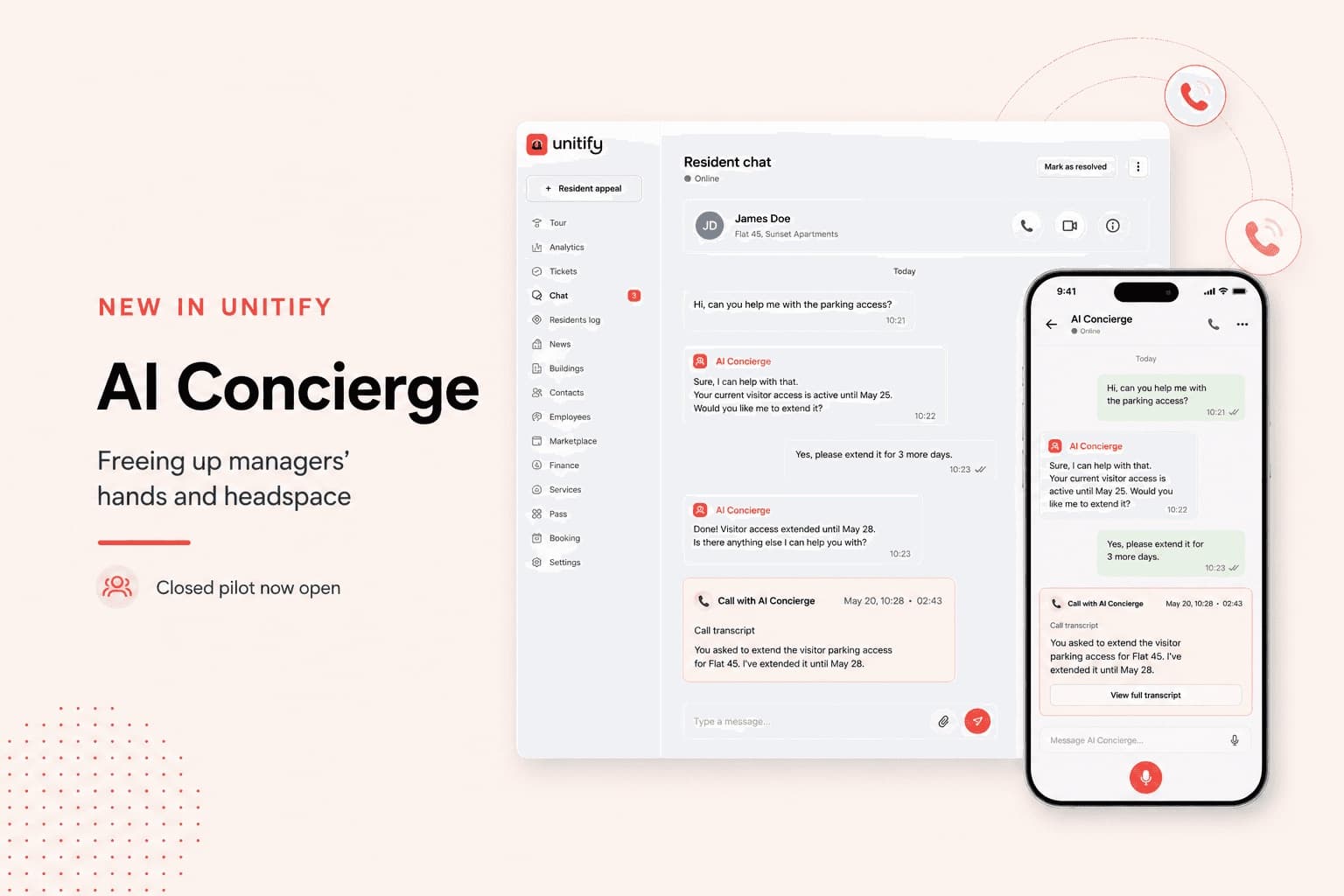
Intercom, access, video, meters and EV charging connect through mini apps, alongside your requests and billing.
Digital intercom
Calls go straight to the resident’s phone. Entry by app, BLE tag or face.
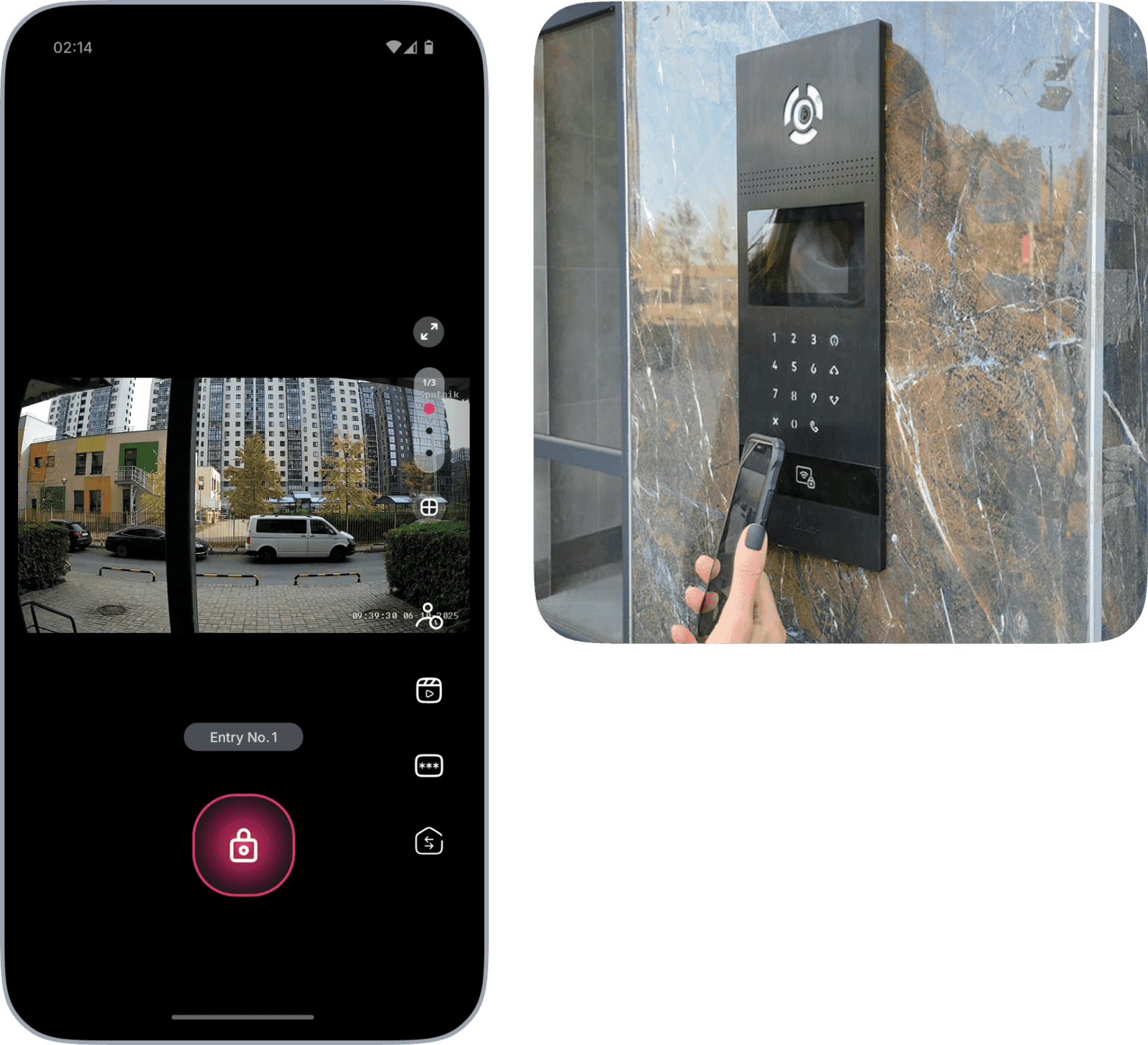
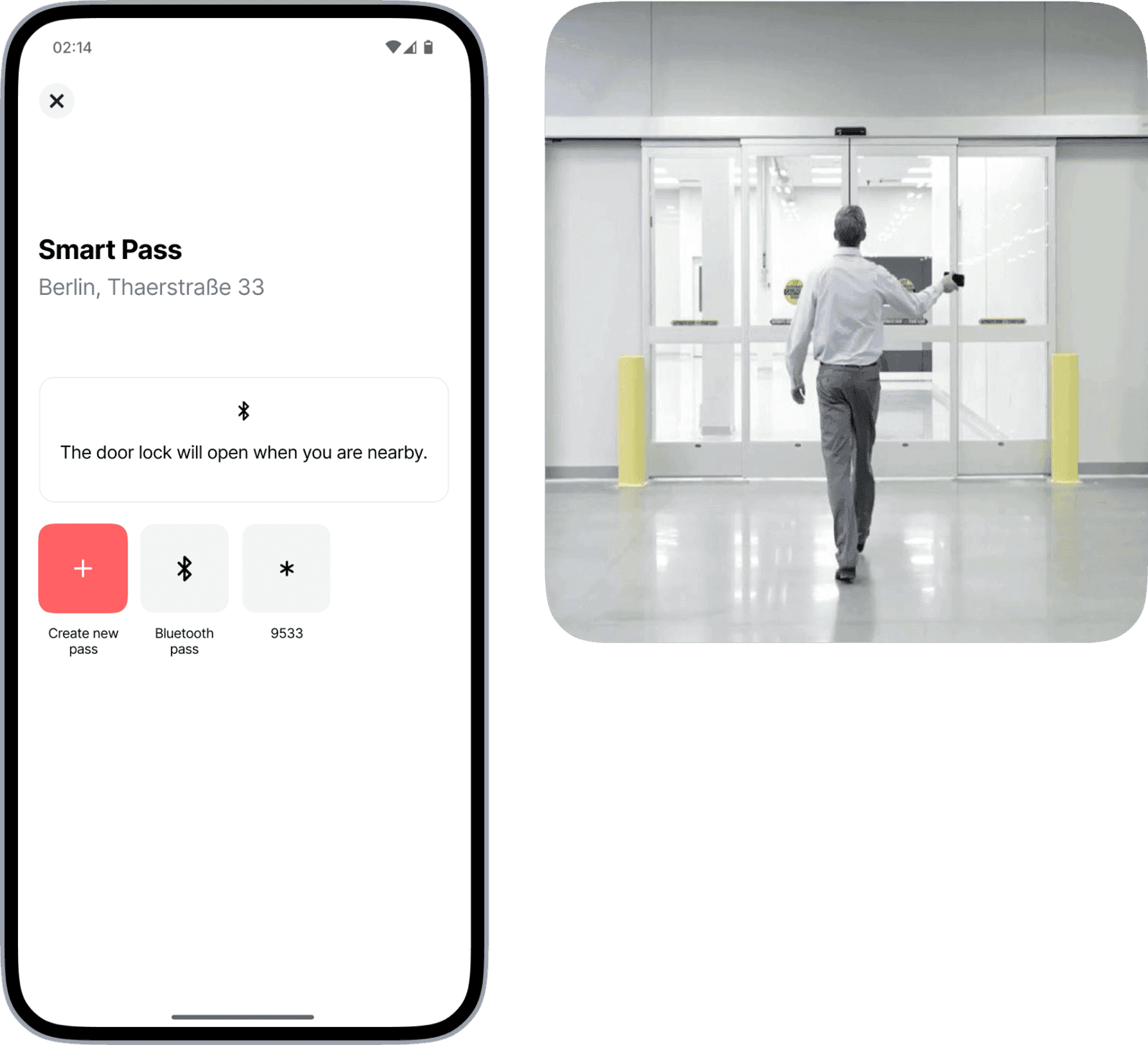
Access control
Contactless entry by phone or tag. Vehicle access by plate recognition.
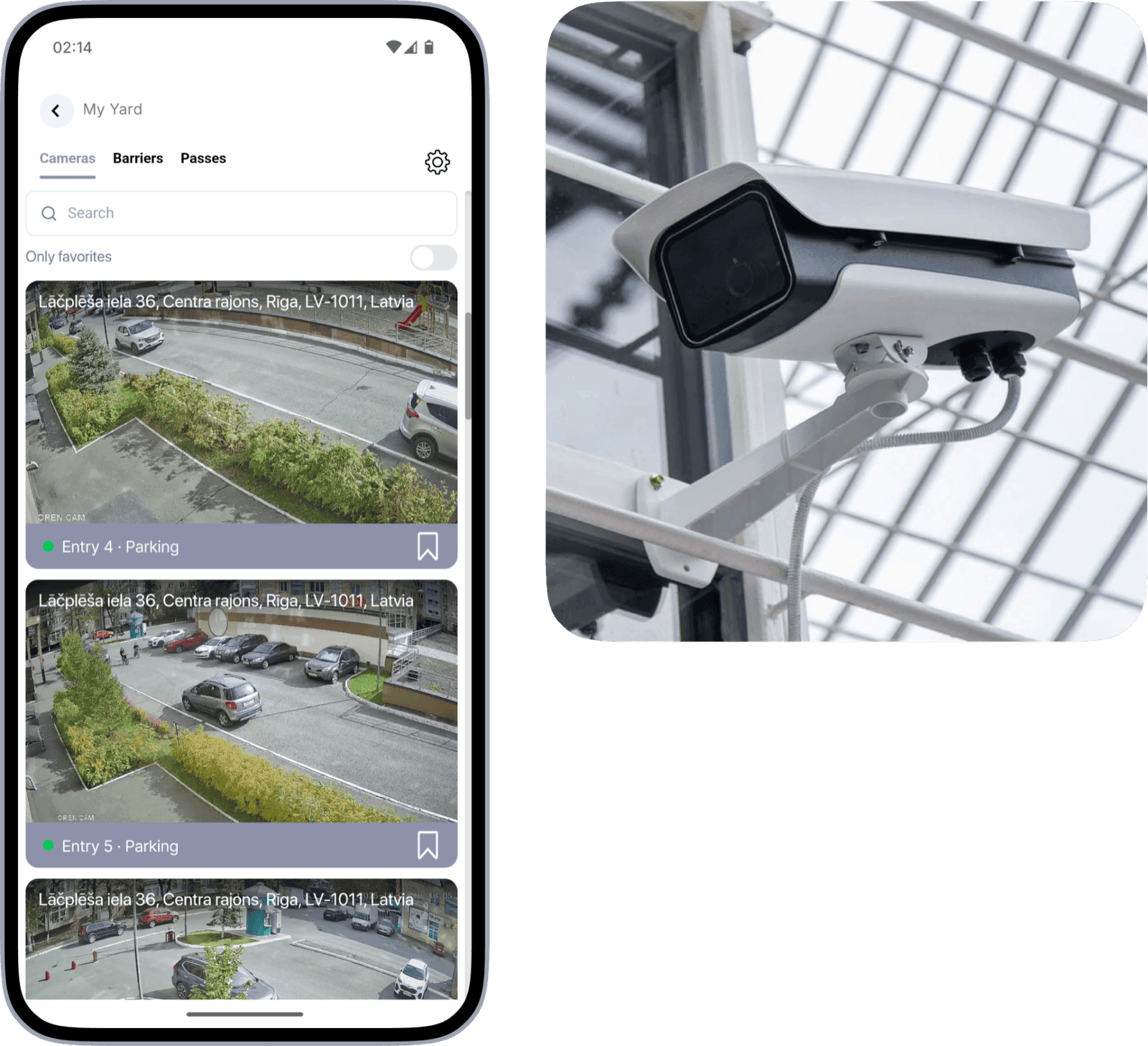
Video surveillance
Live cameras, digital archives and plate recognition at the gate.
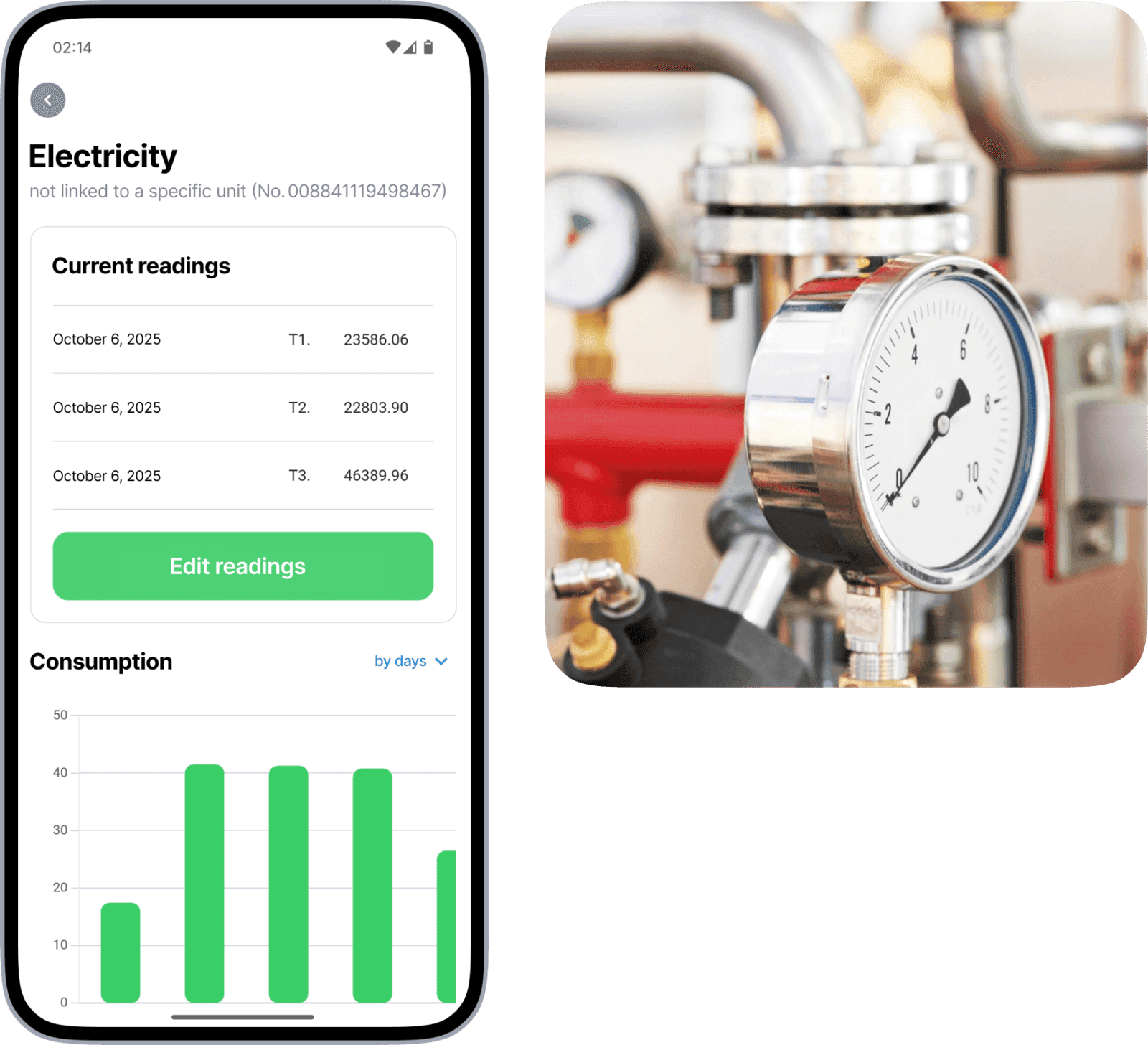
Meter telemetry
Electricity, water, gas and heat readings arrive automatically, no manual rounds.
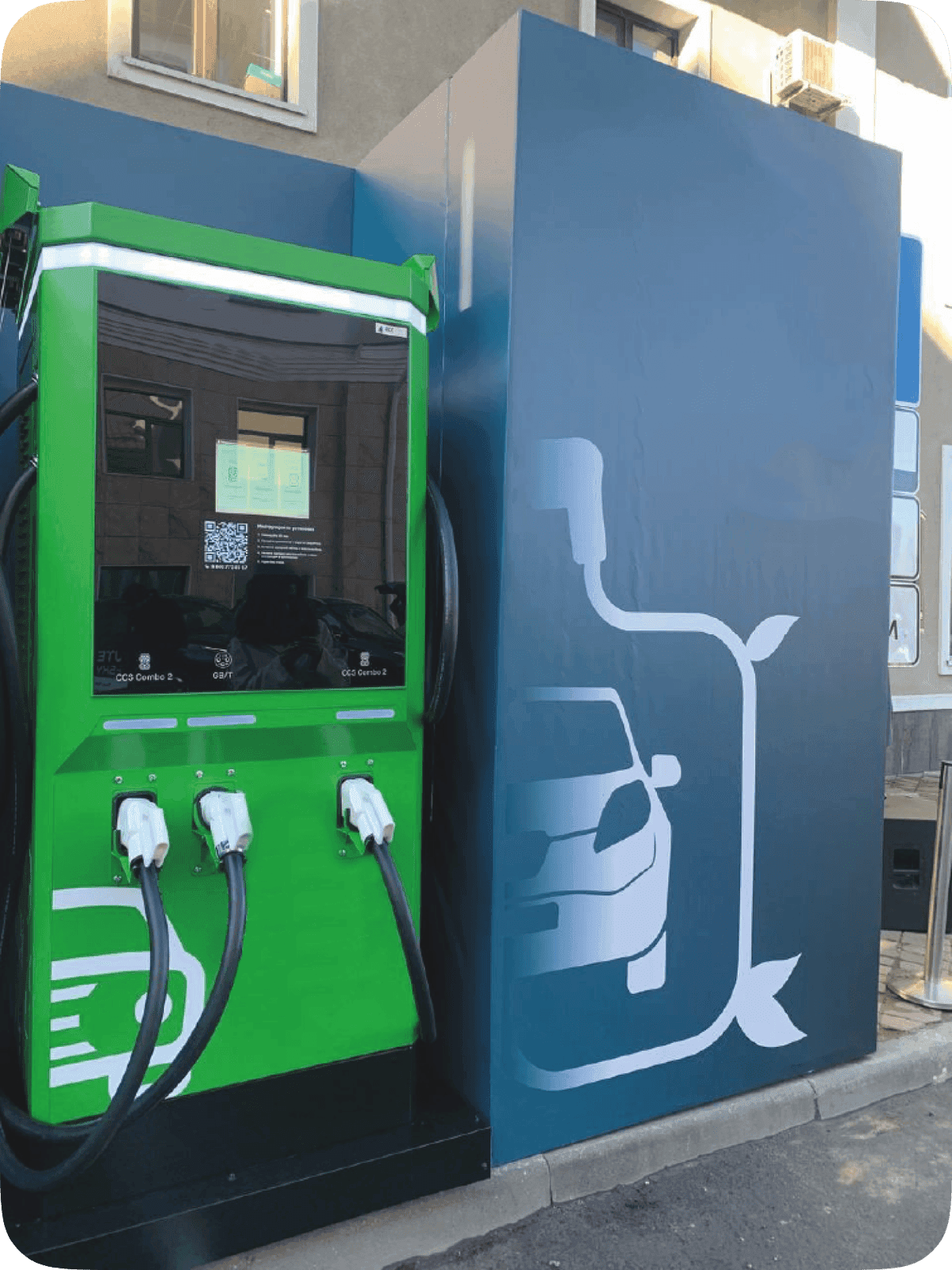
EV charging
Stations on the map, sessions booked, billed and tracked in the app.
Building management
Ventilation, heating, lifts and other systems monitored from one dashboard, with instant alerts.
Devices, orchestrator, resident app
Devices
Intercoms, access control, cameras, meters, EV chargers and building systems, from any vendor.
Orchestrator
Unitify connects every device to one dashboard. New hardware plugs in as a mini app, nothing gets replaced.
Resident app
One app for doors, meters, intercom calls and charging. No fifth login to remember.
Questions developers and building managers ask
How should a developer approach smart-building technology in a new Croatian residential complex?
Treat it as one platform decision, not a shopping list of hardware: access control, video intercoms, dispatching and a resident app should hand over to the building's upravitelj already connected, on the community's own tax number and separate account.
Since when has a Croatian apartment building been a legal person?
Since 2025 a Croatian apartment building is a legal person in its own right — the community of co-owners — with its own name, its own address and its own tax number, able to contract, to sue and to be sued.
Does Croatian law allow decisions to be taken by e-mail?
Where a meeting cannot be convened, Croatian law lets a decision be taken by collecting signatures on a written decision — or, at a co-owner's own request, by e-mail with proof of identity or a qualified electronic signature. Such a decision binds every co-owner.
How does a video intercom with phone unlocking work?
The call goes to the resident's phone through the app instead of a panel inside the apartment. The resident sees the visitor on camera and unlocks the door remotely.
What does a smart building cost a developer in Croatia, roughly?
It depends on which systems are included — access control, intercoms, dispatching, meters — and scales with unit count. Unitify's cost calculator breaks this down per building rather than quoting a flat industry number.
From the blog

Ready to make your next project smarter?
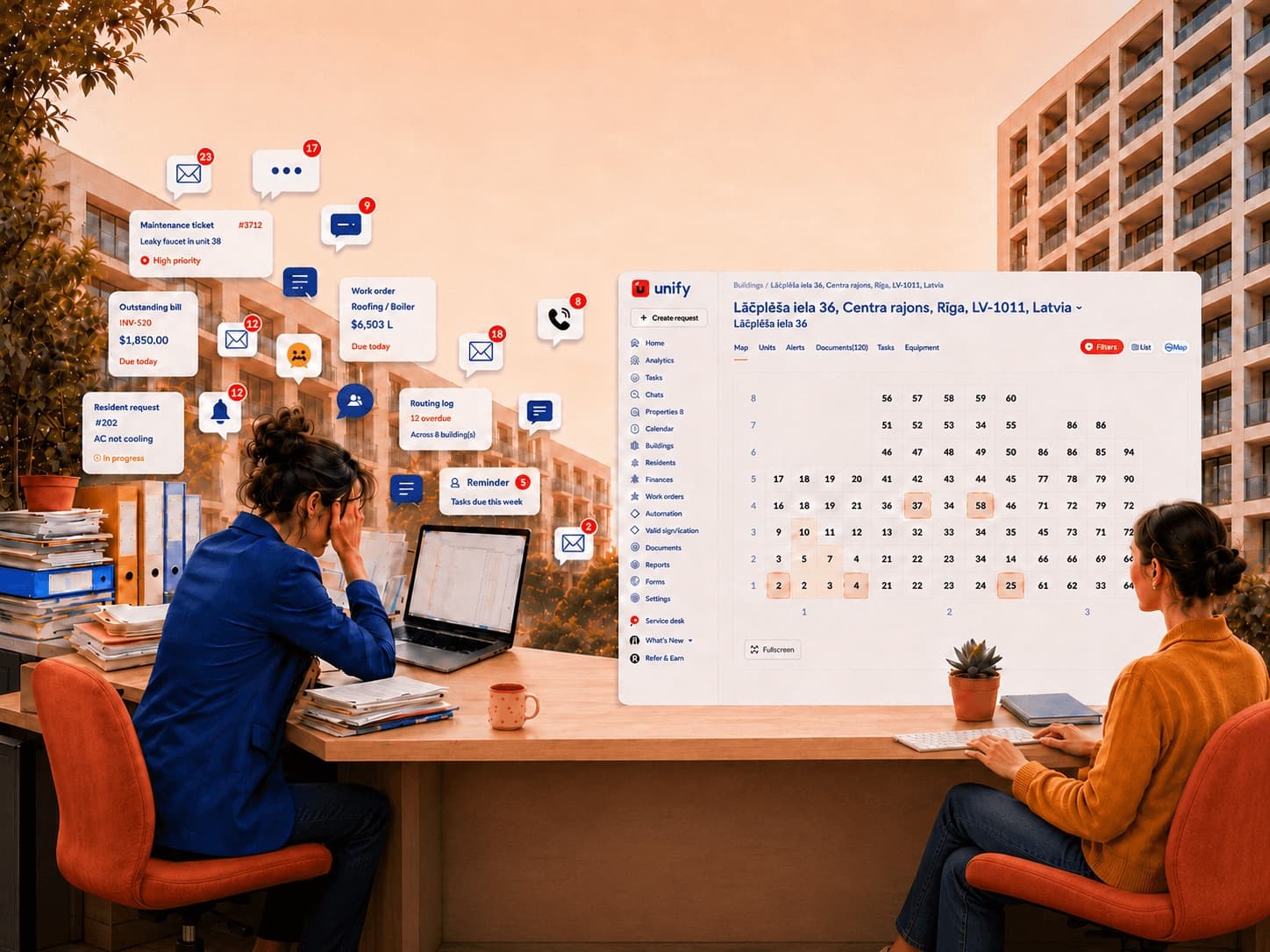
Unitify connects every building system into one platform and one resident app, for new developments and existing buildings alike.