
One platform for compound management companies and developers in Egypt
Unitify connects video intercoms, access control, cameras, meter readings and a resident app into one system, and keeps billing and reporting organized for the management company running a compound under Egypt’s Unified Building Law. Anything that exposes an API or SIP interface is connected under the project: intercoms, access controllers, barriers with plate recognition, lift access, cameras, meters and smart-home devices in apartments.
Built for how a new-city compound management company actually runs
One platform for Egypt’s new-city compounds and their management companies.
Payment rails already in use
Egyptian residents already pay recurring bills through the country’s own national rails. These are how residents already pay, not integrations Unitify connects to.
Instant Payment Network (InstaPay)
The Central Bank of Egypt’s real-time transfer network, linking every bank in the country for instant payment to accounts, cards and wallets.
Meeza
Egypt’s domestic card scheme, established under a 2017 National Payment Council decree and issued by 32 banks.
Bank transfer (EG-ACH)
Egypt’s national direct-debit and direct-credit rail, which the Central Bank of Egypt names for the payment of bills to service companies and recurring financial orders.
Built around the Unified Building Law, not around it
Every claim below links to the primary gazette or executive-regulation source it is verified against, not a summary.
One law, one chapter: Book Four, Chapter One, arts. 69–89 (Law 119/2008)
Egypt's Unified Building Law (Law 119/2008) devotes Book Four, Chapter One — articles 69 to 89 — to the union of occupants, the statutory body that manages a building's common parts. The detail sits in its executive regulation, Minister of Housing Decision 144/2009 (articles 155–174).
Book Four, Ch. 1, arts. 69–89, Building Law 119/2008, manshurat.org ↗New urban communities are inside the regime, and a union can span several properties (Law arts. 69 and 72)
The union-of-occupants chapter expressly covers the new urban communities alongside ordinary local-administration units — New Administrative Capital and Sheikh Zayed are inside the regime, not outside it. A union may also be formed spanning more than one property, or a group of adjacent properties.
Arts. 69 and 72, Building Law 119/2008, manshurat.org ↗A union of occupants is mandatory at five units or more, whatever the building's age (Reg. art. 156)
Forming a union of occupants is compulsory for any building of five units or more, whatever its age, and the duty falls on the occupants themselves — a group of adjacent properties may also form one union as long as their combined unit count reaches five.
Art. 156, Executive Regulation, Decision 144/2009, manshurat.org ↗Contributions are allocated by land share, commercial space counted double (Reg. art. 157)
Both voting weight and the financial obligations the general assembly decides are set by the unit’s share of the land relative to the property’s total land area, and a square meter used commercially or administratively counts as double a residential square meter.
Art. 157, Executive Regulation, Decision 144/2009, manshurat.org ↗Integrated compounds need a management company once 60% occupied (Reg. art. 158)
For an integrated residential complex made up of one or more neighborhoods, once public electricity is connected and 60% of the complex’s units are occupied, the owners and occupants, in coordination with the developer, must incorporate one or more management-and-maintenance companies, carrying the union’s statutory powers plus maintenance of the complex’s shared utilities and services.
Art. 158, Executive Regulation, Decision 144/2009, manshurat.org ↗Arrears: a statutory lien, then a payment order from the judge of urgent matters (Law art. 87)
The union holds a lien over the unit, its appurtenances and its undivided share of the land and common parts, exempt from registration fees. Its chairman can obtain a payment order from the judge of urgent matters after formally notifying the defaulter, and non-payment carries the same legal consequences as non-payment of rent.
Art. 87, Building Law 119/2008, manshurat.org ↗No electronic voting provision, attendance and a paper minutes book are the rule (Reg. arts. 164-167)
Neither the law nor its regulation provides for electronic voting, remote attendance or in-absentia polling. Notice is delivered against signature or posted at the building entrance, attendance is recorded on a sheet at the start of each session, and every decision is recorded in a paper minutes book with the vote count.
Arts. 164-167, Executive Regulation, Decision 144/2009, manshurat.org ↗No union formed, a temporary committee takes over (Law art. 73)
No article in the Building Law’s penal Book fines a building for not forming a union of occupants. If none is formed, the competent local unit appoints a temporary management committee of non-occupants to do the union’s job until a general assembly meets and elects a board.
Art. 73, Building Law 119/2008, manshurat.org ↗The hardware layer, wired into your platform
Intercom, access, video, meters and EV charging connect through mini apps, alongside your requests and billing.
Digital intercom
Calls go straight to the resident’s phone. Entry by app, BLE tag or face.
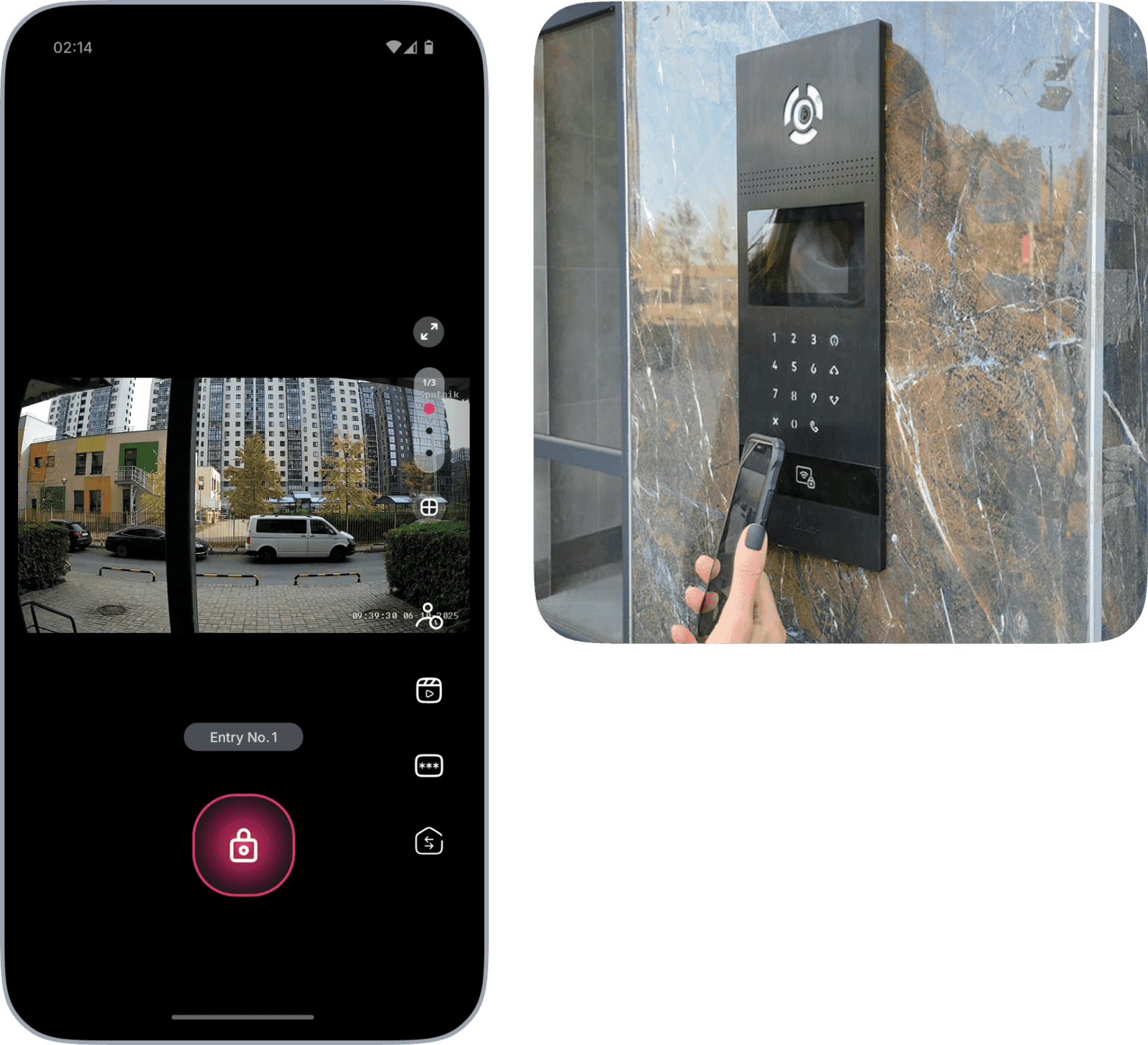
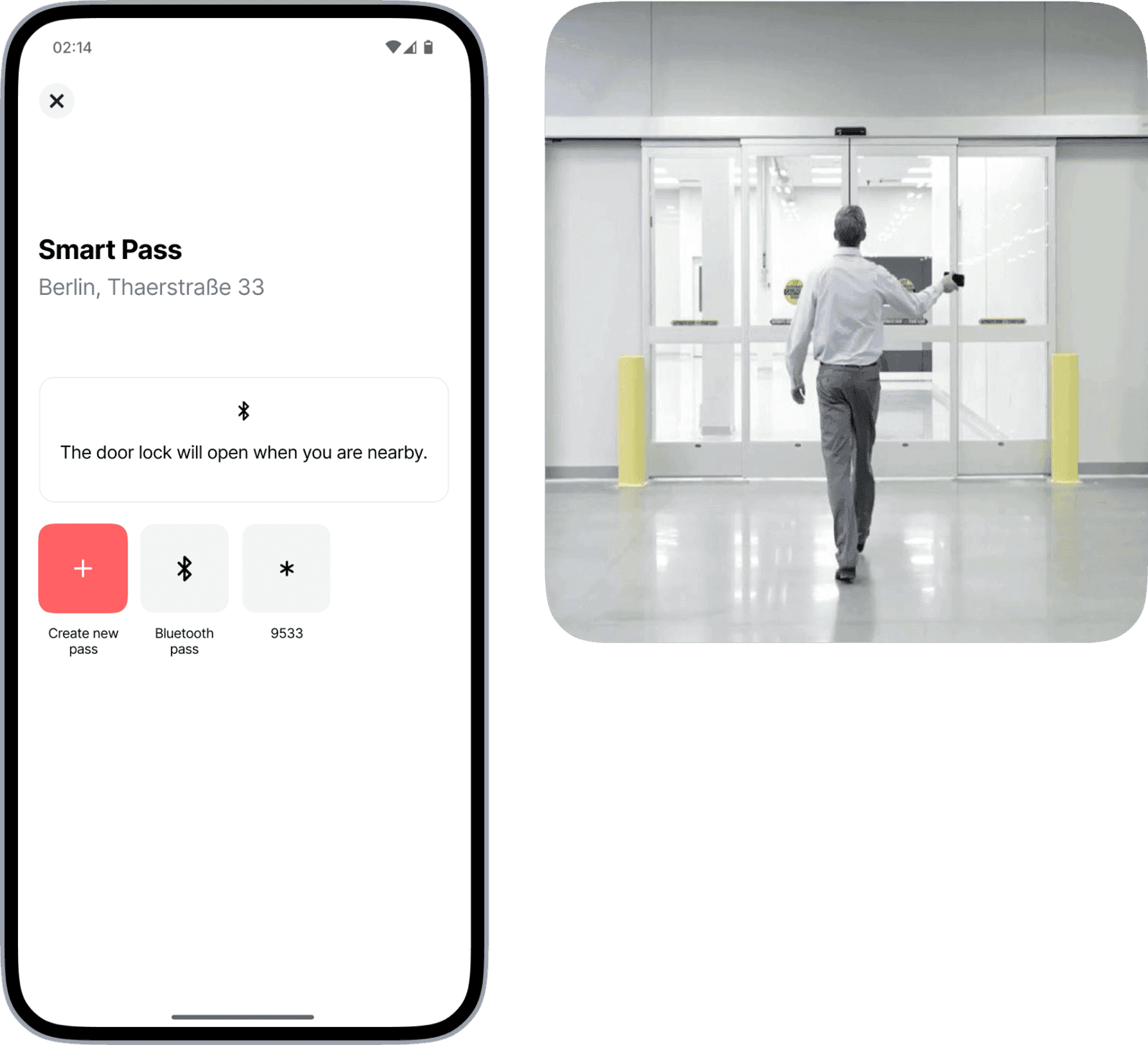
Access control
Contactless entry by phone or tag. Vehicle access by plate recognition.
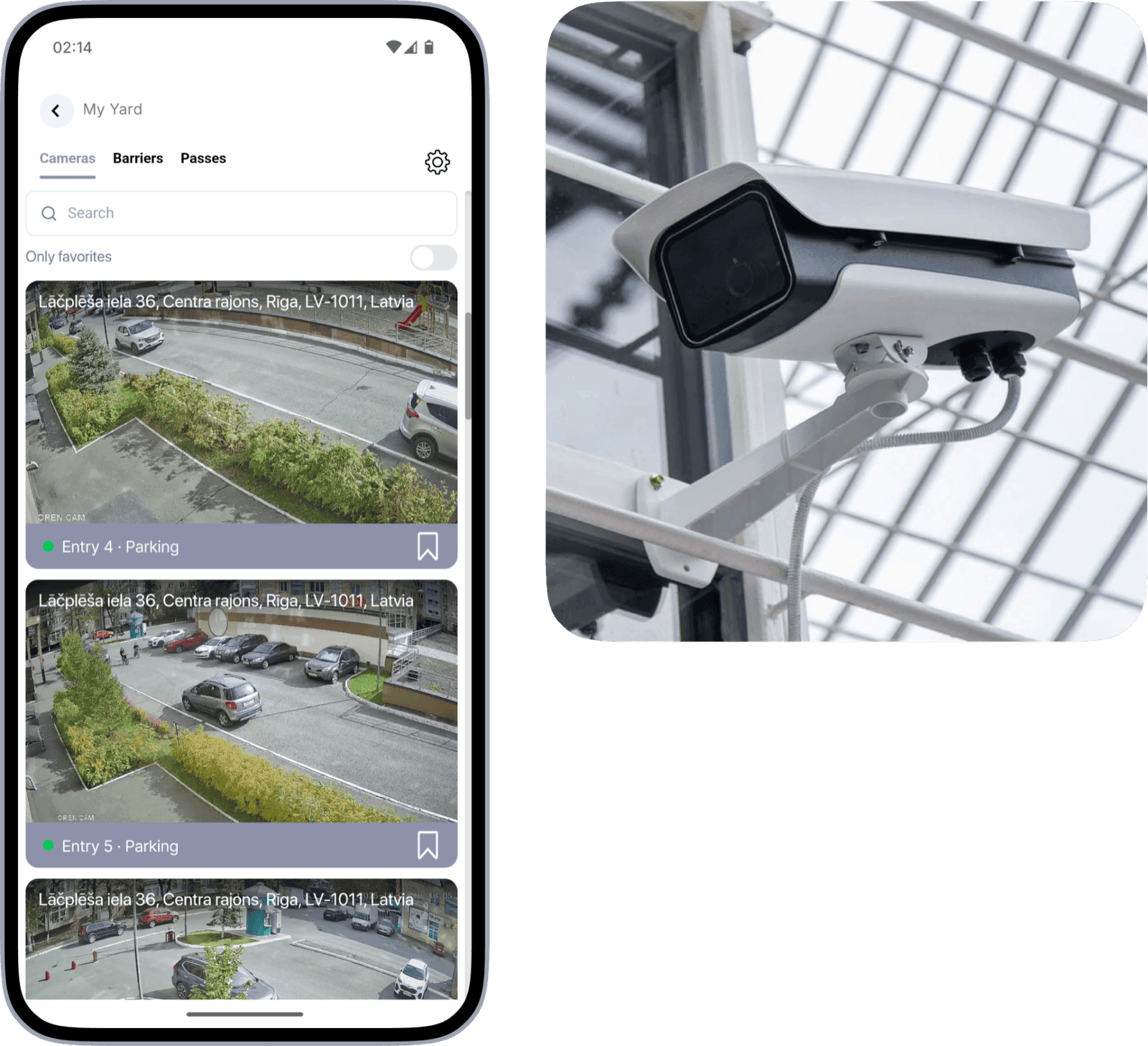
Video surveillance
Live cameras, digital archives and plate recognition at the gate.
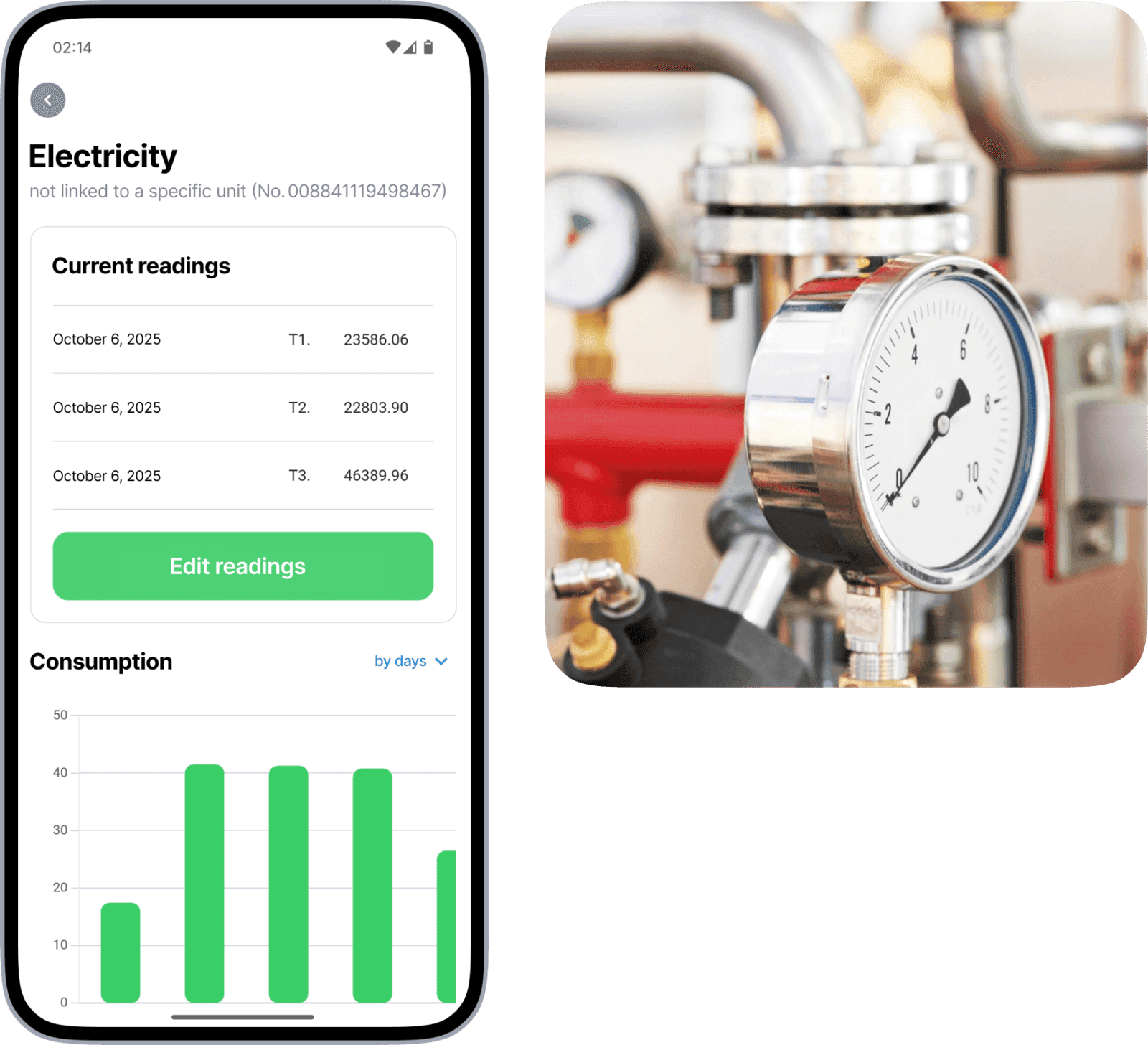
Meter telemetry
Readings come from residents in the app, from a file or over the API from your metering system. Smart meters that expose an interface are connected under the project.
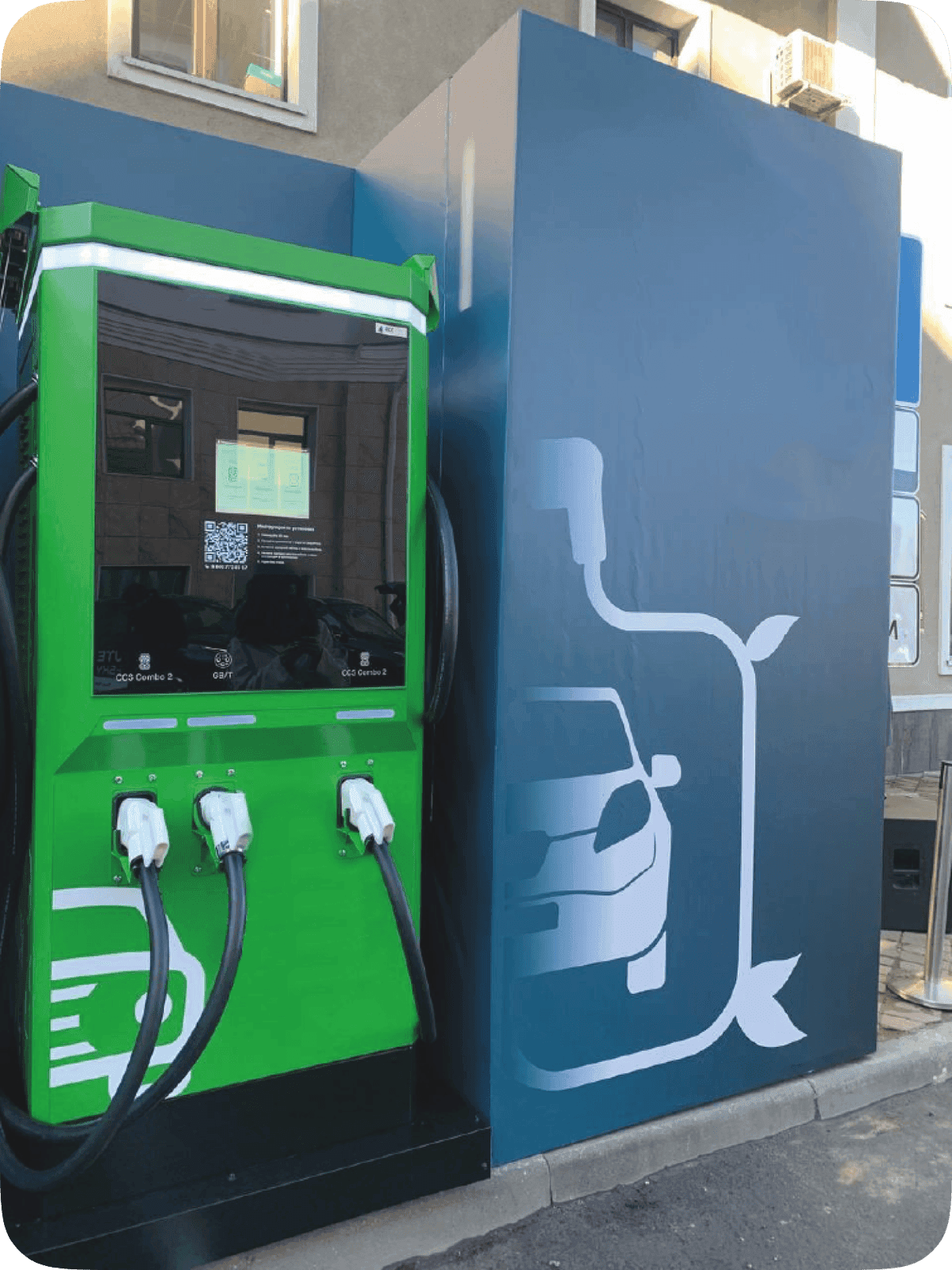
EV charging
Stations on the map, sessions booked, billed and tracked in the app.
Building management
Ventilation, heating, lifts and other systems monitored from one dashboard, with instant alerts.
Devices, orchestrator, resident app
Devices
Intercoms, access control, cameras, meters, EV chargers and building systems, from any vendor.
Orchestrator
Unitify connects every device to one dashboard. New hardware plugs in as a mini app, nothing gets replaced.
Resident app
One app for doors, meters, intercom calls and charging. No fifth login to remember.
Questions developers and management companies ask
When must a union of occupants form, and who is responsible?
Any building of five units or more must have a union of occupants, whatever its age, and the duty falls on the occupants themselves. If none is formed, the local administrative unit appoints a temporary management committee to do the union’s job until a general assembly meets and elects a board.
What is the article 158 compound management company, and when is it required?
For an integrated residential complex made up of one or more neighborhoods, once public electricity is connected and 60% of the complex’s units are occupied, the owners and occupants, in coordination with the developer, must incorporate a management-and-maintenance company carrying the union’s own statutory powers.
How are maintenance contributions calculated?
By each unit’s share of the land relative to the property’s total land area, with commercial and administrative space counted at double the residential rate. The same key sets shareholding in a compound’s article 158 management company.
What happens if a resident does not pay?
The union holds a statutory lien over the unit and its share of the common parts, and its chairman can obtain a payment order from the judge of urgent matters after formal notice. Non-payment carries the same legal effects as non-payment of rent, and arrears follow the unit to its next owner or tenant.
Can residents vote electronically on union decisions?
Neither the law nor its regulation provides for electronic voting, remote attendance or in-absentia polling. A product can prepare, distribute, tally and archive assembly papers; it cannot claim legal sufficiency for an in-app ballot.
Can you connect the intercom or access hardware we already have?
Usually yes. If the panel, controller, camera or meter exposes an integration interface (an API, SIP, ONVIF or a Modbus or M-Bus gateway), we connect it to the resident app under the project. Barriers with plate recognition, lift access and in-apartment smart home are handled the same way, as project work. Hardware with no interface cannot be connected, and we check the exact model before you commit.
From the blog
Ready to make your next project smarter?
Unitify connects every building system into one platform and one resident app, for new developments and existing buildings alike.