
Property Management Core
5
min read
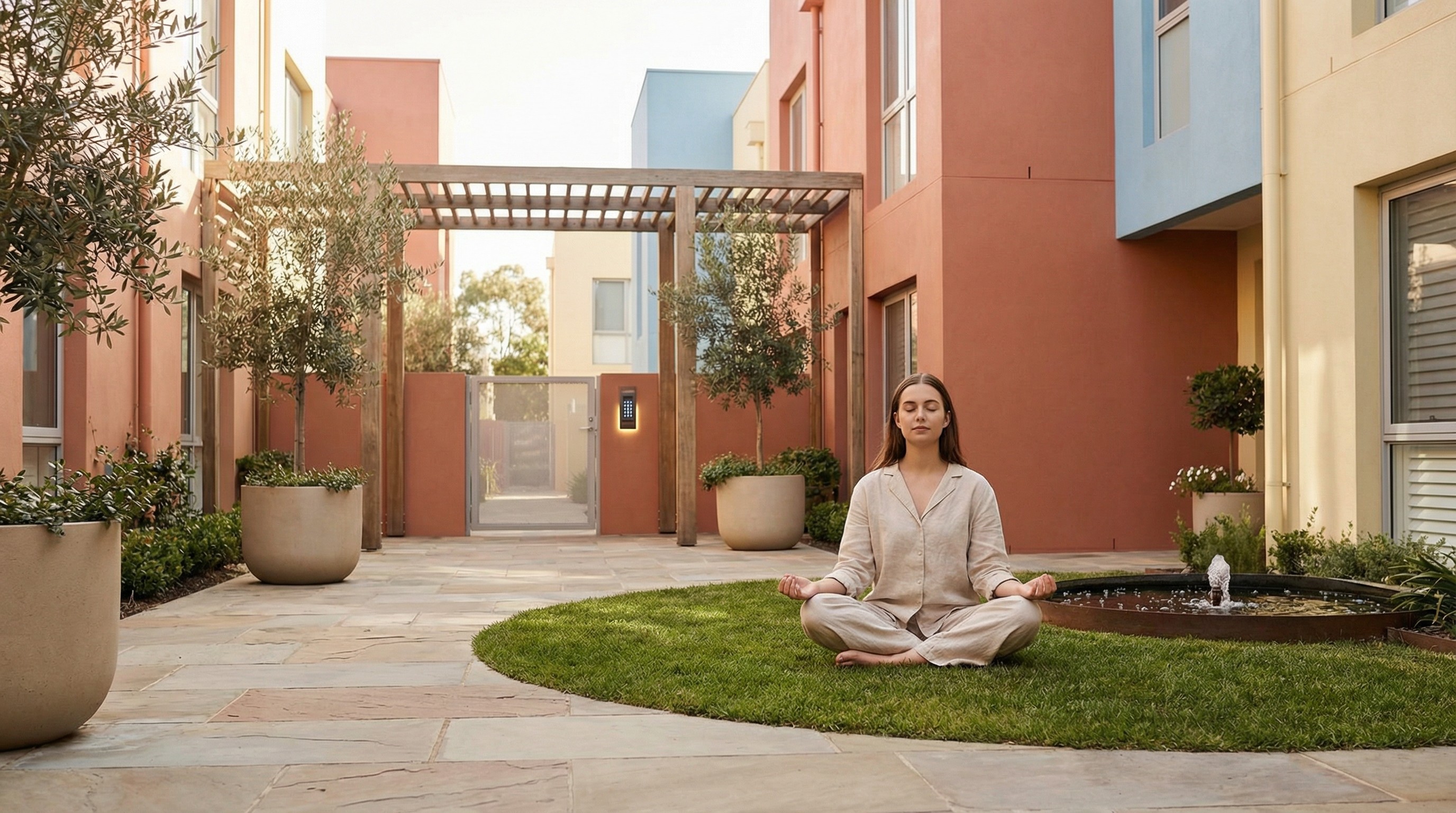
Security in residential buildings is often discussed in technical terms: access systems, cameras, hardware, protocols. But for residents, security is rarely about technology itself. It is about how safe, calm, and in control they feel in their everyday life.
This emotional layer is easy to underestimate. Yet it plays a crucial role in how residents perceive the management company — and whether they trust it.
Why security is an emotional experience
Residents rarely evaluate security systems by their specifications. Instead, they subconsciously ask themselves very simple questions:
Who can enter my building?
Can I control access without friction?
Do I feel informed, or left in the dark?
If something happens, will there be clarity or confusion?
When these questions remain unanswered, uncertainty appears. And uncertainty quickly turns into frustration, complaints, and mistrust — even if the building is technically well equipped.
Digital security tools shift this dynamic by addressing not only protection, but emotional comfort.
Digital access as a sense of control
Digital passes, mobile access, and guest permissions change how residents interact with their building. Instead of depending on physical keys, guards, or manual processes, residents gain direct control:
opening doors remotely
granting temporary access to guests, couriers, or service staff
managing permissions without involving support
seeing who enters shared spaces and when
The key benefit here is not speed or convenience alone. It is the feeling of control over one’s environment. When residents know they can manage access easily and transparently, their stress level drops — even if they rarely use all available features. Control creates calm. Calm builds trust.
Video features: from surveillance to reassurance
Video cameras are often perceived as a reactive tool — something used only after an incident occurs. But when video systems are integrated into a digital environment, their role changes.
Instead of being hidden in isolated systems, video becomes:
a source of clarity in disputed situations
a way to reduce tension between residents
a tool for faster, fact-based decision making
a signal of order and accountability
Importantly, well-designed video access does not increase anxiety. On the contrary, when residents know that shared spaces are monitored transparently and responsibly, they feel more secure — even if they never actively check the footage.
How security shapes loyalty
Residents may not explicitly say “I trust my management company because of digital access,” but their behavior reflects it.
Buildings with modern, transparent security systems typically experience:
fewer emotional complaints
lower conflict escalation
higher tolerance in stressful situations
stronger long-term loyalty
Why? Because residents feel that the building is managed professionally and thoughtfully. Security becomes part of a broader perception of quality — not an isolated feature.
In Unitify, security and peace of mind are treated as part of the resident experience — not as isolated technical features.
The resident app can bring together all available access options in one place: building entrances, shared spaces, parking, and temporary guest access. Instead of relying on separate systems or manual coordination, residents manage access directly and transparently from their phone.
Video features can also be integrated into the same environment. Depending on the building setup, residents may access cameras in shared areas — such as floors or courtyards — through the app, providing clarity and reassurance without unnecessary complexity.
By embedding access control and video into a unified digital platform, Unitify helps property managers deliver a level of security that residents do not need to think about every day — they simply feel it.
Security as part of a unified experience
Digital access and video features are most effective when they are not standalone solutions, but part of a unified management ecosystem. When security connects seamlessly with communication, requests, notifications, and daily operations, it reinforces a consistent message: the building is managed with care, structure, and foresight.
In such an environment, peace of mind is not accidental. It is designed. And when security fades into the background, what remains is trust — the foundation of every healthy residential community.
From peace of mind to a concrete system
When security and comfort are designed intentionally, they become invisible to residents — and invaluable to operations. With the Unitify Smart Building Brief, you can model access, video, and smart home scenarios in one place and receive a clear, structured package ready for implementation. Just in 5 minutes.


