Гиды по городам
7
минут чтения

“Software for property managers” may sound boring. Good. That is exactly the point.
Over the last six months, we have been working on making property management quieter, clearer, and far less manual. The kind of work that used to swallow entire days should not require five chats, endless follow-ups, and constant “who’s handling this?” moments. It should just be done — on the record, in the right place, and visible to everyone who needs it.
One example: bill generation that used to take around 7 hours can now be completed in about 20 minutes with Unitify Easy Billing.
That is the kind of “boring” we have been building at Unitify: less chaos, fewer manual steps, and more building operations running in the background.
What’s new in Unitify
Over the last six months, we have worked across several key parts of the platform:
→ Easy Billing
Generates bills instead of eating up a whole day of manual work.
→ Smarter resident requests
Requests can be routed, assigned, and closed with less manual coordination.
→ One thread for every conversation
No more digging through group chats to understand what happened, who replied, or what still needs to be done.
→ Apartment-level data in one place
Teams can see reliable unit-level information: residents, debts, tickets, app status, payments, announcements, and meter readings.
→ Interactive unit grid
Property managers can see tickets, debts, and app installation status across the building at a glance.
→ AI-assisted ticket handling
When a resident reports an issue, Unitify can automatically identify the type of request, add tags, calculate urgency, and help draft a reply.
→ Multilingual resident communication
The team can work in one interface language, while residents receive responses in their own language.
→ Equipment management
Building assets such as elevators, pumps, engineering systems, roofs, and other equipment can now be managed with connected tasks and history.
→ AI engineer for maintenance planning
Unitify can help plan recurring maintenance based on equipment data, manuals, and local requirements.
→ Resident services and mini-apps
Residents can book amenities, request guest or vehicle passes, and access building-specific services from the mobile app.
→ New technician app
We have also significantly updated the technician app — with a calendar and a Kanban board for field teams. Requests are prioritized by urgency score and automatically assigned to the technician responsible for that issue type — without constant manager supervision. The team only needs to set up roles once and define which types of tasks each technician handles.
Video walkthrough
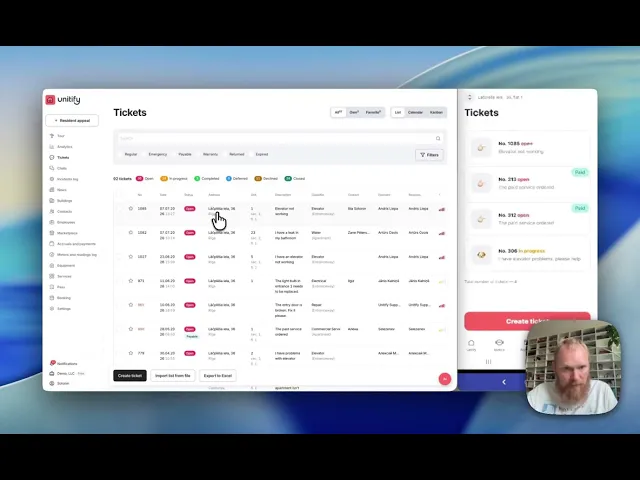
We recorded a short video walkthrough of our latest updates to show how quiet — almost meditative — property management can be when everything is connected in one system.
In the video:
00:14 — Interactive unit grid: tickets, debts, and app status at a glance
00:31 — Tap any unit to see the whole picture on one screen
01:37 — A resident reports “elevator not working” from the app
02:01 — The ticket lands scored and tagged — automatically
02:36 — AI drafts the reply in the resident’s own language
03:44 — An AI engineer plans maintenance ahead of time
05:03 — Residents book amenities in a couple of taps
The point
Good building operations are calm and invisible.
No stress. No drama. No scattered communication. No manual work that should have been automated long ago.
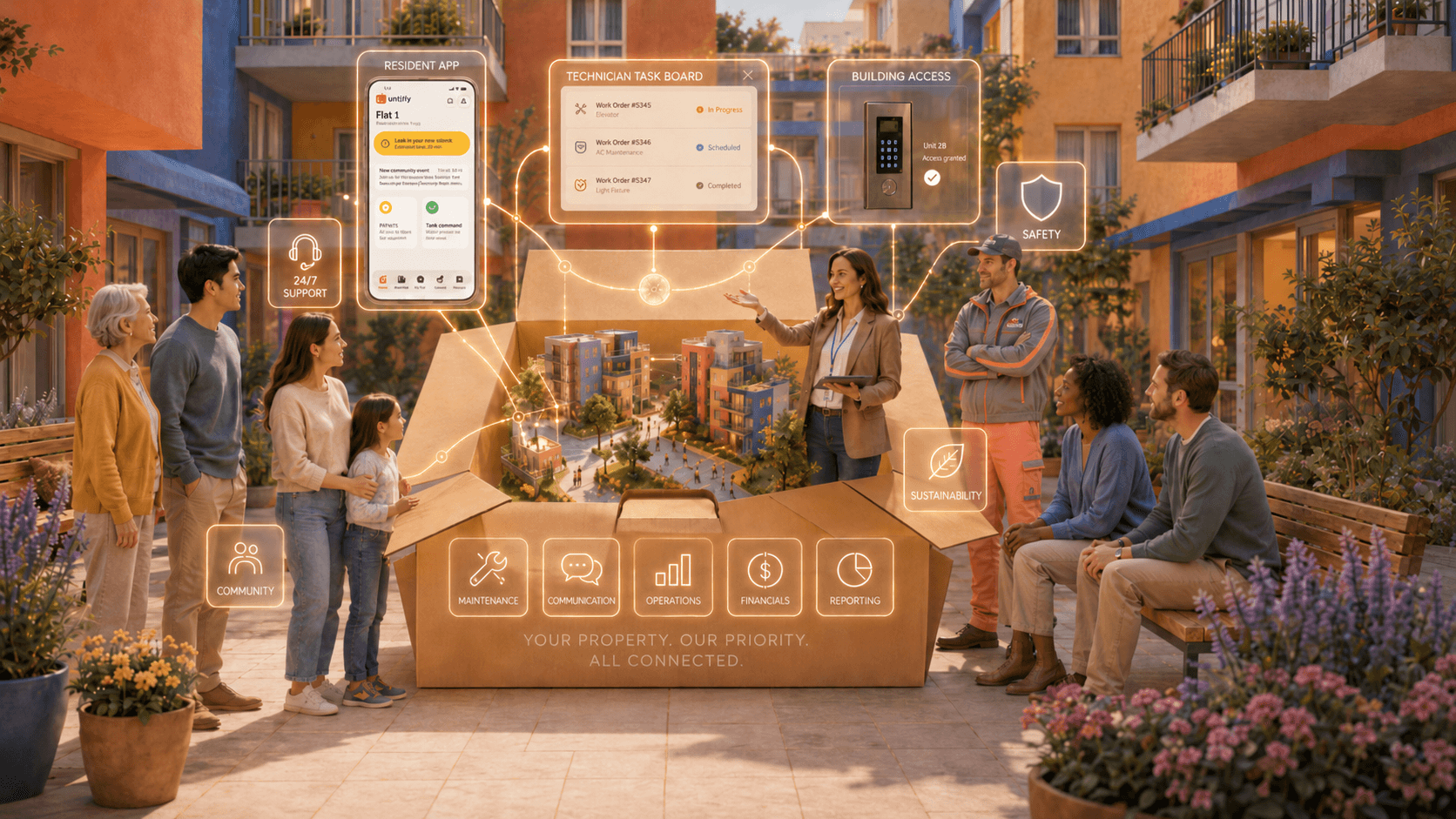
Just buildings, apartments, residents, requests, payments, equipment, communication, and services connected in one operational environment.
If making billing 21× faster sounds like the kind of boring your team needs, we would be happy to walk you through it. Book a short demo call.