Property Management Core
5
min read
There was a time when a building had a fixed set of services: security, cleaning, utilities, maybe a concierge desk. That time is over.
Today, a residential building is not just a physical asset. It’s a living digital environment. And just like any digital product, it must evolve. The companies that understand this are shifting from “software with features” to modular digital ecosystems — platforms where services can be added, removed, and upgraded as easily as apps on a smartphone. And that shift is redefining relationships with residents.
Buildings Don’t Stand Still — Why Should Their Systems?
Every year, new expectations appear:
Residents want smart lock access for guests.
EV owners expect charging stations with transparent billing.
Communities ask for parcel lockers and booking systems.
Developers want energy dashboards.
Property managers need better communication templates.
Financial teams demand automated billing and reports.
The old model required a new vendor for every new need. It means more contracts, more integrations, and more chaos. The modular model replaces that with something radically simpler:
One core platform + Unlimited expansion possibilities.
What “Modular” Actually Means in Property Management
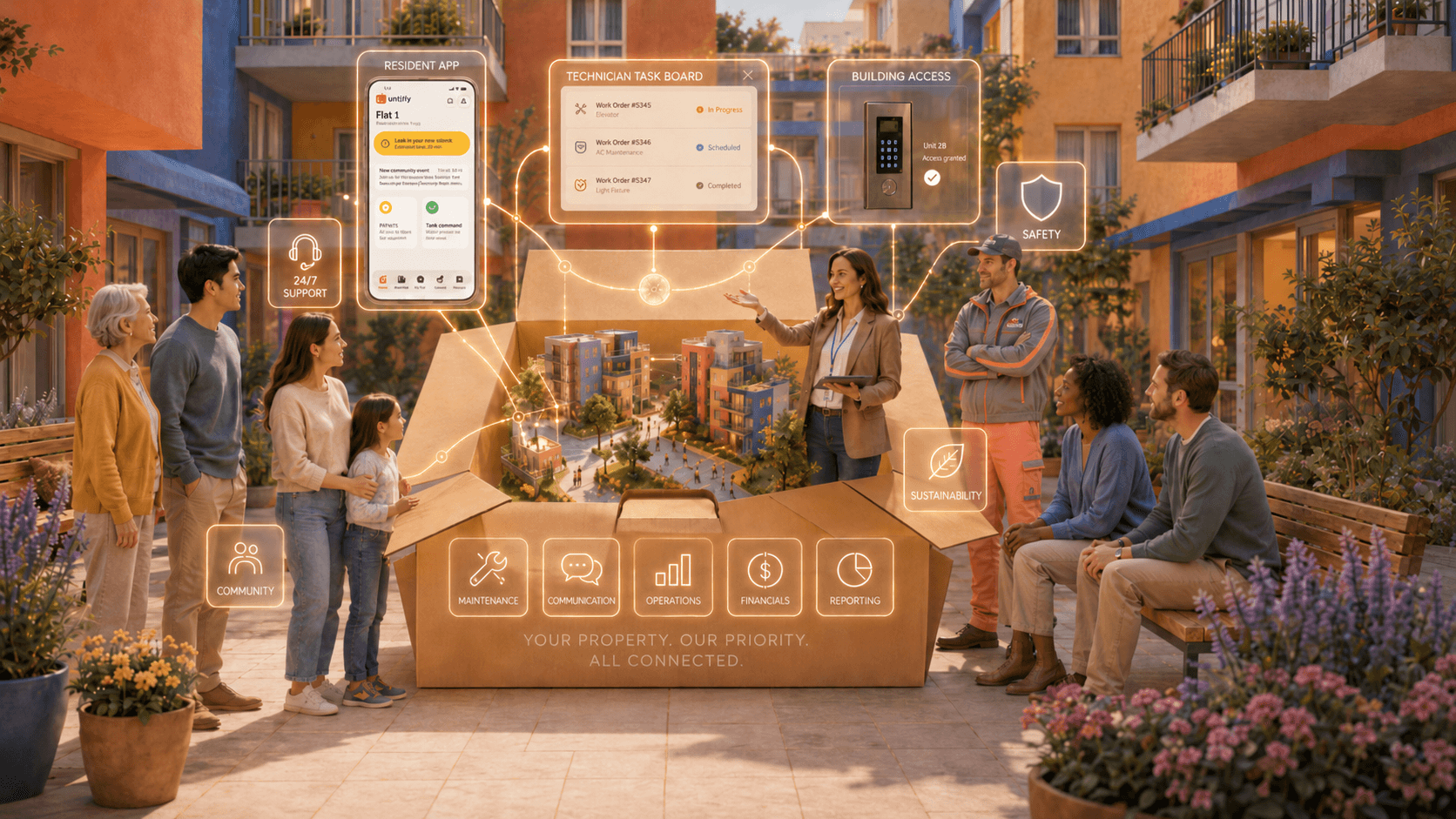
A modular platform works like a digital infrastructure layer. At the center is the core system — building structure, resident database, billing engine, communication tools. Around it, mini-apps connect seamlessly.
Think of mini-apps such as:
Smart intercom and access control management
EV charging with automated payment tracking
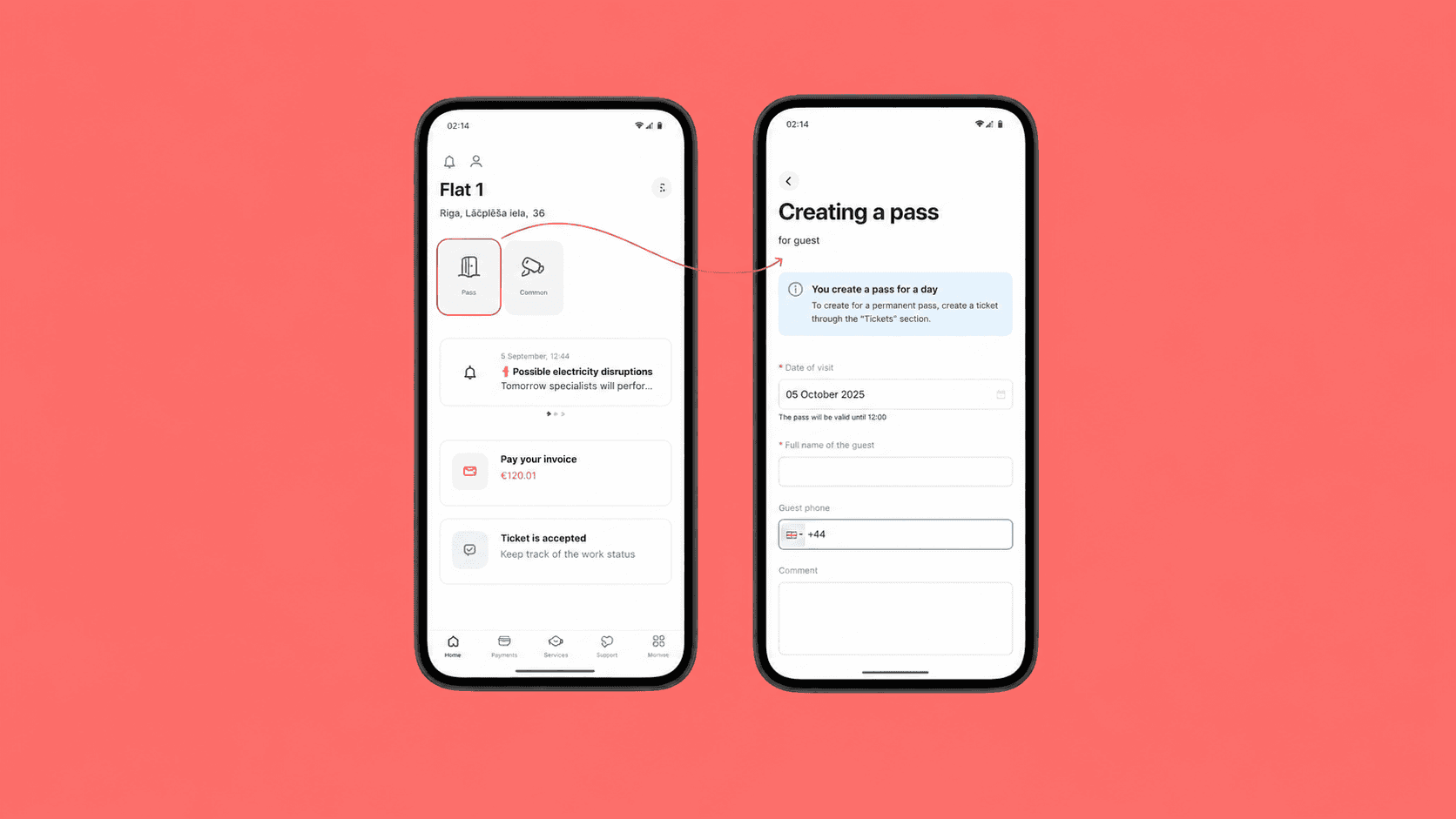
Visitor passes and digital key sharing
Amenity booking systems
CCTV and security integrations
AI-Concierge chat
Additional services marketplace — from cleaning, repairs to pet and community economy services, storage subscriptions, and location-based partnerships — all activated modularly as the building grows, enabling the management company to earn structured vendor commissions and transform everyday services into predictable recurring revenue.
Each module can be activated when needed. No rebuilding. No data migration. No operational disruption. Just expansion.
Why Modularity Changes the Resident Experience
Residents don’t think in terms of “systems.” They think in terms of convenience.
When services are modular but unified:
Access works from one app.
Payments are visible in one place.
Notifications are contextual and timely.
Support chat already knows the building, apartment, and history.
New services appear without changing platforms.
From a resident’s perspective, the building simply becomes smarter over time. That consistency builds trust and loyalty.
Why It’s a Strategic Advantage for Property Managers
For property managers, modularity isn’t just flexibility — it’s leverage.
Instead of buying fragmented solutions:
You reduce integration costs.
You avoid vendor lock-in.
You activate services only when financially justified.
You test new revenue streams without rebuilding infrastructure.
You scale across multiple buildings with different configurations.
One building might activate EV charging and smart parking. Another might prioritize AI concierge and digital billing. A premium complex may enable all modules. A mid-market building may start with three. Same core. Different configuration. That’s operational intelligence.
Modularity Enables Personalization at Scale
Modern residents expect personalization — but traditional systems weren’t built for it.
With modular architecture:
Communication can be segmented by entrance, floor, or service usage.
Access rights adjust dynamically.
Billing models adapt to consumption patterns.
Service offers can be targeted to specific groups.
This isn’t just automation — it’s contextual service design. And contextual service is what turns a management company from a utility provider into a trusted partner.
Why This Is the Future of Resident Relationships
Buildings are becoming platforms. Not metaphorically — literally. Just as smartphones transformed when app stores appeared, residential communities transform when their digital backbone supports mini-apps and extensions.
The future belongs to systems that are:
Open and API-first
Expandable
Data-driven
Vendor-agnostic
Designed for long-term evolution
Rigid systems age fast. Modular ecosystems adapt. And in property management, adaptability is the difference between reacting to problems — and designing better living environments.
The Philosophy Behind Unitify
At Unitify, we believe digital infrastructure should not limit buildings — it should empower them.
That’s why we built a modular, open-source ecosystem where:
Core operations stay centralized and transparent;
New services plug in without friction;
Data flows between modules;
Residents experience one seamless environment;
And property managers gain both efficiency and new monetization opportunities.
Resident relationships aren’t built through features. They’re built through consistent, evolving service. And modularity is what makes that evolution possible.
And it’s a future we’d genuinely want to call home.